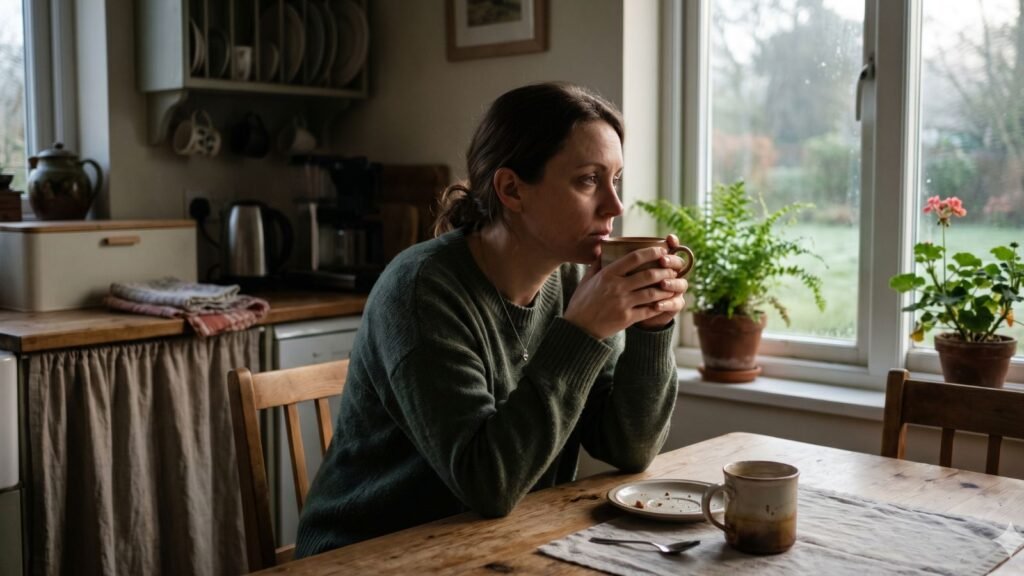

You arrive home after a long afternoon of running errands, finding yourself sitting in the driveway with the engine turned off. The key is in your hand, but you don’t open the car door. Instead, you just sit there in the quiet stillness, staring at the steering wheel. Nothing is wrong, and nobody is waiting inside to upset you, yet you find yourself desperately holding onto those extra five minutes of absolute silence before stepping back into the flow of life.
Or maybe it’s the phone buzzing on the kitchen counter while you’re making dinner. You see a close friend’s name flash across the screen, and even though you love them and enjoy their company, you find yourself letting it ring. You feel a familiar, tiny pinch of guilt as the screen goes dark. You aren’t angry with them, and you aren’t trying to ignore them. You simply feel as though you’ve run out of words for the day, and you need a quiet moment to replenish them.
We often feel a strange pressure to always be reachable, as if being alive means we owe the world our constant presence. Modern life has quietly rewritten the rules of connection, making us feel that a delayed response is a sign of coldness or that wanting to spend a Saturday night alone is a symptom of some deeper problem. We worry that by closing our door, we’re building walls that will keep people out forever.
The Quiet Art of Stepping Back
In reality, the desire for quiet isn’t a rejection of the people around us. It’s a quiet return to ourselves. When you feel the urge to pull back, it’s usually because your mind is trying to tell you something important. We spend our days absorbing everyone else’s emotions, opinions, and expectations, carrying them around like extra luggage. Eventually, there comes a point where we simply run out of room to hold anything else.
Research on how our minds process daily stress suggests that we require unstructured quiet time to make sense of what we’ve experienced. Without these moments of pause, we struggle to filter the endless distractions of life, leading to a feeling of constant static in the background of our thoughts. When we don’t allow ourselves this breathing room, we start losing our ability to listen, to feel empathy, and to respond with kindness. The space we take isn’t about avoiding others; it’s about preserving the quiet energy required to love them well.
Why Closeness Requires Distance
It’s easy to fall into the trap of believing that the strongest relationships are the ones where people are entirely inseparable. We’re taught to view constant closeness as the ultimate goal. But anyone who has shared a life with someone knows that the most resilient bonds are actually the ones that have room to breathe. Relationship specialists often point out that healthy connection requires a balance of intimacy and independence. Without space, we risk losing our sense of self in the beautiful mess of our relationships.
When we deny ourselves the quiet we need, we often start showing up as lesser versions of ourselves. We become easily irritated by small things, impatient with the people we love most, and emotionally distant even when we’re sitting right next to them. In trying so hard not to push anyone away, we accidentally push away our own capacity for genuine connection. Taking a step back isn’t a selfish act. It’s a way of ensuring that when we do step forward, we actually have something meaningful to offer.
Protecting Your Inner Calm
We live in a culture that celebrates constant movement, and it can feel surprisingly difficult to defend your right to do nothing. You might worry that taking a weekend to yourself makes you look antisocial or that setting boundaries will disappoint your family. But there’s a quiet strength in knowing when you’ve reached your limit. It’s about recognizing that your peace isn’t something you should have to earn after you’re completely exhausted.
Think about the moments in your life when you’ve felt the most settled, the most creative, or the most content. They rarely happen in the middle of a crowded room or during a frantic day of endless commitments. They usually happen in the gaps, in those quiet mornings when the house is still asleep, or during a solitary walk through your neighborhood. Those aren’t empty moments. They’re the moments that fill us back up.
Perhaps the quiet realization we all need to find is that taking space isn’t about shutting out the world. It’s about remembering who we are when the world isn’t asking us to be anything. When we allow ourselves to step back, we aren’t abandoning our responsibilities or our loved ones. We’re simply making sure that the quiet light inside us doesn’t flicker out. And if you need to sit in your car for an extra ten minutes today before going inside, you don’t have to apologize for it. You’re simply finding your way back to yourself, and you’re definitely not the only one.