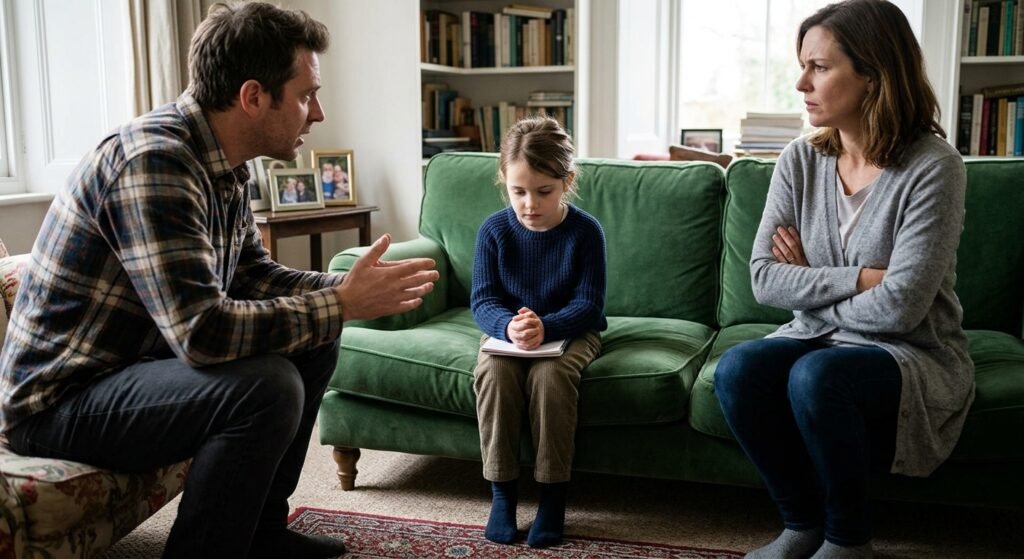
You probably know a child who seems to have an unusual gift for reading the room. They are the one who magically appears with a glass of water when an argument starts brewing in the kitchen, or the one who quickly cracks a joke to soften an adult’s sharp tone. Grownups often look at these children with admiration, calling them old souls, natural peacemakers, or remarkably mature for their age. It looks like a beautiful quality, a sign of a deeply caring nature, but if you look a little closer, you might notice something else happening beneath the surface.
Think about a typical family evening when the air in the house gets a bit thick. Maybe there’s a quiet disagreement about bills, or maybe a parent has come home from a stressful day at work, carrying a dark cloud of frustration. Most children might complain, ask for dinner, or retreat to their rooms to play. But the peacemaker child does something else entirely. They become quiet, they watch, and they begin to manage the emotional temperature of the room. They ask how your day was in a voice that sounds far too old, or they quietly guide their younger sibling out of the room so there won’t be any additional disruption to spark an argument.
The Invisible Job Description
In many homes, children quietly step into roles that were never meant for them. This isn’t because parents are intentionally uncaring. Most of the time, it happens because life is complicated, stress is high, and children are deeply sensitive barometers of their environment. Long before they understand the words adults are saying, children can read the micro-expressions on a face, the stiffness in a pair of shoulders, or the sharp sound of a cabinet closing too quickly. They don’t just notice these things; they feel them in their bodies.
When a home feels unstable or tense, a child’s natural response is to try to make it safe again. And for some children, the easiest way to feel safe is to make sure the adults around them are okay. They learn that if they can keep Mom happy, or if they can prevent Dad from getting irritated, then their own world will remain calm. It is a brilliant coping strategy, but it comes with a high cost. Without realizing it, the child has accepted an emotional job description they never applied for, and they are working overtime to keep the peace.
The Vigilance Behind the Good Behavior
Psychologists have spent years studying how family systems operate, and they often talk about how easily children adopt specific roles to keep the family balanced. Research suggests that when parents are emotionally overwhelmed or conflict-prone, children often experience a heightened level of emotional vigilance. Studies in child development show that kids who grow up in high-tension environments actually show different brain responses to angry or tense voices, staying on high alert even when the conflict has ended. They are constantly scanning for trouble, not because they want to, but because their sense of safety depends on it.
In everyday life, this looks like the perfect child who never causes any trouble, makes excellent grades, and always says the right thing. We praise these kids constantly, but we rarely ask why they feel such an intense need to be perfect. Often, their good behavior is a quiet shield. They believe that if they are quiet enough, helpful enough, and successful enough, they won’t add any extra burden to an already struggling family. They learn to silence their own needs, their own worries, and their own childhood tantrums because they believe there simply isn’t any room for them.
When Growing Up Happens Too Quickly
The trouble with becoming a peacemaker at a young age is that it changes how a person relates to the world long after they leave childhood. When you spend your early years managing other people’s emotions, you carry that pattern into adulthood. You might find yourself constantly apologizing for things that aren’t your fault, feeling responsible for everyone else’s happiness at work, or staying in relationships where you do all the emotional labor because you’ve been practicing that role since you were seven years old.
You learn to connect with people through what you can do for them, rather than who you are. You become excellent at anticipating what others need, but when someone asks you what you want, you might find yourself completely blank. That’s because the peacemaker has spent so much time looking outward, monitoring the feelings of everyone else in the room, that they never had the chance to look inward and discover their own voice. Their own identity became secondary to the survival of the family system.
Returning the Burden to the Grownups
If you recognize this pattern in your own childhood, or if you see it happening in your own home today, it can feel a bit painful to acknowledge. It’s difficult to realize that a child’s maturity might actually be a quiet form of survival. But seeing this clearly is the first step toward changing the dynamic. It allows us to stop praising children for being emotional caretakers and start protecting their right to simply be kids.
We don’t need our children to be our therapists, our confidants, or our buffers against the hardships of the world. They don’t need to understand our marital struggles, our financial anxieties, or our adult frustrations. What they need is to know that the adults in their lives are capable of holding their own feelings. They need to see that even when there is tension or sadness, the grownups can handle it without needing a child to fix it.
A Quiet Realization
Perhaps the most important thing we can realize about the peacemaker child is that their goodness isn’t always a sign that everything is fine. Sometimes, the child who never makes a fuss is the one who is carrying the most significant emotional burden in the house. They aren’t trying to be mature; they are just trying to keep their world from shaking.
When we realize this, we can begin to change how we see their quietness. We can stop expecting them to be the strong ones, the easy ones, or the ones who always understand. We can start giving them permission to be messy, loud, demanding, and beautifully immature. Because ultimately, children don’t need to be the glue that holds our worlds together. They just need a safe space to fall apart when their own small worlds feel like too much to carry.