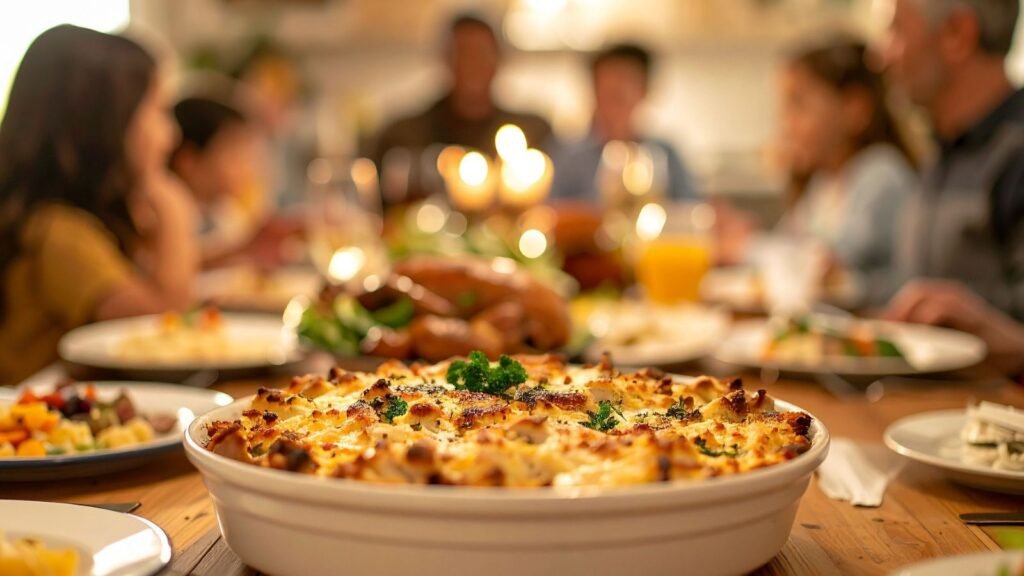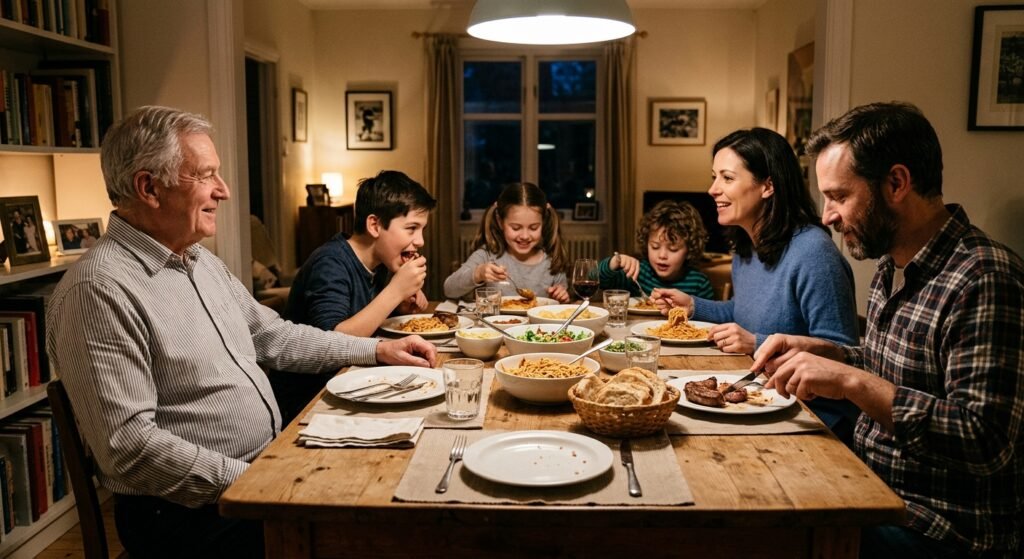
You are sitting at a lovely dinner table, surrounded by good friends and great conversation. The food has just been served, and the first few bites taste wonderful. You participate in the laughter, share a quick story, and then, without warning, you look down at your plate. It is completely empty. Everyone else at the table is still working on their first few bites, their plates looking almost untouched, while you are left holding a clean fork and trying to figure out how to navigate the remaining forty minutes of the course without looking like you were starving.
It is a quiet, familiar embarrassment that many of us know all too well. We often dismiss fast eating as a simple bad habit, a lack of self-control, or just something we do because we love food too much. We promise ourselves that next time, we will chew more slowly, put our utensils down between bites, and try to match the pace of the person next to us. Yet, the moment the next plate arrives, our hands seem to go on autopilot, and the cycle repeats. That is because the way we eat isn’t just a physical motion. It is often a living record of where we’ve been, how we grew up, and how we learned to feel safe.
The Quiet Race at the Kitchen Table
For many fast eaters, the habit of rushing through meals wasn’t born in adulthood. It was forged years ago, often around a crowded kitchen table. If you grew up with siblings, especially close in age, meals were often a silent, competitive arena. You quickly learned that if you didn’t eat fast, the food would disappear before you could get seconds. There was a subtle urgency to the dinner table, a feeling that resources were limited and you had to secure your share before someone else did.
Even if your family always had plenty of food, the emotional perception of scarcity can be profoundly powerful. Your nervous system didn’t care about the reality of the pantry; it cared about the speed of the forks around you. Decades later, you might be sitting in a peaceful restaurant with plenty of food and absolutely no competition, but your body is still playing by the rules of your childhood kitchen. The nervous system doesn’t easily forget the patterns that once kept us satisfied.
The Clock on the Wall
For others, eating quickly wasn’t about competing with family members, but rather about survival against a clock. Think about your school days, where you had a remarkably short window of time to walk to the cafeteria, stand in line, eat your lunch, and make it back to class or the playground. You learned early on that food was a hurdle to clear before you could get back to living. It was an obstacle, not an experience.
This pattern often carries over into our professional lives. If you have ever worked a job where breaks were strictly monitored, or where you had to inhale your lunch in a backroom while keeping an eye on the clock, your body learned to view eating as a high-stress task. Research in digestive health suggests that when we eat under time constraints, our brains don’t have enough time to process satiety signals, which usually take about twenty minutes to register. We train ourselves to ignore these signals completely, prioritizing speed over satisfaction until fast eating becomes our default mode of operation.
The Body’s Search for Safety
When we look at the psychology of eating, we find that our eating speed is closely tied to how relaxed we feel. Eating fast can often be a physical response to stress or anxiety. When we are anxious, our nervous system enters a state of mild alert, preparing us to deal with whatever threat we perceive. In this state, the body doesn’t want to linger over a meal. It wants to consume the energy quickly and move on to safety.
This is why some people find themselves eating much faster when they are feeling overwhelmed or lonely. The quick consumption of food provides a temporary burst of comfort, but it also reflects an internal restlessness. We are eating to fill a space, to soothe a feeling, or to get to the other side of a difficult moment. The food itself becomes secondary to the act of finishing it, as if reaching the empty plate will somehow bring a sense of resolution to our day.
Learning to Sit with the Plate
Understanding why we eat quickly can change the way we view our relationship with food. It isn’t a moral failing, and it isn’t a sign that you lack manners. Instead of scolding yourself for clearing your plate too fast, it can be much more helpful to simply notice the feeling that accompanies the speed. What is the rush trying to protect you from? What is the urgency trying to solve?
Maybe eating fast isn’t a habit you need to conquer with strict rules and endless counting. Maybe it is simply an invitation to look at where you felt hurried in your past, and to softly reassure yourself that you are allowed to slow down now. The food isn’t going anywhere, the clock isn’t ticking quite as loudly, and you have all the time you need to enjoy the company around you.