
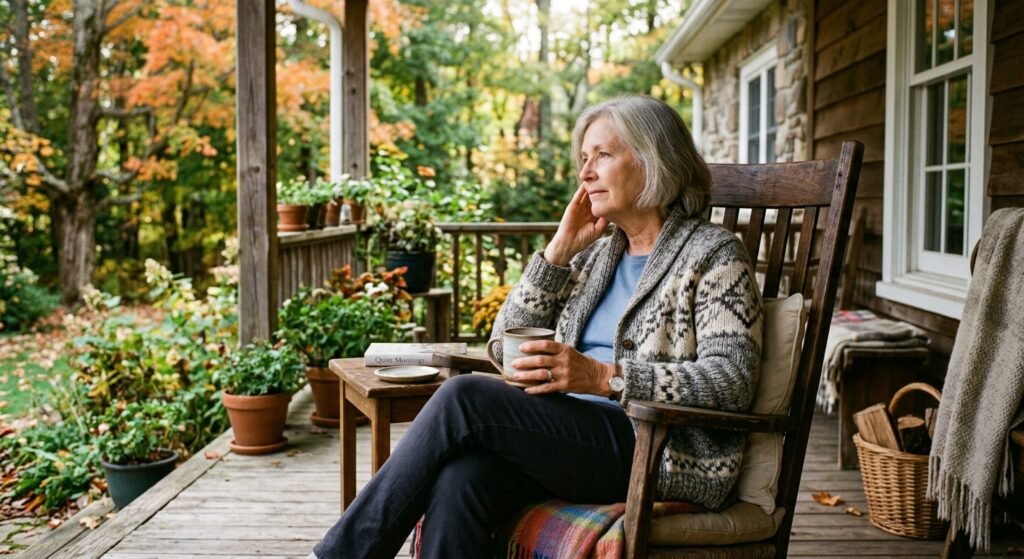
If you spend an afternoon sitting with an older family member, it’s easy to assume you know what they’re longing for. We often look at their slower steps or their quiet hands and think they must miss the physical freedom of youth. We imagine they look back on their twenties and thirties with a deep yearning to run without stiffness, to stay up late without fatigue, or to look in the mirror and see a face untouched by time. But if you pay close attention to the stories they share when they’re reminiscing, you’ll notice that the details they linger on have very little to do with youth itself.
They don’t usually talk about having flat stomachs or perfect joints. Instead, they talk about the years when three people were calling their name at the same time, when their kitchen was messy with the clutter of a busy family, or when they stayed up all night helping a neighbor repair a porch. They talk about the era when they were the first call someone made during an emergency. They miss the chaos of being indispensable.
We often mistake the struggle of aging for a desire to turn back the clock. We spend millions of dollars trying to help older adults feel physically younger, offering them supplements and fitness classes designed to soften the years. Yet, we rarely talk about the deeper, quieter loss that occurs when the world slowly stops asking you for help. It’s the realization that you’ve transitioned from being the provider to the one being provided for, and that the quietest room in the house is the one where the phone no longer rings with people asking you to solve their problems.
The Silent Transition in How People Treat You
There’s a subtle movement that happens as we enter the later chapters of life. For decades, your identity is built on what you can do for others. You’re the parent who packs the lunches, the colleague who answers the difficult emails, the friend who knows how to fix the lawnmower, or the partner who keeps the household running. Your days are crowded with demands, and while you might complain about the busyness at the time, those demands are constantly validating your place in the world. They’re a daily reminder that your existence matters because people are relying on you.
Then, the children grow up and move away. Retirement arrives, and the office learns to run without you. Friends get older, and the social circles shrink. Suddenly, the people around you begin treating you with a gentle, well-meaning caution. Family members start insisting that you sit down and rest. They offer to carry the groceries, they take over the holiday cooking, and they start asking how you’re feeling instead of asking for your advice.
While this care is born out of love, it can feel like a polite sidelining. It’s the moment you realize you’ve been moved from the playing field to the spectator stands. The love is still there, but the utility has faded. And for many people, being loved is wonderful, but being needed is what keeps them anchored to life.
The Psychological Need to Leave a Legacy
This longing isn’t just a sentimental whim; it’s deeply wired into our psychological makeup. Decades ago, researchers studying adult development identified a stage in later life that focuses on what they called generativity. It’s the innate desire to create, nurture, and guide the next generation. When we feel like we are contributing to the future, we feel a deep sense of peace. When that contribution is cut off, we experience a quiet stagnation.
Studies consistently show that older adults who feel useful to their families and communities have better mental clarity, higher levels of happiness, and even live longer. It turns out that having a reason to get out of bed in the morning is far more powerful than any vitamin. The mind and body seem to respond to the simple knowledge that someone is waiting for us, that our skills are still required, and that our life experiences are valuable to those who are still figuring things out.
The tragedy of modern society is that we’ve structured our lives to encourage older adults to withdraw. We treat retirement as the ultimate prize, an endless vacation where you never have to work again. But we forget that a vacation is only enjoyable because it’s a break from something. When the vacation becomes permanent, and when your children treat you like you’re too fragile to participate, the quiet can become deafening.
The Joy of Being Allowed to Help
If you want to see an older adult come alive, watch what happens when you stop trying to protect them and start asking for their help. Watch the posture of a grandfather change when you ask him to teach you how to bake his signature bread, or how to fix a leaky faucet. Notice the spark in a grandmother’s eyes when you confess that you’re struggling with a relationship and you need her perspective.
In those moments, the physical limitations of age seem to disappear. They’re no longer just someone’s sweet elderly relative sitting in an armchair. They’re a mentor, a guide, and an active participant in the story of your life. They aren’t thinking about their aching back or their slow joints because their mind is focused on something much larger: being useful to someone they love.
We often think we’re doing our elders a favor by making their lives as effortless as possible. We build ramps, we deliver meals, and we handle their chores. These are necessary and kind gestures, of course, but we must be careful not to outsource their purpose in the process. We need to remember that caring for someone’s physical body is only half the task; we must also care for their spirit by leaving room for them to care for us in return.
Finding Purpose in the Small Moments
Perhaps the quiet realization that aging teaches us is that we don’t actually want to live forever, nor do we desperately want to be twenty-five again. What we want is to feel like our presence makes a difference. We want to know that if we weren’t here tomorrow, there would be a genuine gap in the lives of the people we leave behind. We want to feel like we are still part of the team, still contributing to the conversation, and still capable of easing someone else’s path.
So maybe the best gift we can give the older adults in our lives isn’t a life of leisure, but a life of relevance. It’s letting them peel the potatoes at Thanksgiving, even if they do it slowly. It’s calling them for advice on a career move, even if their industry has changed. It’s letting them know that their wisdom isn’t an antique to be admired from a distance, but a tool we still need to use every day.
In the end, we all just want to be useful. We want to know that our stories are worth telling, that our hands are still capable of helping, and that our love still has a practical place to go. When we let the people we love feel needed, we aren’t just making their days a little brighter. We’re reminding them that they still belong to the world, and that their presence is just as important today as it was when they were young.