You know those evenings when the day has felt just a little too long, and your mind is buzzing with unresolved conversations? You stand in front of the open refrigerator, staring at the leftover roasted vegetables and the fresh spinach you promised yourself you’d eat. But instead, you reach for the sliced bread, pop two pieces in the toaster, and slather them with an unreasonable amount of butter. Or maybe you bypass the kitchen entirely and head straight for the pantry to find that specific brand of boxed macaroni and cheese you haven’t regularly eaten since college.
It isn’t that you are particularly starving, nor is it a sudden craving for gourmet culinary arts. It is something else entirely. It is a quiet, wordless pull toward something that feels safe. In those moments, we aren’t looking for sustenance; we are looking for a soft place to land. We call these dishes comfort foods, but we rarely stop to think about why they possess such an extraordinary ability to quiet the storm inside us when nothing else seems to work.
The Sensory Path Back to Safety
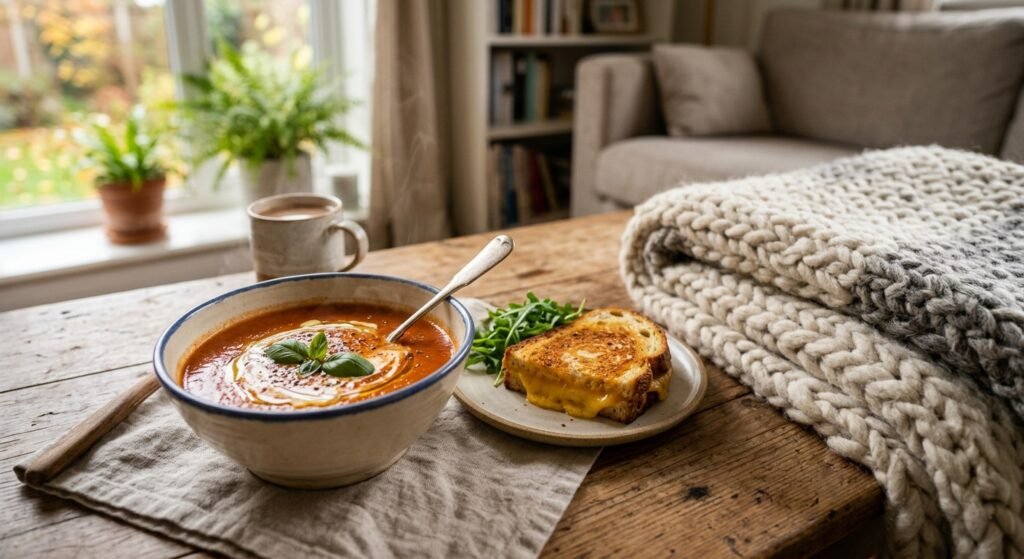
When you take that first bite of a grilled cheese sandwich or a warm bowl of soup, a subtle transition occurs. Your shoulders drop slightly, and the frantic pace of your thoughts begins to slow. For a long time, popular culture has framed this habit as a weakness, labeling it as emotional eating or a simple lack of discipline. We’re told we should manage our cravings with logic and willpower, treating food strictly as fuel for our bodies.
But that clinical view completely misses the emotional reality of being a person. Our sense of smell and taste are wired directly into the amygdala and hippocampus, the ancient parts of our brain responsible for processing emotion and memory. When we eat something from our past, we aren’t just tasting ingredients. We are experiencing a sensory shortcut straight to a moment in time when the world felt smaller, simpler, and infinitely more secure.
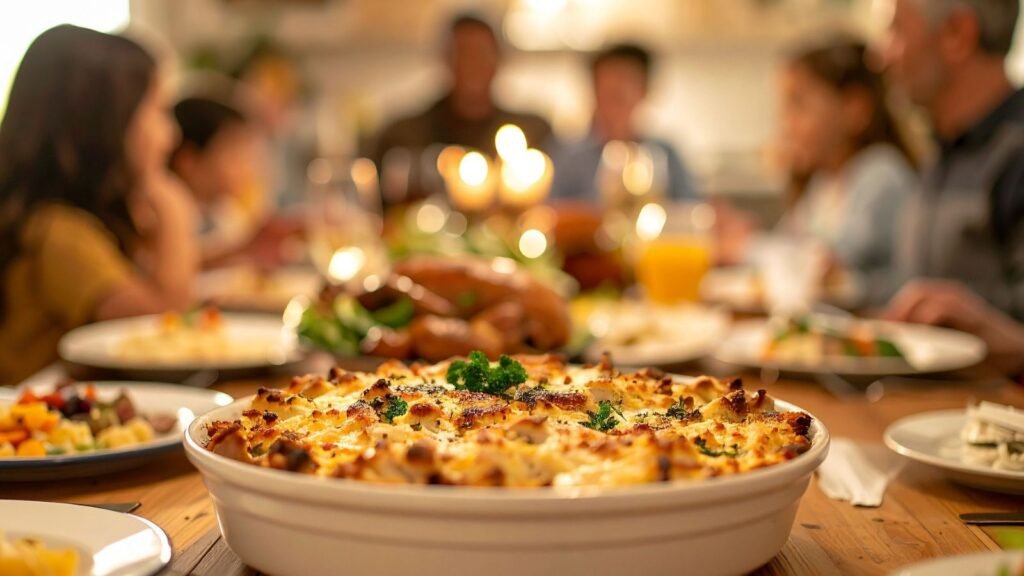
Psychologists who study close relationships have discovered that our preference for these specific meals actually spikes when we feel lonely or socially threatened. In one fascinating study, researchers noticed that people who had strong secure attachments to their families felt a profound drop in feelings of isolation after eating their favorite comfort foods. The food, in essence, acted as a social surrogate. It functioned as a warm blanket for the psyche, reminding us of connection when we felt most alone.
The Predictability of the Plate
Think about how much of our daily lives is defined by uncertainty. We worry about our careers, we navigate complicated dynamics in our families, and we wonder if we’re making the right choices for our future. The world asks us to be flexible, to constantly adapt, and to handle whatever surprise comes next. It’s an exhausting way to live, and after a while, the pressure can feel quite substantial.
A familiar meal, however, never asks you to adapt. It is perfectly, beautifully predictable. The box of noodles tastes exactly the same today as it did when you were ten years old. The chocolate chip cookie smells precisely the same as it did in your childhood kitchen. In a life where so many things are constantly in motion, these small culinary constants offer a rare moment of control. You know exactly what to expect, and in a world of endless surprises, that predictability is a profound relief.
There is also a beautiful simplicity in how these foods are prepared. They rarely require complex recipes or precise measurements. They don’t demand our focus or our intellect. The act of making them is almost meditative, a series of simple gestures that allow our busy minds to rest. We can let our guard down because the plate in front of us requires nothing from us in return.
An Act of Self-Preservation
Perhaps the most comforting thing about these meals is how they connect us to the people who once cared for us. When we were children, being fed was the ultimate expression of safety. Someone else did the shopping, someone else stood over the stove, and someone else handed us a warm bowl when we were sick or sad. We didn’t have to earn it, and we didn’t have to figure anything out. We were simply looked after.
As we grow older, we have to become our own caretakers. We have to make the hard decisions, pay the bills, and navigate the cold corners of adulthood. It is a necessary progression, but it is also a wearying one. When we recreate those simple childhood meals, we are quietly stepping back into that space of being cared for, even if only for twenty minutes at the kitchen counter.
It is a way of mothering ourselves. We are reaching backward through time to borrow a little bit of the warmth we used to take for granted. And maybe that is the real reason these foods actually work. They are not a sign that we have failed to control ourselves; they are a sign that we know exactly how to soothe ourselves when the world gets too cold.
The next time you find yourself reaching for that simple, nostalgic meal after a difficult afternoon, there is no need to feel guilty or search for a healthier alternative. You can simply enjoy the warmth of the plate in your hands. We aren’t actually hungry for the food itself. We are reaching for a sensory bridge to a time when we felt protected and completely looked after, and recognizing that we still deserve that kind of care today.