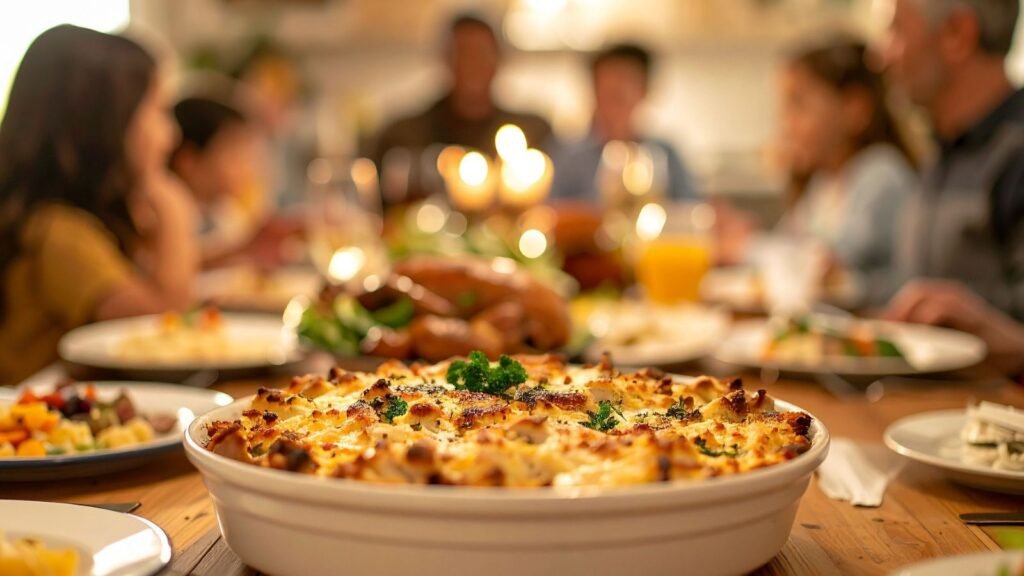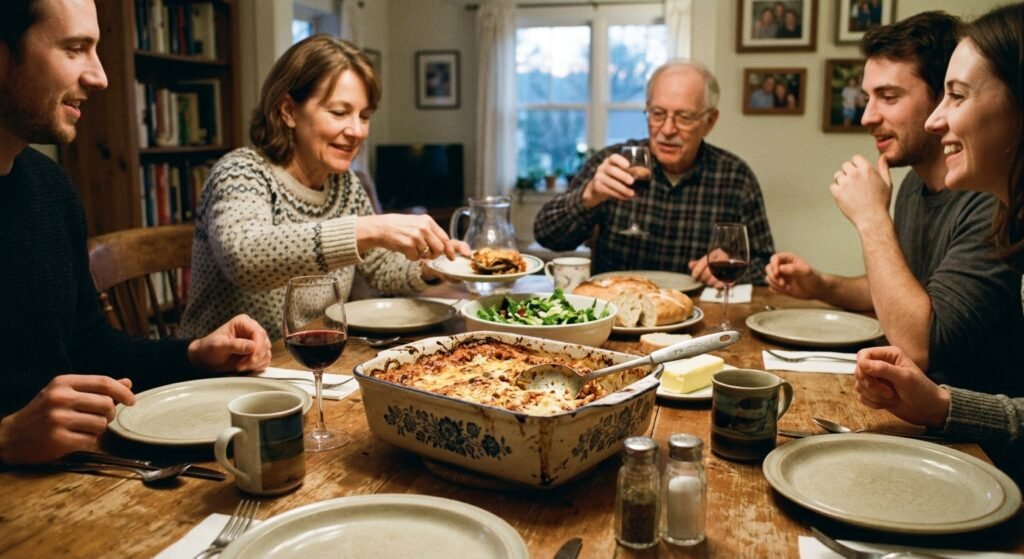
If you’ve ever found yourself staring at an old, faded Pyrex dish in the back of your cupboard, you already know how a simple object can carry an entire season of life. It might be chipped on the handle, or the floral pattern on the side might have faded after decades of trips through the dishwasher. Still, you keep it. And on some quiet Sunday afternoon, you find yourself wanting to recreate the exact casserole your aunt used to bring to every family gathering.
You chop the onions, mix the ingredients, and slide the dish into the oven. As the kitchen begins to warm up, a familiar scent fills the air, and suddenly, you aren’t just standing in your kitchen anymore. You’re ten years old again, sitting on a mismatched folding chair, listening to the muffled roar of a football game on the television while your relatives laugh in the next room. It’s remarkable how quickly a simple scent can collapse the years between who you were then and who you are now.
We often think of our memories as digital files stored away in some quiet corner of our minds, waiting to be retrieved when we look at old photographs. But photographs only let us look at the past from a safe distance. Food does something much more intimate. It lets us taste it.
There’s a beautiful biological reason for this deep connection. Our sense of smell is unique because it travels directly to the amygdala and the hippocampus, the parts of our brain deeply involved in processing emotion and memory. When we smell something familiar, our brains don’t just recognize it; they trigger an emotional response before we even have time to name what we’re smelling. It’s why a single bite of a specific dish can make you feel safe, loved, or suddenly homesick, long before your logical mind registers the ingredients.
The Architecture of an Ordinary Sunday
For most of us, childhood wasn’t defined by grand, sweeping milestones. It was built from the quiet background details we took entirely for granted. It was the specific way the sunlight hit the linoleum floor, the sound of the screen door slamming shut, and the predictable rotation of weekly meals. Your aunt’s casserole wasn’t a culinary masterpiece designed to win awards. It was simply what was there. It was the anchor for your family’s weekly rhythm, a quiet signal that for the next few hours, everybody was in the same place, sharing the same space.
When we look back, we realize those ordinary meals were actually the scaffolding of our lives. We didn’t gather because the food was fancy. We gathered because the food gave us a reason to pause. In a busy world, the dinner table functioned as a small sanctuary where the outside world couldn’t easily reach us. The casserole was the centerpiece of that sanctuary, a warm, comforting presence that promised everything was exactly as it should be.
The Recipes We Carry Without Writing Them Down
The fascinating thing about these family dishes is that they rarely come from a formal cookbook. If you asked your aunt for the recipe, she would probably laugh and tell you she just measures by eye. A pinch of this, a handful of that, and a generous pour of something else. It was a language spoken through touch, memory, and repetition. When we try to recreate those dishes today, we’re not just following a set of instructions; we’re trying to translate a feeling into a tangible reality.
Sometimes we get frustrated because our version doesn’t taste exactly like hers did. We wonder if we used the wrong brand of cheese or if the oven temperature was slightly off. But maybe the missing ingredient isn’t something you can buy at the grocery store. Maybe the missing ingredient is the laughter echoing from the hallway, the clinking of silverware, and the specific comfort of knowing that the people you loved were all safely under one roof.
Our Kitchens as Living Museums
As we get older, we inevitably experience loss. The family dynamics change, people move across the country, and the elders who once held the family together quietly step away. It can feel like those chapters of our lives are completely gone, locked away in a past we can no longer access. But when we cook those old recipes, we realize that we’ve carried a piece of that history with us all along.
Every time you pull that Pyrex dish out of the oven, you’re engaging in a quiet act of preservation. You’re keeping a specific person’s warmth alive in your own home. It is a way of saying that even though time has moved on, the love and security they offered us still has a place at our table today. The food becomes a bridge between generations, a delicious form of storytelling that doesn’t require any words at all.
The True Meaning of Comfort Food
We often use the term comfort food to describe something warm, rich, and satisfying. But perhaps the real comfort doesn’t come from the ingredients themselves. Perhaps the comfort comes from the realization that we are connected to something larger than our current, busy lives. It reminds us of a time when our worries were smaller and our world was safely contained within the walls of a familiar kitchen.
In a fast moving society that constantly demands we look forward to the next big thing, these old recipes invite us to do something radical: to look backward and remember. They remind us that the simple acts of cooking and sharing a meal are some of the most profound ways we show care for one another. And when we serve those same dishes to our own friends, we aren’t just feeding them dinner. We are offering them a piece of where we came from.
Perhaps we aren’t actually longing for the perfect casserole. Perhaps we are simply longing for the feeling of being looked after. And maybe the most beautiful realization is that by keeping these recipes alive, we become the ones who can offer that exact same comfort to someone else who needs to feel safe today.