
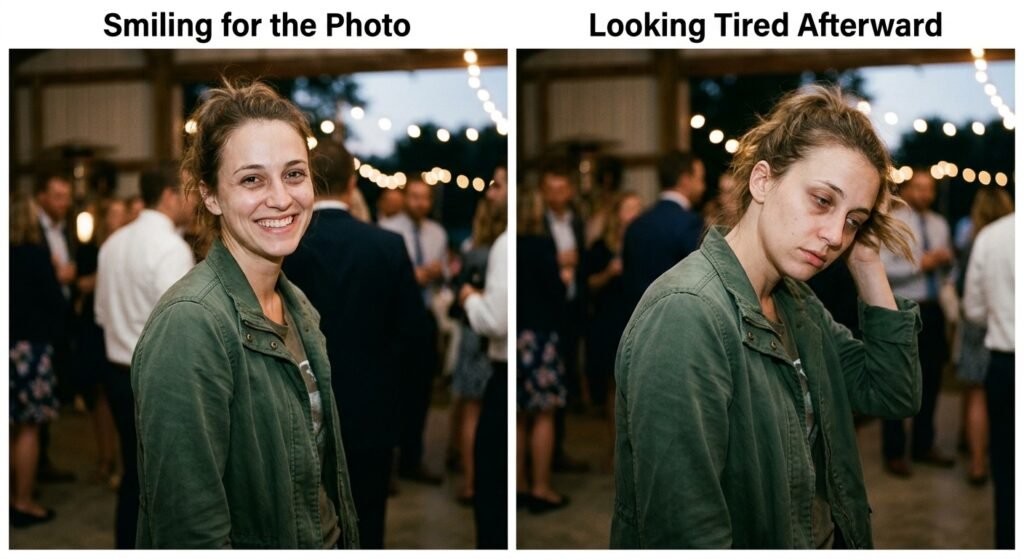
You spent forty minutes setting up the perfect dinner table, lighting the candles just so, and making sure the linen napkins looked casually tossed rather than carefully placed. You took a quick picture, uploaded it, and sat down to eat. But as you picked up your fork, you realized you weren’t actually hungry; you were just tired.
We’ve all had some version of this moment. Maybe it’s the weekend trip that felt more like a photo shoot than a vacation. Or perhaps it’s the career path you pursued because it sounded impressive at family gatherings, even though the actual daily work makes your chest feel tight with anxiety. You’re doing everything right according to the unspoken script of adulthood, yet you feel strangely hollow inside.
It’s a very specific kind of weariness. It’s the fatigue of maintaining an image of happiness, success, or stability that doesn’t quite match how you actually feel when the lights go out and the house is quiet. You aren’t necessarily failing. In fact, on paper, you’re probably doing quite well, which makes the underlying emptiness feel even more confusing and unfair.
The Script We Didn’t Know We Were Reading
At some point, we start collecting expectations like coats in the winter. We gather them from our parents, our friends, social media, and the subtle pressures of our neighborhoods. We’re told what a successful life looks like, how a modern relationship should appear, and what kind of hobbies a balanced person should enjoy. So, we start building. We construct a beautiful facade, brick by brick, hoping that if we get the scenery right, the feeling of contentment will naturally follow.
The trouble is that the scenery requires constant maintenance. You have to keep dusting the shelves, smiling for the camera, and pretending that you love spending your Saturdays doing things that actually bore you to tears. You become the director, the stage manager, and the lead actor in a play you never wanted to audition for. And because you’re good at it, nobody notices that you’re sweating under the stage lights.
The Cost of the Front Stage
There’s a classic concept in sociology that compares our social lives to a theater. We have a front stage where we perform for the audience, trying to look polished, competent, and put together. Then we have a back stage where we can finally let our guard down, complain, make mistakes, and exist without any expectation of performance. It’s in the back stage where we find our deepest rest.
What’s happening to many of us today is that our back stages are slowly disappearing. With our lives constantly on display and the pressure to always be “on,” we carry the front stage home with us. Researchers who study social connection often point out that when we focus intensely on extrinsic goals, such as how our lives appear to others, our intrinsic well-being takes a significant hit. We’re essentially trading genuine satisfaction for external validation, and it’s a trade that never quite pays off.
When you spend all your energy managing impressions, you lose the capacity to simply experience your own life. You aren’t drinking the coffee; you’re observing yourself drinking the coffee. You aren’t enjoying the concert; you’re documenting the fact that you’re there. The moment you start viewing your life from the outside in, you stop living it from the inside out.
The Unspoken Fear of Stepping Off the Stage
Why do we keep doing this to ourselves? It’s usually not out of vanity. It’s out of a deep desire to belong and a quiet fear that if we show our messy, uncurated realities, we might be left behind. We worry that if we admit we don’t actually like the expensive restaurants, or that our relationships have lonely corners, or that we’re desperately bored by our prestigious jobs, we’ll lose our place in the circle.
So we keep the mask on. We tell ourselves we’ll relax next week, or next year, or once we reach the next milestone. We treat peace like a retirement plan, something we’ll get to enjoy only after we’ve paid our dues to the gods of keeping up appearances. But that day rarely arrives because the bar for what is “enough” keeps moving.
A Different Way to Measure a Life
Perhaps the relief we’re looking for doesn’t come from changing our lives, but from changing how we relate to them. Maybe we don’t need a more impressive life. Maybe we just need a more honest one.
Imagine what might happen if you stopped worrying about how the story looks to the audience and started focusing on how it feels to you. You might choose the quiet Saturday night at home without feeling like you’re missing out. You might let a conversation be awkward without rushing to smooth it over. You might admit to a friend that you don’t have it all figured out, only to watch their shoulders drop in relief because they don’t either.
That’s the quiet truth we often overlook. The moments that actually connect us to one another are rarely the polished ones. We don’t fall in love with people’s perfect resumes or their flawless vacations; we connect with their vulnerability, their quirks, and their willingness to be real. By hiding our true selves to protect the performance, we end up starving ourselves of the very connection we’re trying so hard to invite.
You don’t have to carry the burden of an ideal life anymore. You’re allowed to put down the props, turn down the stage lights, and just sit in the quiet room of your own reality. It might not make for a great photograph, but it might finally let you breathe.