
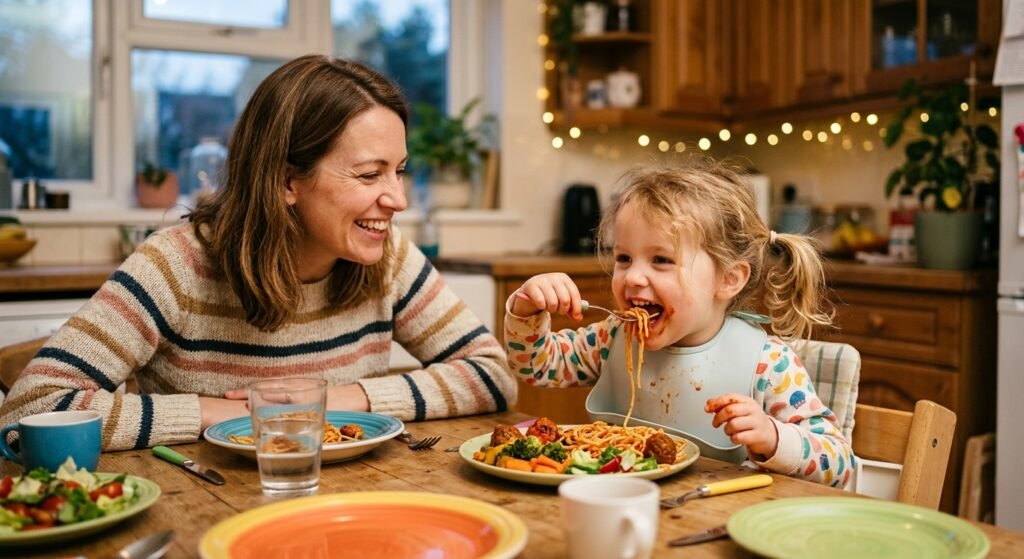
You sit at the kitchen table, watching your child navigate a plate of spaghetti. There is sauce on their nose, a noodle dangling over their chin, and a look of pure, unbothered satisfaction on their face.
They aren’t thinking about bedtime, tomorrow’s schedule, or the state of the world. They’re entirely, beautifully present in the joy of a single bite. In that quiet moment, you feel a deep, settling warmth wash over you that you didn’t quite expect.
It is a feeling every parent knows, yet we rarely talk about why it carries such profound significance. We spend so much of our lives negotiating, worrying, and managing. We fret over screen time, sleep schedules, and whether we’re teaching them the right lessons. But when you put a plate of food in front of your child and watch them eat it with genuine relish, all that static seems to fade. For a few minutes, the endless checklist of parenting shrinks down to something beautifully simple: you provided, they received, and everyone is safe.
The Language of Nourishment
From the very beginning, feeding is how we establish our first conversations with our children. Before they have words to tell us they’re cold, tired, or happy, they have hunger. When we meet that hunger, we’re doing more than just filling a stomach. We’re offering our first promise of reliability. We’re telling them that their needs matter, that we are listening, and that this world is a place where they will be cared for.
This is why the dining table can become such an emotional space. When a child rejects a meal you’ve prepared, it rarely feels like a simple difference in taste. It can feel like a tiny rejection of your care. Conversely, when they eat happily, it feels like a quiet vote of confidence. Psychologists who study family dynamics often point out that food acts as a primary emotional currency in homes. It is a tangible way we express love, and when our children accept it warmly, it satisfies our own deep-seated need to know we’re doing a good job.
Beyond the Nutrition Facts
We live in an era of parenting that is deeply saturated with information. We are bombarded with advice about organic ingredients, balanced macros, and the dangers of processed sugar. It is easy to start viewing a child’s plate not as a source of joy, but as a daily exam we’re desperately trying not to fail. We analyze every green vegetable left behind and stress over the three days in a row they only wanted to eat beige foods. The simple pleasure of eating can easily get lost in the anxiety of nutrition.
But research into family eating patterns reveals something comforting. Studies suggest that the emotional atmosphere around the table matters just as much as what’s on the plate. When children associate meals with warmth, laughter, and relaxed parents, they develop a healthier relationship with food that lasts long into adulthood. The comfort of a happy mealtime actually helps their nervous systems relax, allowing them to digest and thrive. In other words, the joy of the meal is itself a form of nourishment.
The Peace of a Simple Need Met
Think of the last time you watched your child devour a favorite snack after a long afternoon at the park. Maybe it was a simple slice of watermelon, a warm piece of toast, or a bowl of berries. They didn’t need to be coaxed. They didn’t need a reward. They just sat there, swinging their legs, completely lost in the sensory pleasure of eating. You probably found yourself smiling just looking at them, feeling a wave of relief that had nothing to do with nutritional content.
That relief comes because, in a world that asks us to solve deeply complex problems every day, feeding a child is one of the few things we can actually complete. We can’t protect them from every scraped knee, every playground disappointment, or the inevitable challenges of growing older. We can’t guarantee they’ll always make the right choices or find life easy. But in this exact moment, we can cook something they love, put it on a plate, and watch them find comfort in it. It is a tangible, visible success in a role where success is often hard to measure.
Perhaps that’s the real magic of these quiet, messy moments. We aren’t just filling their bellies; we are building a sanctuary of safety. In a busy life, a child enjoying their food becomes a beautiful, grounding reminder of what actually matters. It’s the realization that love doesn’t always have to be a complicated lesson or a grand achievement. Sometimes, love is much simpler than that. Sometimes, it looks like a clean kitchen counter, a full plate, and a happy child enjoying the simple gift of being fed.