Can we talk about this for a second?
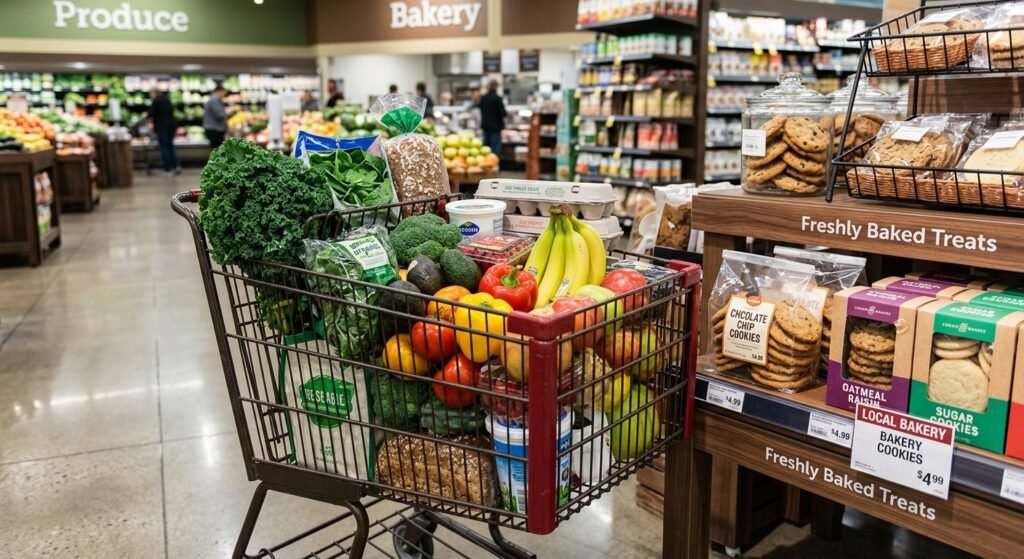
You’re walking down the produce aisle on a calm Sunday afternoon. You’ve got your cart, a sensible list, and reasonable intentions. But then something happens around the leafy greens. You reach out, grab a dark green, crinkly bundle of organic kale, and drop it into your cart with quiet confidence.
In that exact moment, you aren’t just buying vegetables. You’re adopting a whole new personality.
The Person You Become in the Grocery Aisle
The person who buys that kale doesn’t drink three cups of coffee before noon. That person wakes up early without hitting snooze. That person does a peaceful morning stretch, sips warm lemon water, and spends their evenings chopping fresh ingredients into neat little bowls. For about twenty minutes, as you push your cart toward the checkout line, you fully believe that this version of you is about to take over your life.
It feels so real while you’re standing in line. You place the kale on the conveyor belt right next to a tub of hummus, a bag of lemons, and some fresh ginger. You look at the groceries ahead of you, and you feel a quiet sense of accomplishment. You haven’t actually eaten a single leaf of kale yet, but your brain already feels like it deserves a reward for good behavior. Placing healthy choices into a rolling wire basket feels remarkably like doing the actual work of being healthy.
Then Monday evening arrives.
The Standoff in the Refrigerator
You come home from work feeling tired, hungry, and completely uninspired by the idea of standing over a cutting board. You open the refrigerator door and stare at the fresh produce. The kale is sitting right there on the middle shelf, wrapped in its little plastic produce bag, radiating pure expectation. It’s ready for that vibrant dinner you promised yourself you’d make.
Instead, you quietly shut the refrigerator door, pull out a box of pasta, and decide that tonight isn’t quite the right night for a bowl of greens. You tell yourself that tomorrow is definitely the day. Tomorrow you’ll have more energy. Tomorrow you’ll be that ideal version of yourself who loves raw, bitter greens.
By Wednesday night, the situation in the fridge has grown slightly awkward.
Every time you open the door to reach for a slice of cheese or a jar of pickles, you make brief, uncomfortable eye contact with the produce drawer. The kale is still in there, but it isn’t looking quite as fresh or optimistic as it did on Sunday afternoon. The edges are starting to soften. A slight layer of moisture has formed inside the plastic bag. It has officially stopped being dinner and has transformed into a soft green representation of your lingering regret.
At some point during the week, it stops being about food entirely.
You start arranging other items in front of it so you don’t have to look at it when you’re grabbing a glass of milk. You slide a tub of leftover takeout directly in front of the crisper drawer like you’re setting up a temporary shield. You know it’s in there. The kale knows you know it’s in there. It’s a quiet standoff happening between you and a bunch of leaves sitting on a glass shelf.
We All Shop for Who We Want to Be
By Friday afternoon, we all know how this story ends.
You open the drawer, take a quick peek inside, and realize the moment has passed. The kale has surrendered. You carefully extract the bag, toss it into the trash can, and quickly close the lid so you don’t have to dwell on what just happened. You feel a tiny flash of disappointment, but mostly you feel relief. The evidence has been cleared away, and peace has been restored to the kitchen.
The funny thing is that almost everyone does this. We don’t just shop for the life we actually live. We shop for the life we hope we might start living sometime around Tuesday afternoon. Grocery stores are filled with ordinary people gently placing items into their carts that their future selves will almost certainly ignore. We buy fresh berries that spoil in two days, blocks of tofu we don’t know how to cook, and exotic salad dressings that will spend the next three years living in the back of the refrigerator door.
Psychology has a simple way of looking at this. Your brain loves to reward you for making good decisions, even if those decisions are just symbolic. When you buy the healthy stuff, your mind registers it as an immediate victory. It satisfies that desire to feel responsible right away. The actual eating part requires effort, but the buying part only requires a credit card and five seconds of optimism.
So when you find yourself standing in the produce section next Sunday, looking at a bag of spinach or a bunch of dark greens you know deep down you probably won’t chop, don’t feel too bad about it.
That leafy green bundle wasn’t a total loss. It gave you twenty whole minutes of feeling like a person who has everything completely figured out. It offered a nice little moment of hope right there between the apples and the bell peppers. And honestly? You’ll probably buy it again next week, and that’s completely fine.