If you look back at a photo of yourself from ten years ago, you might notice something beyond the outdated hairstyle or the clothes you wouldn’t wear today. You might recognize the subtle energy of trying. You were probably trying to project a version of yourself that felt clever, successful, composed, or entirely together.
It’s an exhausting way to move through the world, even if you didn’t realize you were doing it at the time. You carefully curated your opinions before sharing them. You polished your anecdotes so you sounded capable in every story. You bought the shoes that looked stylish rather than the ones that let you walk three miles without regret.
Then, usually without a grand announcement, something quiet begins to alter the way you live.
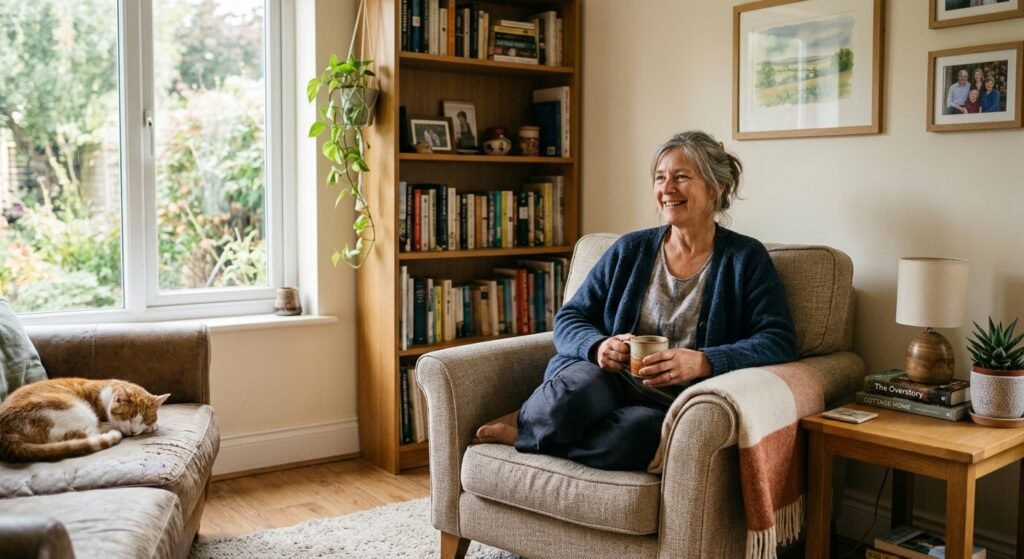
You find yourself declining an invitation simply because you’d rather read on your porch. You stop rehearsing what you’re going to say before you walk into a room. You buy furniture because it feels good to sit on, not because it looks like a scene from a design magazine. Slowly, the need to impress the room quietly slips away, replaced by a simple desire to enjoy your own life.
The High Cost Of Front Stage Staging
Most people spend their twenties and thirties performing for an audience that isn’t actually paying as much attention as they think. Sociologists often talk about front stage behavior, which is the polished face we present to the public, versus back stage behavior, which is who we are when the door is closed and nobody is watching. For a long time, many of us spend almost all our energy on the front stage.
We treat being impressive like a safety net. If people think you’re smart, successful, cultured, or perpetually happy, then surely you’re safe from judgment. You’re protected from being left out. The trouble is that holding up that polished image takes a massive amount of quiet effort.
When every interaction feels like an audition, you’re never truly resting. You’re constantly monitoring how you’re landing, how your accomplishments sound, and whether your choices look enviable from the outside. You end up living your life from the perspective of a spectator rather than the person actually living it.
Eventually, the cost of that performance becomes greater than any reward it brings. You realize that applause doesn’t actually make you feel connected to anyone. It just leaves you wondering if they’d still care about you if you stopped putting on the show.
Validation Is A Moving Target
Psychologists have long studied why people chase status and approval so relentlessly. Research into intrinsic motivation shows that when we do things primarily for external rewards, like admiration, envy, or applause, our actual enjoyment of those activities plummets. We turn hobbies into side hustles and quiet moments into broadcasted content.
The realization hits when you notice that external validation is never a permanent gift. It’s a rental. You receive a compliment on your career, your outfit, or your house, and for a few minutes, you feel a brief flutter of security. But by the next morning, that feeling has evaporated, leaving you to go out and seek another fix.
Outgrowing this cycle doesn’t mean you stop caring about doing good work or looking nice. It just means you stop relying on other people’s reactions to confirm that your choices are valid. You realize that a good book doesn’t become better because you told ten people you read it. A peaceful weekend doesn’t get ruined because nobody saw photos of it.
The Quiet Charm Of Ordinary Pleasures
When you let go of the need to be remarkable, something surprising happens to your daily routine. Ordinary life gets immensely sweeter because you’re no longer comparing it against an imaginary standard of excellence.
You start collecting small pleasures that belong entirely to you. You spend an hour watching birds in the yard without needing to explain why it was a productive use of time. You cook a simple dinner that doesn’t look pretty enough for social media, but tastes wonderful while you eat it at your own kitchen counter. You wear clothes that feel like a soft hug rather than an outfit meant to signal your taste.
There’s a deep freedom in realizing that you don’t need to be the most interesting person at the dinner table. In fact, listening becomes far more enjoyable when you aren’t waiting for your turn to say something clever. You can simply sit back, let someone else hold the spotlight, and enjoy the warmth of being present without the pressure of performing.
A Life Lived For Yourself
Stepping away from the need to be impressive often feels like stepping off a treadmill you didn’t even realize you were running on. You look around and realize that the people who truly care about you were never keeping score anyway. They didn’t love you for your achievements, your witty retorts, or your carefully decorated living room. They loved you because you were warm, present, and real.
Maybe being impressive was never really about pride or vanity in the first place. Maybe it was just a roundabout way of asking for permission to belong, hoping that if you were interesting enough, people would keep you around.
And maybe true freedom arrives when you realize you don’t need to earn your space in the world by putting on a good show. A meaningful life doesn’t require a standing ovation, an audience, or a grand final bow. Sometimes, the most beautiful chapters are the ones you quietly live, enjoy, and keep all to yourself.