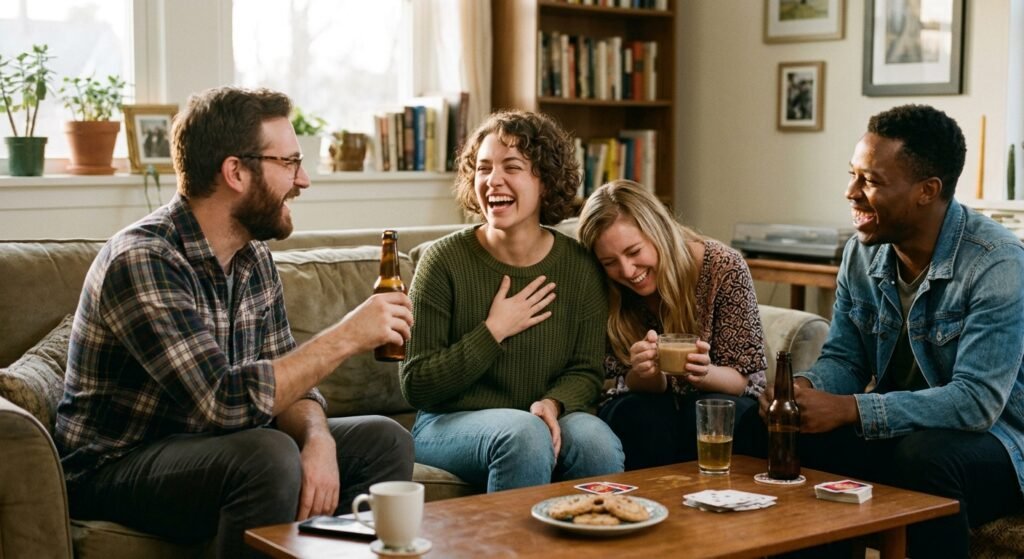
If you look closely at your life right now, you might notice a few subtle choices that your younger self would have fiercely protested. Maybe it’s the pair of shoes sitting by your front door that favor comfort over fashion. Maybe it’s the playlist in your car that swings unironically from nineties pop hits to smooth jazz. Or maybe it’s the fact that when someone asks what you did over the weekend, you proudly tell them you stayed home, made soup, and went to bed early.
Nobody really announces the day they stop trying to be cool. It doesn’t happen with a big speech or a dramatic resolution. It happens quietly, in tiny moments where ease slowly takes the steering wheel and never hands it back.
The Long Performance Of Pretending
For a very long time, being cool feels less like a choice and more like a survival skill. You spend years building a subtle performance meant to convince the world that you have great taste, flawless instincts, and an effortless handle on life. You pretend to enjoy bitter coffee before your palate is ready for it. You nod along when people talk about obscure movies you’ve never seen. You edit your opinions just enough to fit into whatever room you happen to be standing in.
That performance isn’t foolish; it’s simply how people try to protect themselves. When you’re trying to figure out where you fit into the world, looking cool feels like a shield against left-out feelings and subtle rejection. If you can project the right image, maybe nobody will notice how unsure you actually feel inside.
The Spotlight Was Always Empty
There is a classic observation in psychology known as the spotlight effect, which describes our natural tendency to believe that other people are paying far more attention to us than they actually are. In your younger years, it feels like every outfit, every casual comment, and every social choice is being evaluated by an invisible panel of judges.
The turning point comes when you finally realize that everyone else in the room is far too preoccupied with their own spotlight to notice yours. The person you were trying to impress with your sophisticated coffee order was actually worrying about a typo in an email they sent three hours ago. The group you wanted to look composed around was busy wondering if they brought the right jacket.
When that truth hits, a massive relief moves into the room. You realize you’ve been putting on a show for an audience that was mostly looking at their own reflections.
Finding Ease In The Unremarkable
Once the pressure to impress begins to fade, your life expands in ways you didn’t see coming. You start buying clothes because they feel good against your skin, not because they look impressive standing in a line. You listen to music simply because it brings you joy, even if it happens to be the cheesy ballad everyone made fun of in high school. You stop defending your hobbies and start quietly enjoying them.
There is a remarkable kind of peace that arrives when you stop curating your life for an imaginary crowd. You stop spending energy managing how you come across and start using that energy to actually enjoy where you are.
Suddenly, an early bedtime isn’t a sign that you’re missing out on something better. It’s just a wonderful gift you give to your body because you’re tired. A quiet Friday evening becomes a favorite retreat rather than something you feel the need to explain away on Monday morning.
The Quiet Freedom Of Showing Up As Yourself
Social researchers often talk about how our social priorities tend to narrow as we grow older. We naturally move away from trying to gather broad approval and focus instead on small, meaningful comforts and authentic connections. We trade the loud, exhausting desire to be admired for the quiet, sustainable joy of being comfortable in our own skin.
Looking back, the obsession with being cool was never really about the clothes, the music, or the social standing. It was always about wanting to feel safe in a world that often felt unpredictable and demanding.
Maybe being cool was never about proving how interesting you are to everyone else. Maybe it was just a roundabout way of trying to feel like you belonged. And perhaps the real freedom of growing older isn’t that you finally figured out how to be cool, but that you realized you never needed to be cool to belong in your own life.