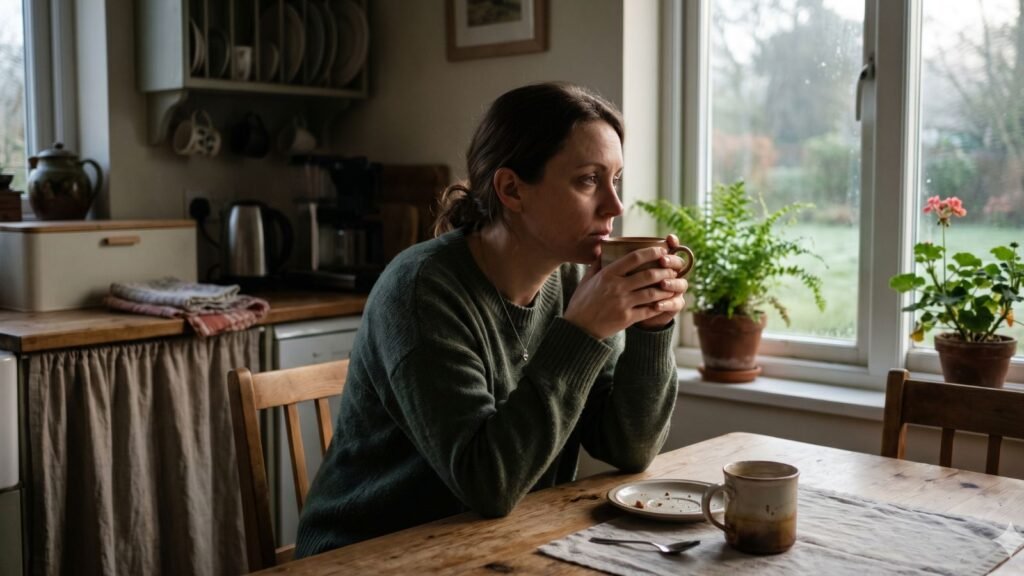
If you have ever sat in a sticky booth at the diner you used to visit every Friday night, you might know this feeling. The same friends are there, the same music is playing quietly in the background, and someone is telling the exact same story they told five years ago. Everyone laughs, but your laugh feels a little forced this time. You look around and realize that while the room and the people have stayed exactly the same, you feel like a visitor from a different continent.
It’s a strange kind of loneliness, isn’t it? You haven’t had a falling out. Nobody did anything wrong, and there’s no dramatic story to tell. Yet, as you sit there, you realize the invisible threads that used to bind you to this group have grown thin. You’ve changed, and somehow, you’re the only one who did.
This usually doesn’t happen all at once. It starts with small things. You find yourself interested in new topics, or you start setting boundaries that you never used to care about. Maybe you changed careers, or you simply spent a few years paying closer attention to what makes you feel peaceful. But when you bring this new version of yourself back to your old circles, you notice a quiet resistance. People might tease you about your new habits, or they might try to pull you back into the old role you used to play, whether that was the funny one, the quiet one, or the one who always kept the peace.
It’s deeply unsettling because we’re taught that growth is a purely positive thing. We expect applause when we make progress. What nobody prepares us for is the quiet grief of looking at a room full of people who love you, only to realize they don’t actually see who you are anymore. They see who you used to be, and they really wish you’d go back to being that person.
The Unspoken Cost of Growing Up
When we talk about personal growth, we usually focus on the gains. We talk about the new habits, the healthier mindsets, and the better choices. We rarely talk about the empty space that opens up when you leave old parts of yourself behind. There is a specific kind of homesickness that comes from standing in your hometown and realizing you don’t fit there anymore.
Our social circles operate a lot like mobile sculptures hanging over a crib. If you pull on one piece, the whole structure moves. When you change, you accidentally disrupt the balance of the entire group. People who study relationships often look at how groups crave stability. When you start acting differently, the group naturally tries to pull you back into your original position, not out of malice, but because they want the comfort of the familiar dynamic.
It’s why your family still treats you like you’re sixteen, or why your college friends expect you to behave the way you did when you shared a tiny, messy apartment. They aren’t trying to hold you back. They’re just trying to keep the world feeling predictable. But playing an old role when you’ve outgrown the costume feels exhausting.
The Need for a Shared Reality
Those who study social connection have found that our closest relationships are built on what they call a shared reality. It’s the unspoken agreement about how the world works, what matters, and who we are to each other. When you start seeing the world through a different lens, that shared reality begins to crack. You aren’t just changing your behavior; you’re quietly questioning the rules of the group.
This research shows that we don’t just need connection; we need to feel understood. When you change and your environment doesn’t, you run into a barrier where people love you but can’t quite comprehend you. You find yourself explaining your choices, defending your boundaries, or worse, hiding your progress just to make other people feel comfortable.
You start to wonder if you’re being selfish. You ask yourself if you’ve become difficult, or if you’re just overthinking things. But the truth is much simpler: you’ve outgrown the container, and trying to squeeze back into it is only going to hurt.
The Space Between Who You Were and Who You Are Becoming
So, what do we do when we find ourselves in this quiet in-between? It’s tempting to think we have to make a choice. We think we either have to pretend we didn’t change so we can keep our friends, or we have to cut everyone off and start over. But life is rarely that clean-cut.
Perhaps the realization we’re looking for isn’t that we need to escape our past, but that we can’t expect our past to fund our future. It’s okay to love people deeply while accepting that they can no longer walk beside you on every part of the path. You can cherish the memories of who you were together without forcing yourself to stay that person forever.
Change is a lonely road at the beginning, but it’s the only road that leads to a community that actually fits who you are today. The quietness you feel right now isn’t a sign that you’ve made a mistake. It’s just the sound of the room clearing out to make space for what comes next.