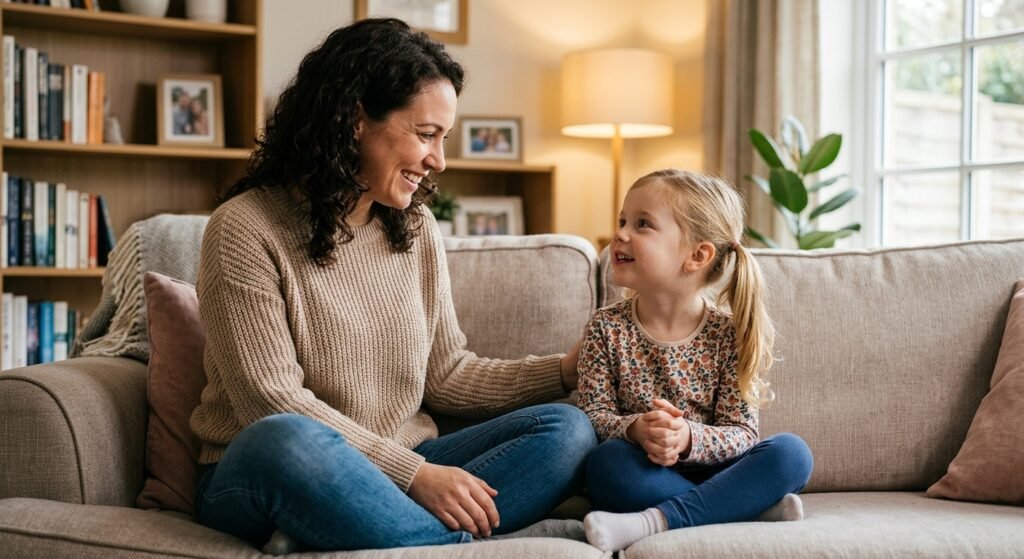
You’re standing at the kitchen counter on a Tuesday evening, half-focused on fixing dinner, when your child casually repeats something you said weeks ago. It isn’t a rule you explicitly taught them. It isn’t a tidy little lesson about sharing or saying please. It’s just a phrase you mumbled to yourself while looking for lost keys, or a quiet observation you made while watching the sky turn pink from the back porch.
In that sudden, quiet moment, time pauses just a bit. You look down at them, surprised, wondering how on earth that little piece of information stayed in their head while the request to pick up their shoes vanished within thirty seconds.
Most parents know the frustration of feeling unheard. You can repeat a simple direction five times in five minutes, and it seems to dissolve before ever reaching their ears. So it feels almost startling when you discover that they’ve been listening all along, just not to the things you were actively trying to teach them.
The Background Sound Of Everyday Life
We spend an awful lot of energy preparing for the big moments. We rehearse how we’ll explain tricky topics, we plan family meals around meaningful conversations, and we try our best to say the right things when life gets complicated. We treat parenting like a series of formal lessons, hoping that if we state the advice clearly enough, it’ll take root.
Yet kids rarely absorb life through structured presentations. They absorb it through the background details. They pay attention to how you speak to the grocery cashier who accidentally double-charged you for lemons. They notice the deep breath you take before answering a frustrating call. They watch how you react when a glass spills across the table during breakfast.
Long before developmental experts began explaining observational learning, families already knew this instinctively. Researchers like Albert Bandura showed decades ago that young minds learn far more by watching adults navigate life than by listening to instructions. But seeing it happen in your own living room feels different than reading about it in a textbook. It arrives as a sudden realization that your ordinary, unscripted moments are actually the main curriculum.
The Mirror You Didn’t Know You Were Holding
There’s a subtle kind of humor in watching your own habits reflected back at you. You might catch your child placing a hand on their hip exactly the way you do when you’re thinking, or using a specific tone of voice when comforting a doll. It’s sweet, but it can also feel a little exposing.
That surprise often comes with a sudden flash of self-awareness. You realize that your softest habits, your unexamined reactions, and your quiet ways of moving through a difficult day are being stored away by someone who thinks the world of you. They aren’t grading your performance. They’re simply gathering clues about how to be a person.
When a child brings up an old memory or echoes a quiet thought you shared long ago, they aren’t trying to catch you off guard. They’re showing you what caught their heart. To them, those small, informal moments were the times you were being most real.
Why The Off-Script Moments Matter Most
When we actively try to teach children, we tend to put on our teaching voice. We slow down, we use deliberate words, and we focus on the outcome. Kids sense that structure immediately, and like most people presented with a formal talk, their minds sometimes wander.
When you’re just living—when you’re humming along to music in the car, laughing at a silly joke, or admitting that you made a mistake—your defenses are down. Your child senses that authenticity. Those are the moments that feel safe and interesting to them because they’re getting an unfiltered glimpse of who you are when you aren’t trying to manage the room.
Psychology tells us that emotional safety opens up memory pathways in ways strict instruction rarely can. When children feel secure and unpressured, their brain acts like a sponge for contextual details. They store away how you offer forgiveness, how you extend patience to yourself, and how you hold space for messy feelings.
Relieving The Pressure To Be Perfect
It’s easy to take this realization and turn it into a source of stress, worrying that every wrong word or grumpy morning is permanently imprinting on their young minds. But that misses the warmth of what’s actually happening.
Kids don’t need a flawless role model. In fact, seeing an adult handle a mistake with grace and honesty is often far more comforting to a child than watching someone who never stumbles at all. When they hear you apologize after raising your voice, or when they see you reset after a stressful hour, they’re learning that life doesn’t require perfection to be good.
They aren’t taking detailed notes to critique you later. They’re simply seeking connection. Every small detail they hold onto is proof that they care deeply about your world and want to understand how you navigate it.
Maybe children aren’t ignoring our advice at all. Maybe they’re just far more interested in who we are than in what we say. And perhaps the comfort lies in knowing that even on the days when you feel like you got everything wrong, the gentle, quiet parts of you were the ones they were saving all along.