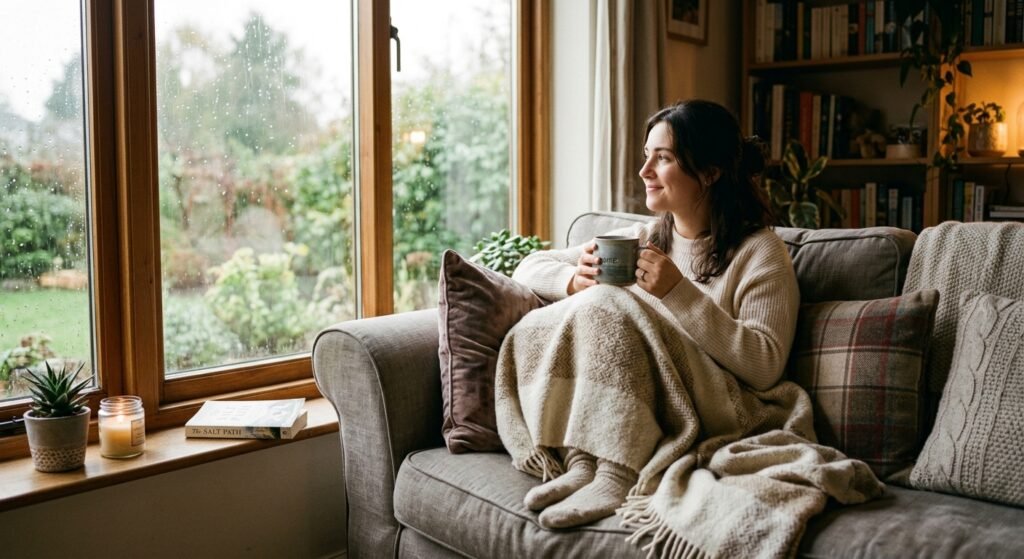
You’re sitting in a local bakery on a Tuesday morning, watching a square of sunlight move slowly across the wooden floor. The coffee in your mug is warm, the pastry is flaky, and for a fleeting moment, everything feels perfectly still. Then, almost like a reflex, your hand drifts toward your pocket. You pull out your phone, open an app, and begin framing the scene. You find the right angle, adjust the lighting, and spend the next five minutes trying to think of a caption that sounds casual yet deeply observant. By the time you look back up, the sunlight has moved, your coffee is lukewarm, and the quiet contentment you felt just moments ago has been replaced by a subtle anxiety about how your morning will be received by people you barely know.
It’s a tiny, common sequence of events, but it reveals a curious modern reality we rarely discuss. Without ever applying for the job, many of us have quietly hired ourselves as the chief marketing officers of our own lives. We don’t just experience our days anymore; we manage them. We curate our living spaces, audit our hobbies, and edit our thoughts, transforming our personal existence into a consistent, recognizable package. We feel a strange pressure to ensure our lives look cohesive, as if we’re not just people living in a neighborhood, but brands trying to secure a loyal audience.
The Subtle Demands of the Personal Brand
This tendency didn’t arrive overnight. It crept in through the back door of our daily routines, disguised as a fun way to share our interests. At first, it was just about posting a picture of a book we liked or a meal we cooked. But slowly, the feedback loop began to change how we see ourselves. We started noticing which parts of our lives gained approval and which parts were met with silence. We began to look at our careers, our relationships, and even our quietest moments through an invisible lens, constantly evaluating whether they fit our established aesthetic.
Soon, having a simple interest becomes a commitment to a lifestyle. If you enjoy baking bread, you’re suddenly encouraged to build an identity around it. If you like to garden, you must share your journey and offer tips to others. Even your struggles are expected to follow a predictable path, ending with a neat takeaway or an inspiring realization. This constant self-curation can be exhausting because it requires you to always be on stage, even when you’re alone in your own kitchen. It turns the simple joy of doing something into the responsibility of being someone who does it publicly.
Why We Seek the Spotlight
Our desire to package our lives isn’t simply about vanity. Psychologists have pointed out that when people feel a loss of close, physical community, they often turn to broader, performative spaces to find a sense of belonging. In generations past, your identity was naturally grounded in your immediate surroundings. You were known by your neighbors as the person who always helped with the community garden, or the one who made a wonderful potato salad for block parties. You didn’t need to advertise your values because the people around you saw them in your daily actions.
Today, as those local ties have grown more distant, we try to recreate that recognition on a much larger scale. We attempt to prove our worth to a digital room, hoping that if we present a polished enough version of ourselves, we’ll finally feel seen. We swap the unpredictable, messy comfort of being known by a few real neighbors for the neat, controlled approval of a distant crowd. Yet, the more we try to scale our identity, the more fragile it can feel, because a crowd requires constant entertainment to keep paying attention.
The Relief of Resigning from the Performance
There’s a beautiful, quiet moment that happens when you finally decide to resign from this self-imposed role. It usually starts small. You go for a walk in the evening and leave your phone on the kitchen counter. You see a beautiful sunset, and instead of capturing it to show others that you appreciate nature, you simply stand there and watch the colors fade. You realize that the sunset doesn’t need your documentation to be real, and neither do you.
When you stop trying to build a personal brand, your daily life begins to belong to you again. A quiet weekend spent doing absolutely nothing stops feeling like a missed opportunity for content and starts feeling like actual rest. You can read a book without needing to write a review. You can try a new hobby and be completely terrible at it, without worrying about how your lack of progress looks to the outside world. The pressure to have a cohesive aesthetic melts away, leaving room for you to be messy, inconsistent, and wonderfully ordinary.
Choosing to Just Be There
Sociological studies on modern connection suggest that our deepest sense of peace doesn’t come from being widely admired, but from being locally integrated. We find comfort not in our global reach, but in our local depth. It’s found in the small, unglamorous interactions of a normal day: waving to the mail carrier, recognizing the person behind the counter at the grocery store, or knowing which floorboard creaks in your hallway. These moments aren’t photogenic, they don’t build a platform, and they can’t be summarized in a clever caption. But they are the thin, strong threads that actually hold a life together.
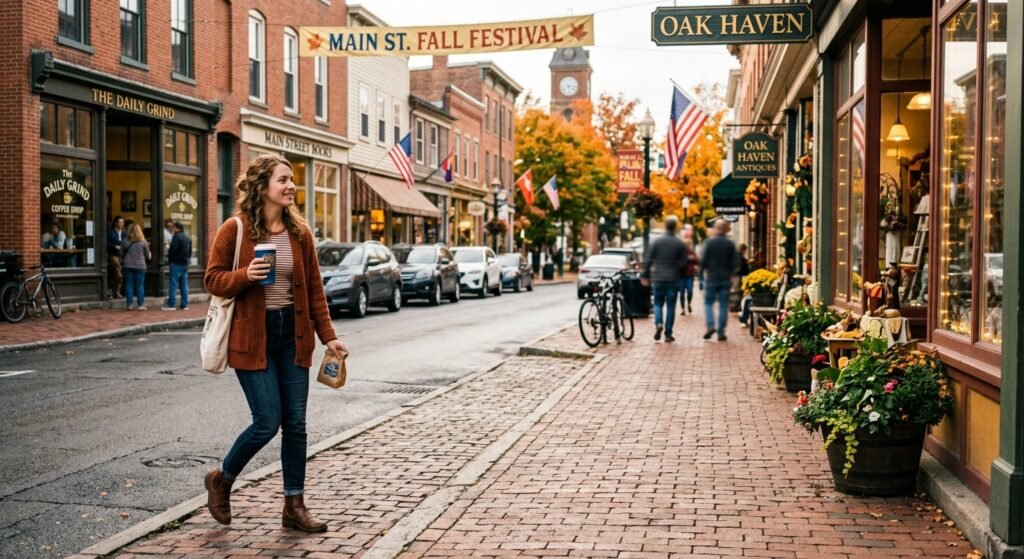
Deciding to just be a person who lives in a town is an act of quiet liberation. It means accepting that your life is allowed to be private, uncurated, and small. You don’t need to turn your daily choices into a statement of purpose, and you don’t need to prove to anyone that you’re living well. The meaning of your life isn’t found in how effectively you package it for others, but in how deeply you inhabit it yourself. And as you put your phone away and look out at the quiet street, you might realize that being nobody in particular is actually the most peaceful thing you can be.