Can we talk about this for a second?
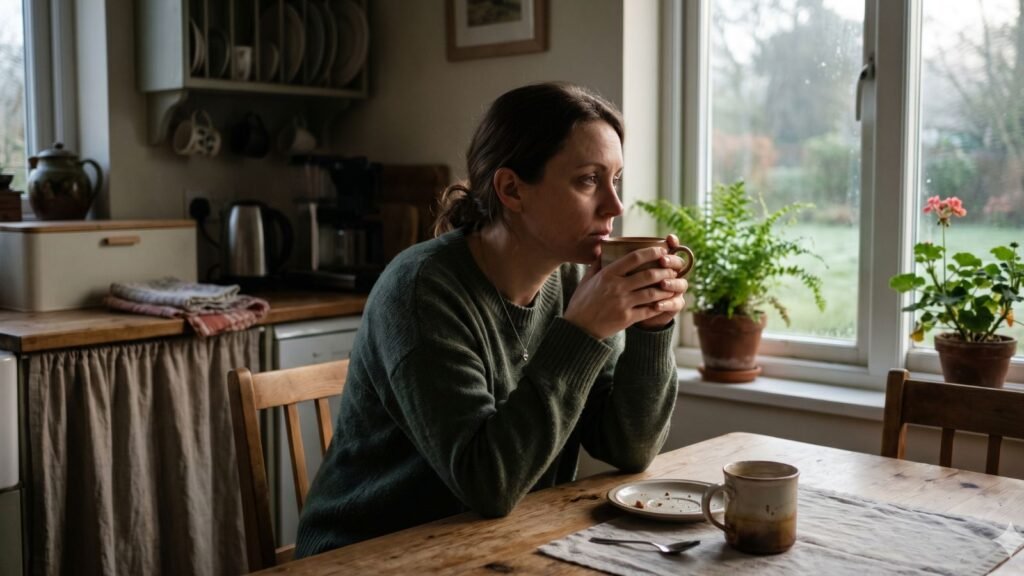
You are sitting on your couch on a Sunday evening, scrolling through your phone, when you suddenly find yourself looking at a high-tech stationary bicycle. Or maybe it’s an adjustable set of dumbbells, a sleek rowing machine, or even just a beautifully textured yoga mat in a calming shade of forest green. You don’t actually need these things at this exact moment, but as you look at the screen, something changes in your mind.
The Vision of a New You
You aren’t just looking at fitness gear. You are looking at a completely different version of your life.
In this vision, you are the kind of person who wakes up at dawn with boundless energy. You stretch effortlessly. You drink green tea instead of three cups of dark roast coffee, and you spend thirty minutes gliding on a machine before your workday even begins. You look at the price tag, and instead of seeing a major expense, you see an investment. You convince yourself that the only thing standing between your current self and this vibrant new lifestyle is this one specific piece of molded plastic and steel.
So, you click buy.
The moment of purchase brings an immediate wave of satisfaction. For some reason, this suddenly feels completely reasonable. Your brain registers the transaction not as a chore you have to perform later, but as a victory you have already achieved. You feel healthier just by entering your credit card details.
The Arrival of the Monument
A few days later, a box arrives that is so large and substantial it practically blocks your front door. Dragging it inside feels like your first official workout. You spend an evening surrounded by cardboard, styrofoam packaging, and a tiny silver wrench, piecing together your new future. When it’s finished, you step back and admire it. It stands proudly in the corner of your living room, a shining monument to your fresh start.
For the first few days, the magic actually works. You climb onto the saddle or unroll the mat with a sense of pride. You might even track your progress on an app, nodding along as the digital screen tells you how many imaginary miles you have traveled. You look at your friends and casually mention your new routine, enjoying the subtle nod of approval that comes with being a person who exercises at home.
But then, a busy Tuesday morning arrives. Or you stay up too late watching a movie. Or you simply wake up and realize that the idea of pulling on athletic shoes and moving your legs in circles feels like a chore.
You decide to take a rest day. Just one. You tell yourself that recovery is an essential part of any fitness journey.
We all know how this ends.
The Gentle Transformation into Furniture
One rest day quietly turns into three. Three days turn into a week. Before long, the shiny machine in the corner starts to blend into the background of your home. It stops being an exciting gateway to wellness and becomes… furniture.
But the story doesn’t stop there. Because your home is a living space, and space is valuable, your mind starts to look at this idle equipment differently.
Somehow this always happens.
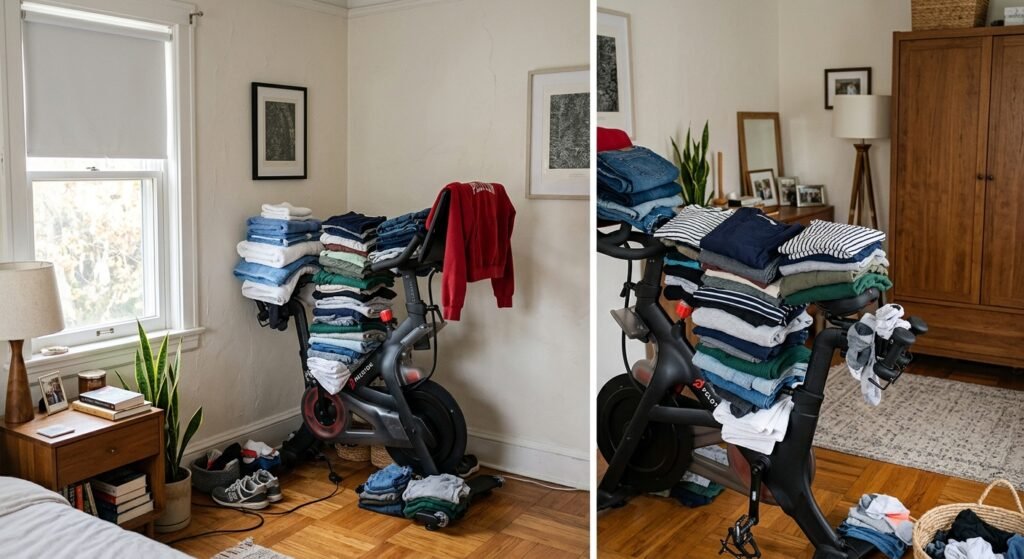
You walk into your bedroom with a clean sweatshirt that you only wore for twenty minutes. The closet feels too far away, and the dresser is already full. You look at the handlebars of your stationary bike. They are the perfect height. They are clean, stable, and completely unused.
You drape the sweatshirt over the handlebars. Just for now, of course. You tell yourself you’ll put it away properly tonight.
Five minutes later, or maybe a day later, that sweatshirt is joined by a pair of jeans. By Friday, the handlebars are holding a jacket, a bath towel, and a canvas tote bag you forgot to unpack. Your state-of-the-art fitness machine has been masterfully repurposed into the most expensive, over-engineered clothes drying rack in the neighborhood.
Nobody talks about how common this is. Walk into almost any home, and you will find these quiet monuments to our best intentions. We have resistance bands resting inside decorative baskets, kettlebells serving as highly effective doorstops, and treadmills that have spent the last three years hosting a collection of winter blankets.
The Beauty of Our Best Intentions
At some point, it stops being about the physical activity. It becomes a small daily negotiation with our own conscience. Every time we walk past the equipment, we feel a tiny pinch of guilt, followed immediately by a wave of creative reassurance. We tell ourselves that autumn is the perfect time to start again, or that we’re just waiting for the busy season at work to pass.
But maybe we’re looking at it the wrong way.
Buying that equipment wasn’t a mistake, and letting it gather a little dust doesn’t mean we failed. It just means we are highly optimistic. We love the idea of self-improvement, and we are willing to invest our hard-earned money into the people we hope to become. That little pile of laundry on the handlebars isn’t a sign of defeat; it’s just a cozy blanket on a dream that is currently taking a nap.
So, if you have a stationary bike that is currently holding three cardigans and an umbrella, don’t rush to sell it online just yet. Smile at it when you walk by. Acknowledge the hopeful person who bought it, and remember that the dream is still there, quietly waiting for whenever you are ready.
And honestly, if you never actually ride it again, at least your sweaters have a very modern place to hang out. You will probably do it all over again next year with a set of adjustable dumbbells, and honestly, we all do this.