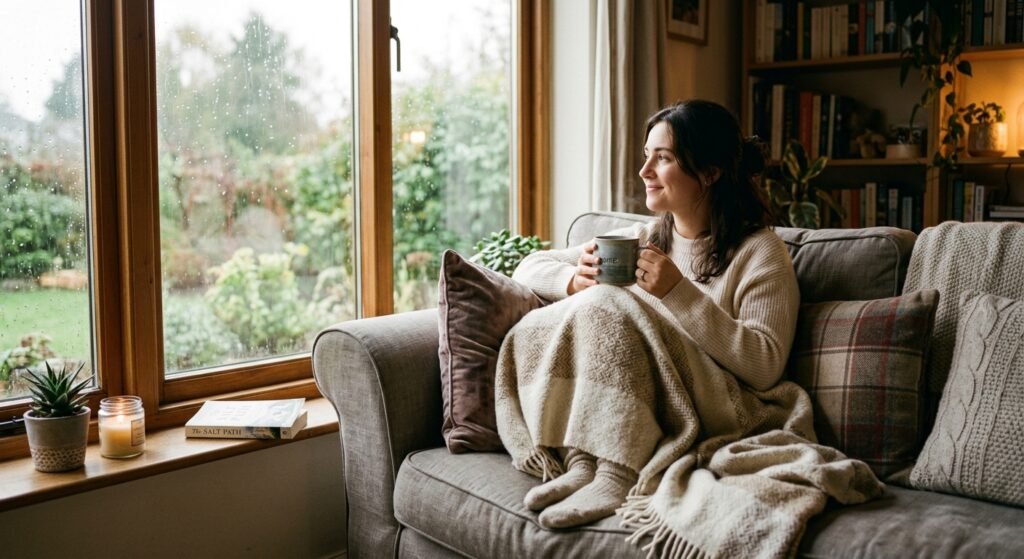
You sit on the sofa on a quiet afternoon with absolutely nothing pressing to do. The messages are answered, the laundry is folded, and for the first time in weeks, your calendar is clear. You spent days wishing for this exact moment. Yet, within five minutes, a strange restlessness begins to settle into your chest. You check your phone, open an app, close it, and open it again. You get up to check the kitchen even though you aren’t hungry. You look around the room, feeling an odd urge to organize a closet or clean a shelf. The quiet you prayed for suddenly feels like a test you aren’t prepared to pass.
Most of us have convinced ourselves that we love rest. We talk about wanting a slower life, a quiet weekend, or a chance to finally unwind. But when that slowness arrives, it often feels less like a reward and more like an emergency. Your mind starts scanning the horizon for things you might have forgotten. You ask yourself if you should be working on a project, catching up on chores, or planning the months ahead. The absence of action gets mistaken for an error in your daily life.
The Alarm Bell Of Stillness
That discomfort isn’t a personal failure. When your daily routine demands constant effort, your brain adapts to that high speed. It gets used to reacting, managing, and solving problems throughout the day. When you suddenly take away all the stimulation, your nervous system doesn’t immediately celebrate. Instead, it gets suspicious. It assumes that if nothing is happening, something must be wrong.
Researchers have noticed that people will go to surprising lengths to avoid sitting alone with their thoughts. In classic studies where participants were given a choice between sitting quietly in a room for fifteen minutes or receiving a mild electric shock, a remarkable number of people chose the shock. Being active, even unpleasantly, can feel safer than being completely still. Action gives us something to hold onto. Stillness leaves us with nowhere to look except inward.
When you’re busy, your internal voice gets drowned out by the volume of the day. The unfinished conversations, the quiet regrets, the lingering worries, and the soft questions about where your life is heading all wait patiently in the background. The moment you slow down, those quiet thoughts step into the foreground. Boredom isn’t just a lack of things to do. It’s the sudden presence of yourself, unfiltered and uninterrupted.
The Urge To Be Useful
We live in a world that measures personal value through visible effort. From a young age, you’re taught that free time is something you earn only after everything else is finished. The problem is that in modern adulthood, the list of things to do is never actually finished. There’s always another message to send, another room to tidy, or another goal to pursue.
Because of this, resting can feel like stealing time from your future self. You sit down with a book and feel a subtle pang of guilt. You take a walk without listening to audio and feel like you’re wasting valuable minutes. You lie down and wonder if you ought to be doing something productive. Unwinding begins to feel like a luxury you haven’t earned yet, rather than a simple necessity for staying balanced.
When you’ve been running for months, slowness feels wrong simply because it’s unfamiliar. You’ve become so accustomed to the constant friction of life that peace feels like a missing piece of machinery. You mistake peace for emptiness, and you try to fill that emptiness as quickly as possible.
Getting Used To The Quiet
Adjusting to a slower speed isn’t something that happens automatically. It requires practice, much like adjusting your eyes to a dark room after stepping out of bright sunlight. At first, everything feels uncertain and uncomfortable. You feel twitchy, distracted, and eager to run back to the familiar activity of constant movement.
If you can stay still through that initial wave of anxiety, something interesting begins to happen. The panic settles. Your mind stops searching for the next fire to put out. You start noticing the soft light on the floor, the sound of trees outside the window, or the simple comfort of breathing without a deadline attached to it. The discomfort was never proof that slowness is bad for you. It was just proof that you aren’t used to it yet.
Maybe learning to be bored isn’t about becoming more disciplined or discovering a better way to relax. Maybe it’s about realizing that stillness feels threatening only because you’ve been rushing for so long. Peace isn’t something you achieve by finishing your list. It’s something you permit yourself to feel right in the middle of everything staying unfinished.