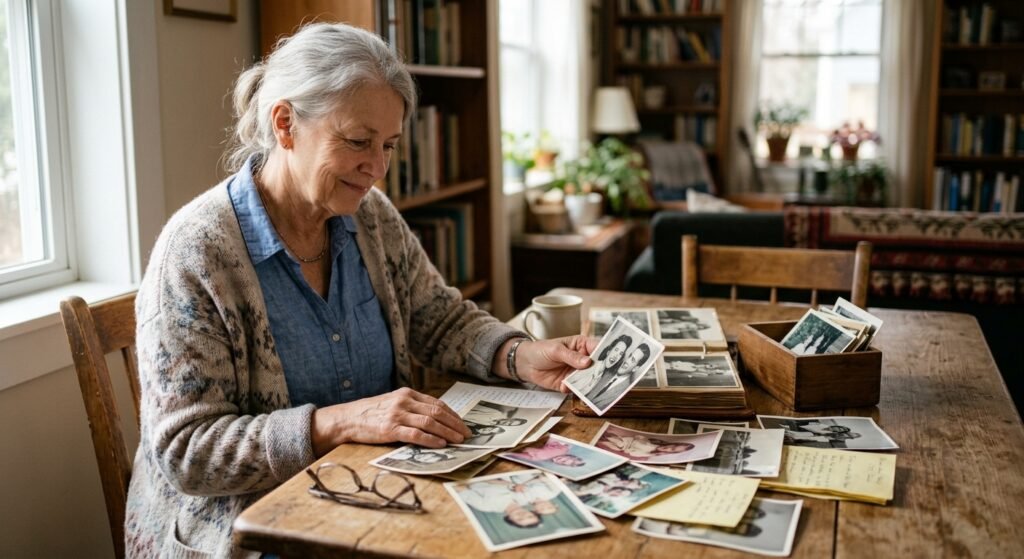
Maybe you have a cabinet in your home containing something you never use but can’t bring yourself to throw away. It could be a set of delicate teacups with tiny chips along the edges, an old wooden clock that lost its tick decades ago, or a recipe book written in faded, elegant cursive. You don’t keep these things because they’re practical. You keep them because they carry a quiet presence, a physical connection to the people who walked this earth before you did.
But sometimes, the things we inherit aren’t physical. Sometimes, we inherit a tendency to apologize when we haven’t done anything wrong. We inherit a quiet, persistent anxiety that keeps us awake at midnight, worrying about problems that haven’t happened yet. Or maybe we inherit a way of retreating into silence when someone we love tries to get close to us, using distance as a shield because that’s how our parents kept themselves safe.
It’s a strange moment when you catch yourself reacting to a minor mistake, like dropping a glass on the kitchen floor, with the exact same panic your grandmother felt sixty years ago. The room is quiet, nobody is angry, and yet your heart is beating fast. In that small, ordinary moment, you aren’t just cleaning up broken glass. You’re living out a script that was written long before you were born.
We often carry these emotional legacies without questioning them. We assume that to love our families, to honor where we came from, we have to accept the entire package. We believe that loyalty means carrying their grief, their fears, and their patterns into our own lives. It feels almost like a betrayal to live differently, as if choosing peace would somehow criticize the struggle of those who came before us.
The Silent Inheritance We Never Asked For
Psychologists who study family systems often talk about how behavioral patterns travel down through generations like invisible rivers. When a parent doesn’t have the space or the tools to heal their own hurts, those hurts don’t simply disappear. They get passed down in the way they communicate, the way they handle conflict, and the way they show affection. For a child growing up in that environment, these patterns feel like the absolute truth of how the world works.
If your grandfather had to work constantly just to keep a roof over his family’s head, he might have passed down a belief that rest is lazy and work is the only measure of a person’s worth. Your mother, watching him, might have adopted that same restless energy. By the time that belief reaches you, it doesn’t feel like a historical response to scarcity. It just feels like a personal failure whenever you try to take a Saturday afternoon off to do nothing.
Research in family psychology suggests that we often repeat these patterns because they feel familiar, and familiarity offers a false sense of safety. Even a painful pattern can feel more comfortable than the uncertainty of doing something completely new. We stay in the cycle because breaking it requires us to step into the unknown, which can feel deeply lonely at first.
The Difference Between Loyalty and Repetition
There is a quiet, profound realization that comes when you understand that you can love your family deeply while still choosing to live differently. Honoring your ancestors doesn’t mean you have to repeat their mistakes. You can look at the struggles they went through with immense gratitude and compassion, while gently deciding that their survival strategies don’t have to be your lifestyle.
Think of it as blessing what they did to survive, while recognizing that you are allowed to do more than just survive. Your grandmother might have needed to keep her feelings locked away because her life didn’t have room for emotional vulnerability. That was her strength, and it kept her going. But you live in a different world now. You have the safety, the resources, and the space to feel your feelings, and using those resources isn’t a rejection of her; it’s the ultimate fulfillment of what she worked so hard to give you.
When we look at our parents or grandparents, we often see their flaws and their unresolved pain. It’s easy to feel a mix of frustration and sadness about the things they couldn’t give us. But when we look closer, we can see that they were often operating with the limited tools they had at the time. They were doing their best with the emotional budget available to them.
Gently Setting Down the Burden
Choosing to heal a generational pattern is not an act of anger or rebellion. It is an act of quiet love. It’s looking at a legacy of anxiety, or silence, or perfectionism, and saying, “I see why you had to carry this, but I don’t have to carry it anymore.” It’s setting down the emotional baggage at the border of your own life, not because you’re ungrateful, but because you want to travel light enough to build something new.
This realization changes everything because it frees you from the pressure of trying to fix the past. You can’t change what happened to your parents when they were young. You can’t heal your grandparents’ marriages or ease the hardships they endured. Trying to carry their pain as a way of showing loyalty doesn’t heal them; it only drains you. The best way to honor their journey is to use the freedom they bought you to build a life of genuine peace.
Next time you catch yourself falling into an old, familiar family pattern, whether it’s a sudden burst of defensiveness, a wave of unnecessary guilt, or the urge to keep working until you drop, take a slow, deep breath. Remind yourself that you’re standing at a crossroads. You can acknowledge the old path with respect, appreciating how it got your family this far, while quietly turning down the new one you’re building for yourself.
You aren’t betraying the people who came before you by being happy. You’re actually living out their wildest dreams. They struggled so that you wouldn’t have to struggle in the exact same ways. By choosing peace, by choosing communication over silence, and by choosing self-compassion over perfectionism, you are blessing their journey. And in doing so, you’re finally letting them rest, too.