Can we talk about this for a second?
You’re sitting on your couch, staring at your phone, and your thumb is hovering over the order button on a food delivery app. It’s seven in the evening. You know exactly what’s in your refrigerator. You have a bag of fresh spinach that’s slowly turning into a sad, green puddle, three chicken breasts that are rapidly approaching their expiration date, and a perfectly good jar of pasta sauce. But you’re not looking at those. You’re looking at a picture of a warm bowl of noodles.
The catch is that you did this yesterday. And you also did it the night before that.
Suddenly, you find yourself entering a very specific stage of decision making. This is the moment where ordering delivery stops being a fun little weekend treat and officially becomes a streak. You’re three nights in, and you’re starting to feel a tiny, quiet wave of shame. But you still press the button.
The Anatomy of a Three-Night Streak
Every delivery streak has a very clear story arc. Night one is pure celebration. You had a busy day, you checked off a lot of things on your to-do list, and you decide that you’ve earned a break. Cooking feels like an unnecessary hurdle. When the food arrives, it feels like a victory. You eat your burrito on the couch, watch your favorite show, and feel completely satisfied with your life choices.
Then comes night two. This is the night of the reasonable excuse. You look in the fridge, and you realize that cooking the chicken actually requires seasoning it. Seasoning it requires getting out three different spice jars. Suddenly, the thought of washing those spice jars and wiping down the counter feels like a task that requires a project manager. You convince yourself that you’ll definitely cook tomorrow, but tonight, you just need to get through the evening. You order a pizza. It’s fine because pizza leftovers are basically a breakfast food, so you’re actually planning ahead.
By night three, the justification system has completely broken down. You can no longer pretend you’re being efficient. You’re just tired. The gap between the responsible version of you who bought those groceries on Sunday and the actual version of you sitting on the couch on Wednesday is too wide to cross. You’re no longer ordering food because you want to celebrate. You’re ordering food because the kitchen has become a place of emotional confrontation.
The Great Delivery Cover-Up
This is where the quiet shame really starts to influence your behavior. Have you ever found yourself ordering enough food for two people just so the restaurant doesn’t think you’re eating alone? You add an extra side of spring rolls and a second set of chopsticks. You convince yourself that you’re just setting up lunch for tomorrow, but in reality, you’re trying to look like a host rather than someone who hasn’t used their stove in seventy-two hours.
Then there’s the drop-off strategy. You select the option to leave the food at your door. Don’t do this because you’re busy. You do this because you cannot face the possibility that it might be the same delivery driver from last night. You wait behind the door, listening quietly for the sound of retreating footsteps. Only when the hallway is completely silent do you slowly open the door, scoop up the brown paper bag, and slide back inside like a raccoon reclaiming treasures.
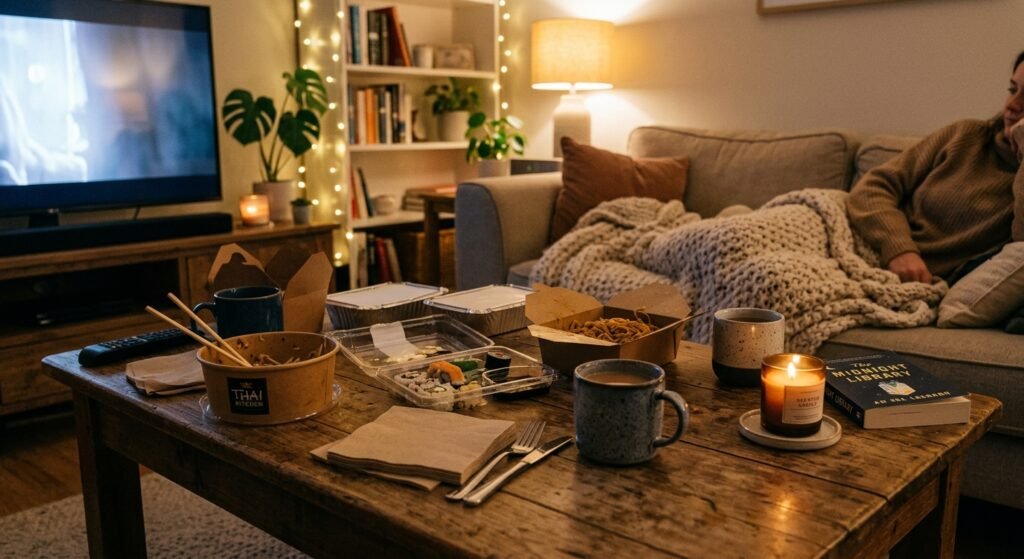
When you finally open the container, you don’t even bother putting the food on a real plate. Putting delivery on a plate is a level of commitment that you’re simply not prepared for tonight. It feels like trying to dress up a casual conversation. You eat straight from the plastic container, using the plastic fork that came in the bag, because the ultimate goal of night three is to leave absolutely zero evidence that dinner ever happened.
Why We Do This to Ourselves
It’s easy to look at this habit and think we’re just being lazy, but there’s actually something much more interesting going on in our brains. Every day, we make hundreds of tiny decisions. We decide what to wear, how to draft that email, how to respond to a coworker, and whether we should finally reply to that text message we received three days ago. By the time evening arrives, our ability to make choices is completely exhausted.
This is why the refrigerator feels so intimidating. Opening the fridge doesn’t just mean looking at food. It means making another series of choices. Do I chop the onions first? Do I have enough olive oil? What if the chicken is bad? Delivery removes all of those questions. It replaces a complicated puzzle with a single, beautiful button. When life feels slightly out of control, outsourcing your dinner is the easiest way to regain a sense of comfort.
We tell ourselves that we’re failing at being responsible adults, but really, we’re just looking for a soft place to land. The delivery app isn’t just selling us food. It’s selling us a temporary escape from the demands of our own kitchens. And for a few nights, that feels worth every penny.
The Promise of Tomorrow
Eventually, the streak has to end. You look at your bank account, or you finally open the crisper drawer and realize your vegetables are staging a silent protest. You know that tomorrow you’ll finally turn on the stove, boil some water, and cook a meal that actually involves a cutting board. You’ll feel remarkably mature, and you might even wipe down the counters afterward.
But tonight, as you finish that last bite of curry from the cardboard carton, try not to be too hard on yourself. Sometimes, survival looks like a brown paper bag on your doorknob. We’ve all been there, standing in our socks, waiting for the delivery driver to drive away. It’s just part of how we cope with a busy week. And honestly, those leftovers are going to taste amazing for breakfast tomorrow.