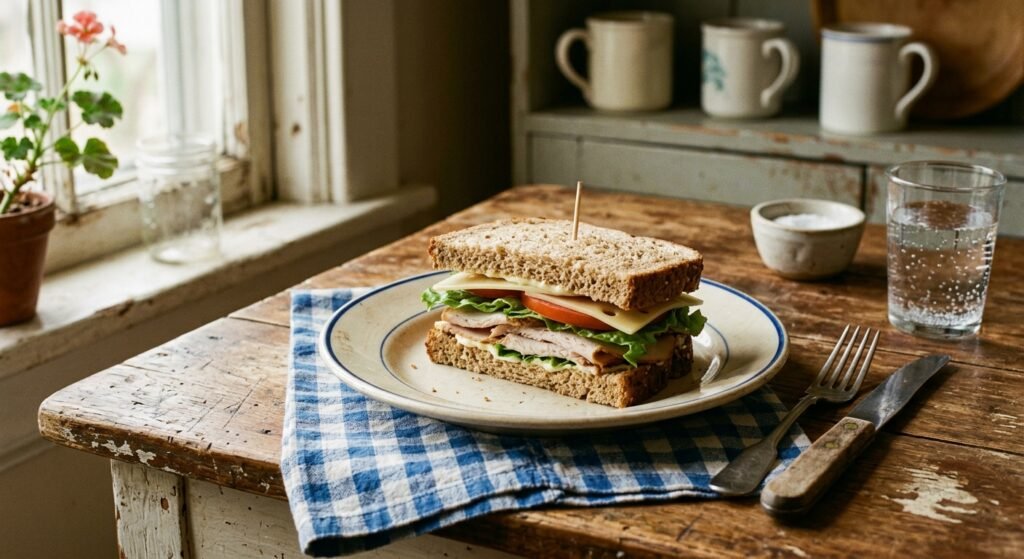
The Craving That Isn’t About Hunger
You stand in your kitchen on a quiet Tuesday afternoon and decide to make something simple. It’s the exact sandwich you ate hundreds of times growing up: basic white bread, a slice of yellow cheese, maybe a gentle smear of butter or mustard. You press it into the pan just like you saw it made years ago, watching the edges turn that perfect shade of golden brown.
Then you take a bite, expecting a wave of pure comfort, but something feels missing. The bread is warm and the cheese is melted, yet the taste doesn’t quite match the memory you’ve been carrying around for years. You wonder if the company changed its recipe or if your adult tastebuds have simply outgrown it.
What’s actually happening has very little to do with ingredients. You aren’t just trying to taste bread and melted cheese. You’re trying to reach back into a moment in time when that simple meal was accompanied by a feeling you didn’t realize you were collecting.
Why Certain Bites Stay With Us
Memory works in quiet, unexpected ways, especially when flavor is involved. Brain experts often point out that our senses of taste and smell are connected directly to the emotional centers of our minds. Unlike sight or sound, which get filtered through analytical pathways first, a familiar taste bypasses logic and goes straight to feeling.
That’s why a simple bite of a plain sandwich can briefly open a door you thought was closed. It isn’t that the food was extraordinary by any high standard. Most childhood favorites are wonderfully basic. The magic wasn’t in the complexity of the meal; it was in the total absence of complexity in your life while you ate it.
When you were young, sitting at a kitchen counter with the crusts cut off, your world had clear boundaries. Someone else handled the bills, stocked the fridge, and managed what was coming next. Your only responsibility was deciding which half to eat first.
The Secret Ingredient Is Safety
We often think we’re nostalgic for the food itself, but what we’re really longing for is the environment that allowed us to enjoy it. Nostalgia has a way of filtering out the chaos of the past and keeping only the warmth. When you remember that simple lunch, your mind recreates the entire setting: the background hum of a afternoon television show, the sun on the kitchen floor, and the quiet certainty that you were safe.
In adulthood, eating often becomes just another item on a long checklist. We grab food between tasks, eat over our keyboards, or plan tomorrow while barely tasting today. The meal becomes fuel rather than a moment of pause.
When you try to recreate that childhood lunch, you’re searching for a break in the day. You’re hoping that a familiar flavor might briefly carry you back to a version of yourself that knew how to be entirely present in a simple afternoon.
Revisiting the Table We Outgrew
There’s a gentle truth in recognizing that food carries our personal histories. The meals we remember best aren’t always the grand holiday dinners or the expensive restaurant outings. More often, they’re the unremarkable snacks eaten on cold kitchen tiles or served on paper plates during summer days.
Those simple bites became special because they were seasoned by predictability and care. Someone took the time to assemble those ingredients for you, wrapping them in foil for a lunchbox or serving them after a long day outside. The flavor was tied to the hand that offered it.
Maybe the sandwich never actually lost its flavor over the years. Maybe you just stopped eating it as a child who was being looked after, and started eating it as an adult who is doing all the looking after.
Finding Comfort in the Present
Realizing this doesn’t mean you can’t still enjoy that simple grilled cheese or toast. It just changes how you sit with it. Instead of searching for a flavor that lives strictly in the past, you can appreciate why the memory feels so warm in the first place.
It’s a quiet reminder that you were once deeply cared for, and that the simplicity you miss is something you can still offer yourself today. You don’t need to travel back in time to find that comfort. You can simply slow down, sit at the table, and let the moment be enough.
Perhaps we don’t really miss the sandwich after all. Maybe we just miss the quiet relief of knowing that, for a few minutes, everything was taken care of.