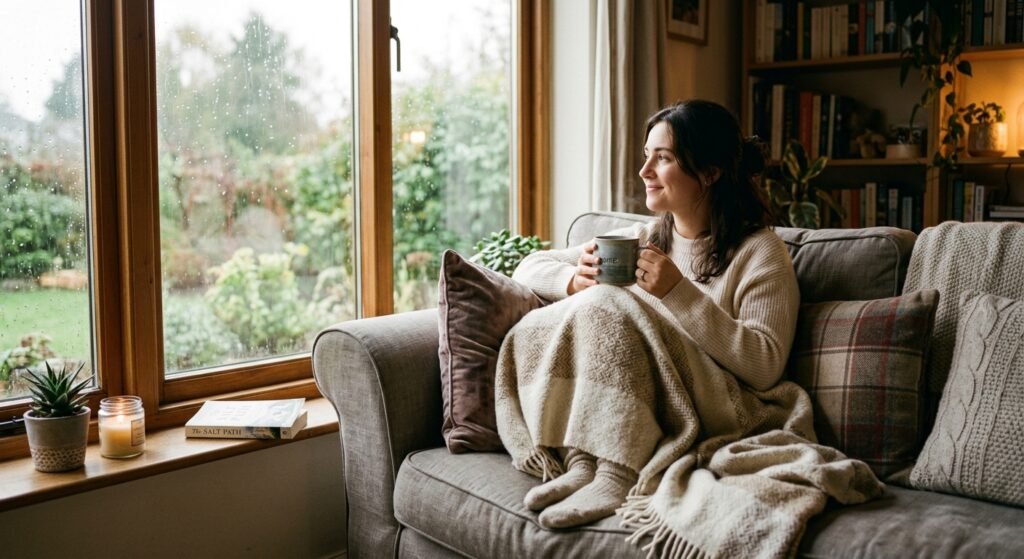
There is a specific moment after a long trip or a chaotic week when you finally step back into your own kitchen. You set your keys on the counter, fill the kettle with water, and hear the quiet click of the stove.
Nothing extraordinary has happened. Yet, as the steam begins to rise, you feel your shoulders drop a few inches.
For weeks, life might have felt like a series of urgent requests, unexpected changes, or constant adjusting. But right here, watching the mug fill with warm water, everything quietly slows down.
The Subtle Comfort Of Predictable Rhythms
We often talk about routines as if they are obligations. We treat them like productivity tools or items to check off a long morning list. But when life gets loud, those very same habits transform into something completely different.
They become quiet markers of safety. Making the morning toast, sitting in the same armchair by the window, or wiping down the wooden table after dinner are actions that ask nothing complicated from you. Your hands know exactly what to do without needing instructions.
When life feels overwhelming, the mind works constantly to interpret new signals and manage unexpected events. That constant processing takes a real toll. Experts who study mental energy often note that predictable actions give the nervous system a chance to rest. When the mind encounters something completely familiar, it stops scanning for trouble and quietly steps down from high alert.
That’s why returning to a simple habit feels less like work and more like an exhale. The predictability isn’t boring. It’s a quiet sanctuary.
Your Simple Habits Keep The Way Home Open
Have you ever noticed how easy it’s to lose touch with yourself during seasons of big change? Moving to a new city, taking on a demanding project, or caring for someone through a long period can swallow up all your daily energy.
In those long stretches, you adapt because you have to. You eat meals on the go, answer messages at odd hours, and put your normal preferences on hold. You become remarkably flexible, but flexibility can slowly leave you feeling scattered and untethered.
Then, one morning, you finally have time to make oatmeal in your favorite small pot. You walk the familiar three blocks down your street, past the tall oak tree and the corner store. You sit down with a pencil to solve a crossword puzzle, just like you used to do every Saturday.
In that moment, you aren’t just completing an activity. You’re quietly recognizing yourself again. The habit becomes a thread connecting you back to the person you were before the world got so demanding.
The Quiet Meaning Of Ordinary Repetition
Behavioral researchers sometimes point out that rituals create a sense of control during times of uncertainty. When unpredictable events unfold around you, small personal rituals offer a tiny corner of the world where you decide what happens next.
You decide which mug to pick up. You decide which path to walk. You decide when to fold the towels and where to put them away.
These small actions might look completely ordinary from the outside. An observer looking through your window would only see someone making tea or organizing a shelf. But internally, something meaningful is taking place.
You’re rebuilding a feeling of internal order. You’re telling yourself that despite whatever unpredictability exists out there, this small space right here remains stable, safe, and yours.
Home Is Found In Simple Acts
Maybe we’ve had routine wrong all along. Maybe routine isn’t about being disciplined, optimized, or impeccably organized.
Perhaps routine is simply the way we preserve our personal truth through demanding seasons. It’s how we leave light on in the windows of our own lives so we can find our way back when the storm settles.
The next time you find yourself deeply relieved just to sit with your morning coffee in total silence, know that you aren’t being simple or unexciting. You’re simply stepping back into your own life. And there’s profound comfort in realizing that home isn’t just a physical place, but the quiet habits that allow you to feel like yourself again.