Opening the refrigerator at eleven o’clock at night is a completely different experience than opening it at noon. At noon, you’re looking for lunch. You want something balanced, something reasonable, something that fits neatly into your schedule. But at eleven o’clock, you aren’t really looking for a traditional meal. You’re standing in the soft yellow light of an open fridge, staring at a tub of leftover rice, a slice of cold pizza, or a single piece of cheese, and for some reason this suddenly feels completely reasonable.
Can we talk about this for a second?
Why does a simple slice of cold pizza taste noticeably better at midnight than it ever did when it was fresh out of the oven six hours earlier?
If someone offered you a cold slice of pepperoni at two in the afternoon while you were sitting at your desk, you’d probably hesitate. You might even look around for a microwave or politely decline. But at eleven thirty at night, standing barefoot on your kitchen tile, that exact same cold slice feels like a personal victory. You don’t even bother warming it up. You just eat it right there over the sink, convinced you’ve discovered the finest snack of your week.
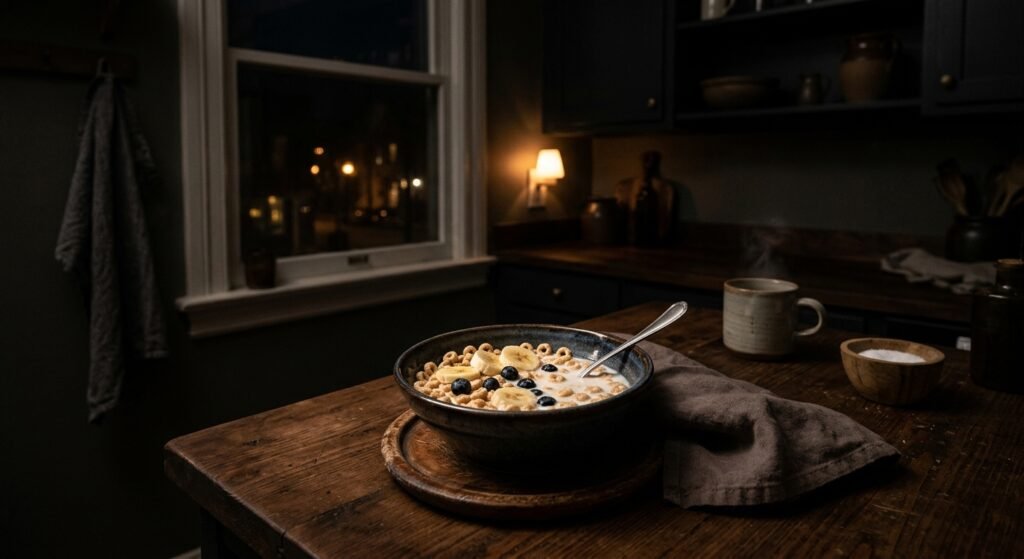
Or consider a simple bowl of cereal.
In the morning, cereal is just breakfast. It’s purely functional. You pour the milk, eat it while checking your calendar, and move on with your morning. It gets the job done, but nobody sits down at seven in the morning and gasps with delight over a bowl of toasted oats.
Fast forward to 10:45 at night.
Suddenly, that exact same bowl of cereal becomes pure comfort. You pour the milk just a little higher toward the rim. You use the big spoon. You sit on the couch while the rest of the house is quiet, and every single bite tastes like a masterpiece. Somehow this always happens. The milk seems colder. The crunch seems better. You aren’t even that hungry, but at some point it stops being about the food and starts being about the moment.
The Logic Behind the Late Snack
So why do we do this? What happens between dinner and midnight that changes the way our taste buds work?
Part of it comes down to the tiny stories we tell ourselves after dark. During the day, food comes with expectations. There are rules. Breakfast items belong in the morning. Lunch needs to be practical. Dinners ought to be balanced. You try to eat your vegetables and make reasonable choices. But once the evening wind down begins, those rules gently drift away.
At night, you aren’t trying to fuel your schedule or impress anyone. You aren’t managing a long list of tasks. The day is officially over, which means your brain finally turns off its strict inner editor. A piece of toast with butter at eight in the morning is just quick fuel before leaving the house. But a piece of toast with butter at eleven at night feels like a warm reward for making it through the day.
The Countertop Dining Experience
There’s also the strange magic of eating while standing up in the dark.
For some reason, food eaten directly out of the container while standing near the counter doesn’t feel like a real meal. In our minds, if you didn’t put it on a plate, set the table, or sit down in a proper chair, it barely counts. You convince yourself it’s just a quick bite, a little taste to settle things down before going to sleep.
Five minutes later, you’ve eaten three slices of turkey, two handfuls of tortilla chips, and the remaining corner of a coffee cake, all while holding the refrigerator door open with your elbow.
We all know how this ends.
You close the door, brush your teeth, and head toward the bedroom feeling quietly satisfied. You didn’t plan on eating shredded cheddar cheese straight from the bag at midnight, but in that specific moment, nothing else in the world would’ve been quite as good.
Why Timing Changes Everything
Psychology subtly explains why late night cravings feel so different. Throughout the daytime, we spend hours making decisions, managing expectations, and keeping our attention focused on what needs to get done next. By the time the evening slows down, our minds are looking for simple, easy comfort that requires zero effort.
Food at night hits differently because our senses aren’t competing with the constant busyness of the afternoon. When the lights are low and the house is quiet, simple flavors feel stronger. A quiet kitchen creates a tiny space where you don’t have to plan anything, fix anything, or answer to anyone. You’re just enjoying a simple pleasure in a moment that belongs entirely to you.
There’s also something deeply comforting about predictable routines. When everything else about the day felt busy or unpredictable, making a small late snack is something you can completely control. It doesn’t require a recipe or a strategy. It’s just you, a butter knife, and a piece of bread, taking a brief pause before tomorrow starts all over again.
So the next time you find yourself standing in front of the open pantry late at night, trying to decide if buttered toast sounds like a gourmet feast, go ahead and make the toast.
It probably isn’t going to win any culinary awards, and you’ll definitely have to wipe a few stray crumbs off the counter before heading to bed. But timing has a funny way of making simple things feel special.
Honestly, we all do this. You’ll probably do it again tomorrow.