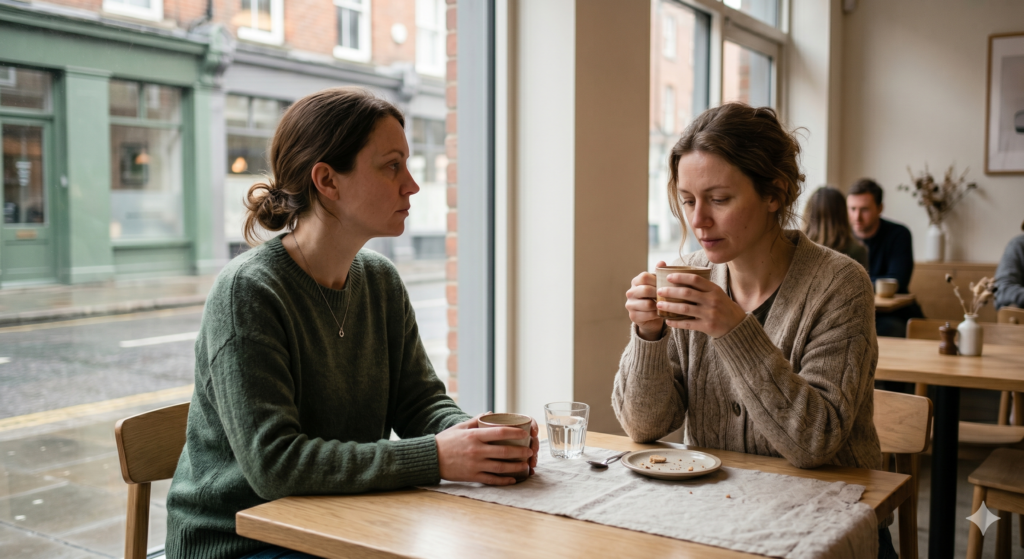
Think about the last time you created something you actually cared about. Maybe it was a melody you hummed into your phone recorder late at night, a sketch on the back of a receipt, or a story you wrote that still sits in a secure document. Now, imagine handing that exact thing to a stranger at a party and waiting for them to react. The sudden twist in your stomach, the urge to explain away your efforts before they even look, the instinct to say it is just a silly hobby; that is the exact threshold where friendship and creativity meet.
We often talk about how lonely the creative path can feel. We sit in our rooms, typing, painting, or designing, wishing we had a community of understanding souls who truly understand how our minds work. Yet, when we actually find ourselves in rooms filled with other creators, we often do something strange. We pull up a shield of effortless competence. We talk about our achievements, our busy schedules, or our latest projects, while keeping our actual creative hearts tucked safely out of sight.
The Shield of Perfect Presentation
It makes sense why we do this. Showing someone your finished work is scary enough, but showing them your process, with the embarrassing first drafts, the ideas that failed, and the raw vulnerability of trying to make something beautiful, feels like standing under a bright spotlight without any cover. So, we choose a safer path. We try to make connections through our taste, our intellect, or our professional accomplishments. We present the edited, polished versions of ourselves, hoping that will be enough to earn us a place at the table.
The trouble is that polished versions don’t foster intimacy. When you present only your successes, you’re not actually letting anyone see you. You’re showing them your gallery, not your studio. While they might admire the artwork on the walls, they can’t connect with the person who spent hours crying on the floor trying to make it. Admiration is a cold substitute for belonging. It places you on a pedestal, and pedestals are remarkably isolated places to stand.
The Psychology of Being Seen
Relationship researchers have long studied how deep bonds are formed between people. The consensus is surprisingly consistent: closeness doesn’t develop through shared successes or mutual admiration. Instead, it grows through gradual, reciprocal vulnerability. When we allow someone to see our doubts, our unpolished ideas, and our creative struggles, we are offering them a rare form of trust. That trust acts as an invitation for them to drop their defenses too.
For creative people, this dynamic is particularly intense. Because our work is so deeply tied to our inner lives, sharing our creative struggles feels like sharing our innermost secrets. When we hide those struggles, we inadvertently block the very connection we are searching for. We end up surrounded by people who like our work, but we still feel entirely alone because we know they don’t actually know us. We’ve built a relationship on a performance, and performances eventually have to end.
Stepping Out of the Gallery
To build real friendships, we have to be willing to invite people into the messy, dusty workshop of our lives. This doesn’t mean you need to share your deepest insecurities with every person you meet. Rather, it means allowing yourself to be seen in your unfinished state. It means admitting to a peer that you’re struggling with a project, or confessing that you’re terrified your best work is behind you. It means letting go of the need to look like you have everything figured out.
When you stop trying to impress other creators, you discover something beautiful. Most of them are just as terrified as you are. They are also sitting in their studios, wondering if they are frauds, hoping someone will knock on the door and tell them it’s okay to make mistakes. By being the one to speak the truth first, you create a safe space for everyone else in the room to take a deep breath and let their guards down.
These are the moments where real friendship begins. It’s not when we agree on our favorite films or praise each other’s portfolios. It’s when we sit together on a living room floor, surrounded by unrefined ideas, laughing about how difficult it is to make anything at all. In those moments, the pressure to be brilliant simply evaporates, leaving room for something far more valuable: simple, quiet understanding.
The Realization of Unfinished Belonging
Perhaps the real challenge of making friends as a creative person isn’t about finding people who share your specific artistic medium or validate your talent. Maybe it’s about realizing that you don’t need to be finished to be worthy of connection. The moments that truly connect us are not the pristine gallery openings or the successful launches, but the quiet, messy afternoons spent admitting we have no idea what we’re doing next.
When we stop trying to prove our worth through what we make, we finally become free to appreciate who we are. You don’t have to wait until you are successful, polished, or secure to build a community. You just have to be willing to open the door, let people see the clutter on your desk, and trust that they will love you not for the masterpiece you are trying to build, but for the messy, beautiful process of building it.