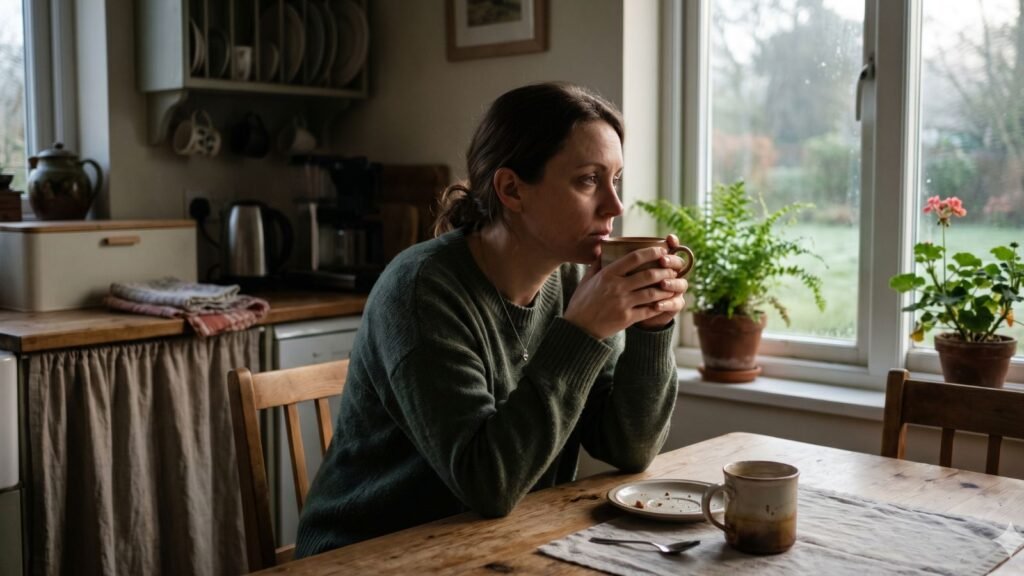
Think about a quiet Sunday afternoon when you’ve finally got a few hours to yourself. The laundry is done, your phone is quiet, and there’s absolutely nothing you urgently need to do. You sit down on the couch, intending to just relax and read a book or watch a movie. But instead of settling into the quiet moment, you feel a strange, persistent restlessness. You find yourself standing up to wipe down a counter that’s already clean, checking your email for the fifth time, or organizing a drawer. It feels like you’re waiting for an imaginary authority figure to walk into the room, look at your life, and declare that you’ve done enough to earn a break.
Or maybe you’ve found yourself in the middle of a clothing store, holding a shirt you really like and can easily afford. Instead of just walking to the register, you take a photo of it and text it to three friends. You tell yourself you just want a second opinion on the color, but the truth is deeper than that. You’re waiting for someone else to say yes so you don’t have to carry the burden of choosing something just because it makes you happy.
We do this with our smallest daily choices and our largest life directions. We ask our coworkers if we should feel upset about a frustrating meeting. We ask our partners if it’s okay that we want to stay home instead of going to a party. We check in, we poll the audience, and we look for nods of agreement. It’s as if we’re walking through our own lives carrying a blank permission slip, constantly looking for someone else to sign it.
The Search For A Safe Verdict
This constant need for validation doesn’t mean you’re weak or incapable of making decisions. In fact, most people who struggle with this are remarkably responsible, thoughtful, and deeply considerate of others. You likely spend a lot of time anticipating the needs of the people around you, which means you’re highly sensitive to how your actions affect the room. The trouble is that this sensitivity can make your own internal voice sound very quiet.
When you’re constantly seeking approval, you’re usually trying to protect yourself from the discomfort of making a mistake. If you buy the shirt and someone else approved it first, any potential regret is shared. If you decline the party invitation because a friend agreed you looked exhausted, you don’t have to feel like a bad friend. External approval acts like a buffer against the quiet anxiety of just being yourself.
People who study how we build our sense of self talk about how easy it is to outsource our internal compass. When we’re young, we learn very quickly that following the rules and making others happy leads to safety, praise, and connection. It’s a highly effective survival strategy for a child. But when we carry that exact same strategy into adulthood, we accidentally turn everyone around us into a judge. We stop asking, “What do I need right now?” and start asking, “What does everyone else need me to do so I can feel okay?”
The Silent Strain Of Always Justifying Yourself
This way of living is exhausting because it requires you to constantly build a case for your own feelings. If you want to take a nap, you can’t just lie down. You have to list all the chores you finished earlier, remind yourself of how early you woke up, and convince yourself that you’ve earned it. If you feel hurt by something a friend said, you spend hours analyzing the conversation, wondering if you’re being too sensitive, before you finally allow yourself to acknowledge the pain.
Every feeling and every choice becomes a court case where you’re both the defense attorney and the defendant. You’re constantly trying to prove that your exhaustion is legitimate, that your boundaries are reasonable, and that your desires are acceptable. And the moment someone questions you, or even just reacts with mild confusion, the entire case falls apart, and you go back to doubting yourself.
What’s remarkably easy to miss in these moments is that you’re asking other people to do a job they were never meant to do. No one else can feel your exhaustion. No one else knows how much energy it took for you to get through the week. When you ask someone else if it’s okay for you to rest, you’re asking them to read your mind and validate an experience they can’t feel. It’s a test they’ll almost always fail, not because they don’t care about you, but because they aren’t living inside your body.
Finding The Signature In Your Own Pocket
Think about how much relief you feel when someone finally says the words you’ve been waiting to hear. When a friend says, “Of course you should cancel those plans,” or a partner says, “You should definitely buy that,” a physical relaxation happens. You breathe easier. The guilt evaporates. That relief is beautiful, but it’s also a reminder of how much power you’ve handed over to the outside world.
The realization that changes everything is that the relief you feel doesn’t actually come from the other person. They didn’t give you peace; they just allowed you to give it to yourself. The permission you were waiting for was always yours to grant. They didn’t sign the slip; they just reminded you that you’ve been holding the pen the entire time.
Learning to live without constantly looking for a green light isn’t about ignoring the people you love or becoming entirely selfish. It’s about realizing that your feelings don’t need a logical justification to be real. You don’t need a fever to prove you’re tired. You don’t need a tragedy to justify your sadness. You don’t need a special occasion to buy the things that bring you a small moment of joy.
Perhaps you don’t need to build a perfect case for why you feel the way you do. Maybe you can just allow the feeling to exist, trust that your body knows what it needs, and give yourself the quiet grace of agreeing with your own life. After all, the only person who has to live through every single second of your day is you. And maybe that’s more than enough authority to finally decide that you’re okay.