The Unspoken Rules Of The Kitchen Counter
Can we talk about this for a second?
You walk into the kitchen with zero intention of having a real meal. You aren’t setting the table. You aren’t getting out a plate. You aren’t even pulling out a chair. You simply open the refrigerator, lean against the edge of the counter, and proceed to eat a handful of shredded mozzarella cheese straight out of the bag like a late night treasure hunter.
And here is the strange part. It tastes absolutely delicious.
If someone served you that exact same handful of lukewarm cheese on a nice porcelain plate while you sat at the dining room table, you’d look at them like they were testing your patience. But standing in the kitchen, leaned over the sink or bathed in the cool yellow light of an open fridge door, it feels like a genuine victory.
Somehow this always happens.
We have all spent thirty minutes carefully preparing a proper dinner, sitting down, and eating it while feeling completely neutral about the whole experience. Then three hours later, we find ourselves standing completely still in a dim room, eating a cold leftover meatball right off a serving fork, and it suddenly feels like the greatest culinary creation on the planet.
The Delusion Of Passing Through
The logic behind standing snacks is fascinating because it relies entirely on a few harmless little stories we quietly tell ourselves.
The primary lie is about time and intent. You convince yourself that because you haven’t officially sat down, you aren’t actually eating. Sitting down requires a commitment. Sitting down means you’ve started a real meal or a planned snack session. Standing up, on the other hand, implies that you are just passing through. You are merely visiting the room. You’re on your way to do something far more productive, and this stop near the counter is just a momentary pause in your evening.
Because you are just passing through, the normal expectations don’t seem to apply to you.
Five minutes later, you are still standing in the exact same spot.
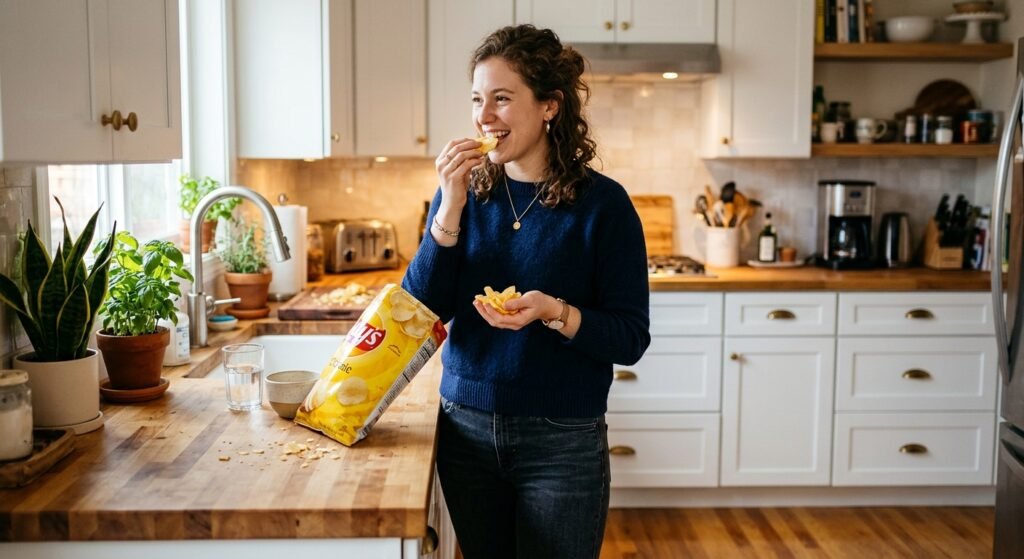
Now you are hovering over a bag of tortilla chips. You didn’t get a bowl because getting a bowl would mean admitting that you’ve officially started eating chips. So you take one. Then you take another. Then you grab three chips at once because you need a sturdy vehicle to scoop salsa straight from the glass jar.
At some point it stops being about the food and starts being about the absolute freedom of the moment.
Zero Friction, Maximum Delight
When you eat at a proper table, there is pressure. You have to use utensils. You have to worry about drop zones and crumbs. You have to sit up straight and act like a cultured adult who eats at a steady, polite pace.
Standing in the kitchen removes every ounce of that expectation. There are no dishes to wash afterward. There are no cloth napkins required when you can easily wipe a stray drop of sauce on a paper towel that is sitting three inches from your hand. Everything about standing up to snack feels efficient, unpretentious, and deeply satisfying.
For some reason this suddenly feels completely reasonable.
Your mind loves low friction experiences. Sitting down to eat feels like a whole production, but leaning against the counter feels like a quiet win against the hassle of daily routines. It is the food equivalent of taking a cozy shortcut that nobody else noticed.
There is also something wonderful about the temperature element. Leftover pizza straight from the box, eaten while standing near the stove, has a completely different character than pizza that has been carefully reheated and placed on a napkin. Cold pizza enjoyed while leaning against a cabinet door tastes like a reward you unlocked through pure efficiency.
The Secret Comfort Of Casual Habits
There is also something deeply comforting about the casual environment of the kitchen when the house is quiet. It is usually a place of work where meals are constructed and cleanups are managed. But late at night or in the middle of a lazy afternoon, it becomes a private lounge where nobody is evaluating your choices.
Nobody is there to ask why you are putting peanut butter on a salty pretzel at ten in the evening. Nobody is keeping score of how many slices of deli turkey you rolled up and swallowed in a single bite. You don’t have to explain your flavor combinations to anyone, including yourself.
Psychology subtly suggests that taking food out of its formal context changes how our brains evaluate pleasure. When you eliminate the ritual of setting the table, you reduce anticipation and increase spontaneous delight. Every bite feels like a small surprise rather than an expected outcome.
We all know how this ends.
You eventually close the refrigerator door, gently brush a few rogue chip crumbs off your shirt, and walk back into the living room pretending like nothing noteworthy just occurred. You haven’t washed a dish. You haven’t dirtied a single fork. In your mind, that entire episode barely even registered on your daily record.
The next time you find yourself standing near the counter in the quiet dark of the kitchen, eating leftover pasta directly out of the container, don’t fight it.
You don’t need a plate. You don’t need a dining chair.
Sometimes the best bites of the day are the ones where you never even bother to sit down. You’ll probably do it again tomorrow, and honestly, we all do this.