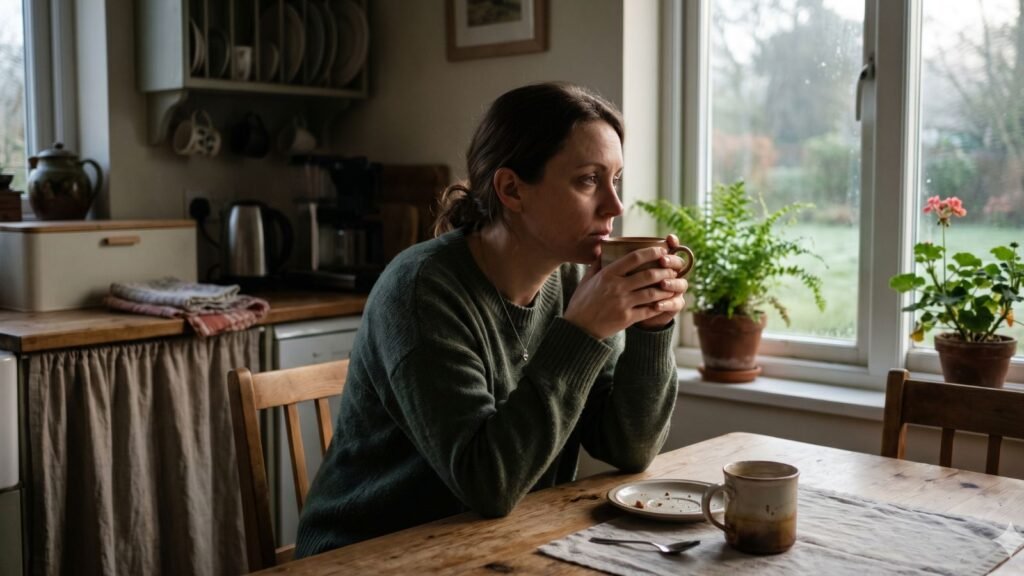
Imagine sitting on your couch on a quiet Sunday afternoon. The living room is warm, a cup of tea is cooling on the table, and for the first time in months, there’s absolutely nothing on your to-do list. Your relationships are stable, your work is steady, and the people you care about are safe. It’s a moment of pure, uncomplicated peace. But instead of breathing a sigh of relief, you feel a familiar tightening in your chest. You look at your phone, checking for missed calls or urgent emails, convinced that this stillness is too good to be true. You find yourself waiting for the other shoe to drop.
Most of us know this feeling well. It’s the strange restlessness that arrives precisely when things start going right. It’s the quiet voice whispering that if you let your guard down, you’ll be blindsided by whatever is coming next. We tend to criticize ourselves for this reaction, wondering why we can’t simply enjoy the good times when they finally arrive. We call ourselves pessimists, but the truth is usually much gentler than that.
The Guard We Forget to Let Down
This state of constant watchfulness isn’t a flaw in your personality. It’s actually a very logical response to having lived through times when the rug was suddenly pulled out from under you. If you’ve ever been surprised by a difficult season, a sudden parting, or a quiet disappointment that you never saw coming, your mind remembers. It notes how deeply that surprise stung. In response, it creates a strategy: if we expect the disappointment, it can’t catch us off guard.
It’s a form of emotional preparation. We tell ourselves that if we stay prepared for the worst, we’ll somehow be more resilient when it arrives. We rehearse potential struggles in our minds, playing out difficult conversations that haven’t happened or imagining losses that aren’t real, all in the hope of softening the blow. It feels like we’re protecting ourselves. In reality, we’re just keeping ourselves in a state of constant emergency.
The Illusion of Softening the Blow
There’s a comforting lie that preparation tells us. It convinces us that worrying about tomorrow protects us from the pain of tomorrow. But if you look back at your life, you’ll probably find that isn’t how things work. When a true disappointment occurs, it hurts just as much whether you spent the previous week worrying about it or not. The worry didn’t build a shield; it only stole the peace you were supposed to enjoy beforehand.
Psychologists who study how we process difficult events often point out that our minds are wired to prioritize safety over satisfaction. It’s a basic survival mechanism. When we’ve experienced periods of instability, our internal alarms become highly sensitive. They don’t automatically reset just because our outer circumstances have improved. Your life might be quiet now, but your internal alarm system is still patrolling the perimeter, looking for the threat that it’s convinced must be hiding just around the corner.
Learning to Sit in the Stillness
This is why learning to trust good moments is so difficult. It requires us to tolerate the vulnerability of not knowing what comes next. When you allow yourself to be happy, you’re also accepting the risk that things might change. That can feel terrifying if you’ve spent years relying on your watchfulness to keep you safe. Letting go of that guard feels like standing in an open field without any protection.
But there’s a profound difference between being safe and being guarded. Being guarded keeps us trapped in the memory of our past struggles, treating every quiet afternoon as if it were a calm before a storm. It prevents us from actually inhabiting our lives. We end up sitting at dinner tables with people we love, but our minds are miles away, scanning the horizon for the next complication. We’re physically present but emotionally absent, too busy preparing for a rainy day to notice that the sun is shining.
A Different Kind of Safety
Perhaps the realization we need isn’t that we must force ourselves to be perfectly relaxed all the time. Maybe it’s understanding that our watchfulness isn’t an enemy to be defeated, but an old protector that has served its purpose. When you feel that familiar unease creep in during a happy moment, you don’t have to fight it. You can simply acknowledge it. You can recognize that your mind is trying to keep you safe in the only way it knows how, using the rules of a past chapter that you’re no longer living in.
Trusting the good things in life doesn’t mean believing that nothing will ever go wrong again. Change is a natural part of life, and difficult seasons will always find their way back to us eventually. But trusting the good things means deciding that you won’t live those difficult seasons before they actually arrive. It means letting yourself feel the warmth of the sun today, even if you know it might rain next week. After all, the quiet moments aren’t a trap. They’re simply the places where we’re allowed to rest before we have to walk again.