You find yourself sitting on a metal folding chair in a gymnasium that smells faintly of floor wax and old sneakers. Around you, the room is a symphony of animated chatter. Parents are laughing, nodding, and leaning in to share inside jokes about the upcoming school fundraiser.
Then there’s you. You’re holding a nearly empty paper cup of lukewarm water, staring intently at your phone screen as if reviewing a document of monumental importance. In reality, you’re just scrolling through your emails for the fourth time in five minutes, desperately trying to look occupied.
It’s a quiet, specific kind of isolation that nobody warns you about when you bring a baby home. We expect the sleepless nights and the toddler tantrums, but we don’t expect the sudden return of adolescent insecurity. Standing in a crowd of people who are all sharing the exact same life stage, you can somehow feel entirely invisible. You aren’t just watching a school event; you’re watching a community that you aren’t sure you’re allowed to join.
The Crowd We Can’t Quite Reach
Adulthood doesn’t protect us from the desire to belong, but it does make the process of finding our place much more complicated. When we’re young, friendships often happen through proximity and unstructured time. We became friends because we sat next to each other in math class or lived on the same street. As adults, and especially as parents, those spontaneous spaces disappear, replaced by scheduled drop offs, structured activities, and brief, polite exchanges in the parking lot.
When you feel different from the surrounding group, those brief exchanges can feel like a test you didn’t study for. Maybe you’re a single parent, or older than the average grade school mom. Maybe you work demanding hours that keep you from volunteering for the field trips, or maybe you’re simply someone who needs quiet reflection to recharge. Whatever the reason, the gap between your daily life and the visible warmth of the parent cliques can feel vast and impossible to cross.
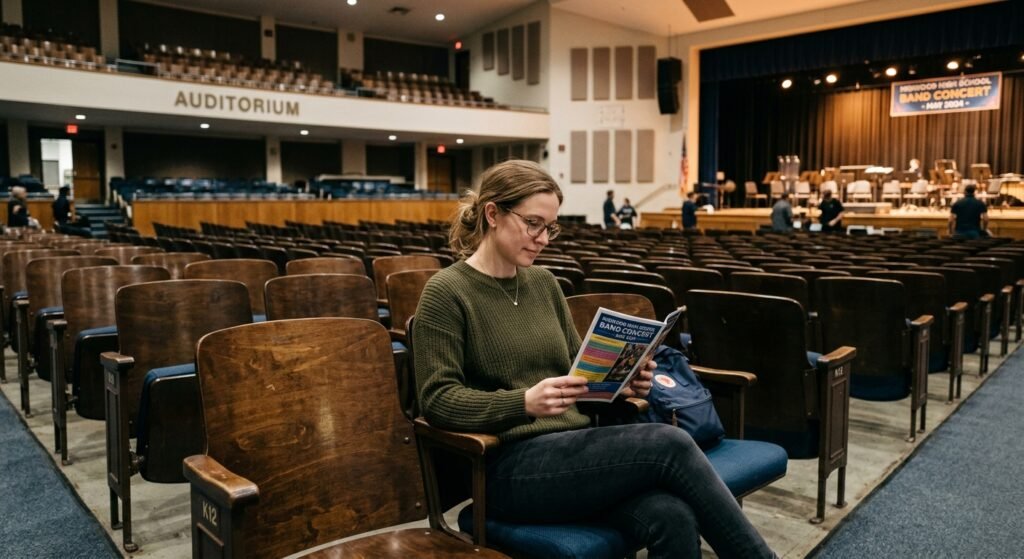
We often try to protect ourselves by retreating. We tell ourselves that we don’t need these connections anyway, that we’re only there for our children. But the uncomfortable sensation of standing alone at the back of the auditorium tells a different story. It’s the silent acknowledgment that we want to be seen, not just as caretakers, but as individuals who are also navigating this messy, beautiful chapter of life.
The Hidden Landscape of Parent Loneliness
If you’ve felt this way, it might help to know how common this quiet struggle actually is. Research into adult relationships consistently shows that life transitions, even positive ones like parenthood, are prime breeding grounds for isolation. A prominent study on family dynamics revealed that nearly seventy percent of parents experience significant feelings of loneliness, particularly in group settings like schools and community events. We assume that because parenthood is so communal, it must be naturally connecting, but the reality is often the opposite.
Psychologists refer to this as a form of social comparison stress. When we enter a highly visible social arena like a school, our brains automatically compare our internal state of confusion with everyone else’s polished exterior. We see the group of parents who seem to have it all figured out, and we assume they possess a secret blueprint for belonging that we somehow missed. We don’t see their private anxieties, their struggles at home, or the fact that some of them might be clinging to those groups out of the exact same fear of standing alone.
This pressure is compounded by the love we have for our children. We aren’t just managing our own social standing; we’re carrying the silent worry that our lack of connection will somehow isolate our kids. We worry that if we don’t make friends with the other parents, our child won’t get invited to the birthday parties or the weekend sleepovers. It’s a profound burden to carry, converting our personal social anxiety into a test of our parental adequacy.
Finding Our Value in the Margins
It’s easy to look at this situation and think the answer is to simply try harder, to force ourselves to walk up to a group of strangers and make small talk about the school curriculum. But sometimes, forcing a connection that doesn’t feel genuine only deepens the feeling of being an outsider. It keeps the focus on trying to fit into someone else’s circle rather than building a space where we can breathe comfortably.
Perhaps the path forward isn’t about transforming ourselves into the life of the parent association. It might be about changing how we view those quiet moments on the sidelines. Sitting alone doesn’t mean you’ve failed at community; it might just mean you’re protecting your energy so you can show up fully for the person who actually needs you to be there.
When your child looks up from the stage during the holiday concert, or searches the crowd from the soccer field, they aren’t looking to see if you’re surrounded by a circle of laughing friends. They aren’t checking your social status or measuring how popular you are with the other adults. They’re looking for one specific face, a single point of safety in a crowded room. They’re looking for you.
There’s a quiet beauty in being the parent who sits slightly apart, watching the world unfold with a calm, steady presence. It allows you to notice the child who is feeling nervous on stage, or the other parent who is also looking down at their phone, wishing someone would say hello. In the end, parenting isn’t a popularity contest we need to win. Maybe the real realization is that you don’t need to belong to the crowd to be the entire world for your child. By standing in the margins, you might just be exactly where you need to be to welcome them when they run off the stage and look for your hand.