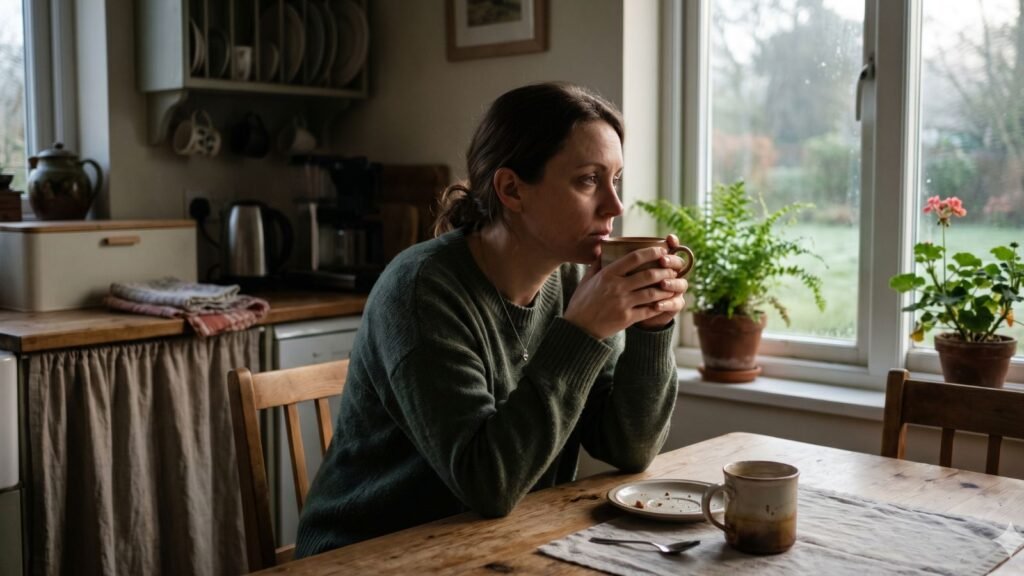
Think about the last time a friend looked you in the eye and asked how you were actually doing, and your immediate instinct was to dodge. You probably smiled, said you were fine, and immediately steered the conversation back to their life, their job, or their family. It’s a dance you’ve mastered over the years, a seamless transition from being the focus of the conversation to being the supportive listener. You’re the person who remembers everyone’s birthday, who keeps a spare phone charger in their bag just in case, and who knows exactly what to say when a coworker is having a difficult day. It feels natural, comfortable, and satisfying to be the one who heals, fixes, and supports.
But if you pay close attention to those quiet moments when the room empties and your home goes still, you might notice a subtle tension. There’s a distinct difference between wanting to support the people you love and needing to support them in order to feel secure. For many of us, focusing on everyone else isn’t just a generous choice. It’s a shield. As long as you’re busy tending to someone else’s garden, you don’t have to look at the weeds growing in your own backyard.
The Safety of Being Needed
It’s remarkably easy to mistake selflessness for safety. When you are the one offering help, you hold the keys to the interaction. You’re the strong one, the reliable one, the one who has everything under control. This position offers a quiet sense of power because it shields you from the unpredictability of your own needs. If you’re the counselor, you never have to be the patient. If you’re the driver, you never have to worry about where someone else is taking you.
This behavior often starts so early in life that we don’t even remember when it began. Perhaps you grew up in a home where emotions were unpredictable, and you learned that the best way to stay safe was to keep everyone else calm. Or maybe you discovered that praise and love only arrived when you were being helpful. Over time, this becomes more than just a habit; it becomes your entire style of relating to the world. You learn to read the subtle changes in a room, anticipating needs before anyone else even notices them. It feels like empathy, and it is, but it’s also a survival strategy.
The Silent Burden of the Helper
There’s an interesting concept in relationship psychology that describes how we handle inner anxiety by focusing outward. When our own inner world feels chaotic, messy, or overwhelming, our natural instinct is to find order somewhere else. Fixing a friend’s career dilemma or organizing a sibling’s life feels manageable. It has a beginning, a middle, and an end. Your own feelings, however, are rarely that tidy. They are complicated, unfinished, and sometimes quite painful to sit with.
Research into interpersonal dynamics shows that people who constantly care for others often score high on measures of social responsibility but struggle significantly with self-compassion. It’s as if we have a vast reservoir of warmth and patience for everyone else, but only a dry well for ourselves. We tell our friends to rest, to forgive themselves, and to take a break, yet we treat our own exhaustion as a personal failure. We carry the emotional load for our entire social circle, convinced that if we drop our end of the rope, everything will fall apart.
Why Receiving Care Feels So Threatening
If you’ve spent your life in the caregiver role, receiving love can actually feel terrifying. When someone tries to care for you, it forces you to step down from your pedestal of strength. It requires you to admit that you don’t have all the answers, that you are tired, and that you need help. For a chronic helper, this feels like losing control. It opens the door to vulnerability, which can feel like an invitation to rejection.
You might find yourself rejecting compliments, downplaying your struggles, or refusing help even when you’re completely exhausted. You tell yourself that you don’t want to be a bother, or that other people have it worse. But beneath those polite excuses lies a deeper fear. If you let someone see your mess, will they still want to stay? If you aren’t useful, are you still worthy of being loved? It’s much easier, and feels much safer, to keep people at a distance by keeping them on the receiving end of your generosity.
A Quiet Realization About Love
Breaking this pattern isn’t about stopping your care for others. You don’t need to become cold, distant, or selfish to find balance. It’s about realizing that your needs aren’t a distraction from your relationships; they are the foundation of them. When we refuse to let people care for us, we aren’t just protecting ourselves. We are also denying the people we love the opportunity to show us how much they care. We are keeping them at arm’s length, offering them a highly polished version of ourselves instead of our whole, true being.
Perhaps the realization we need isn’t that we should care less for others, but that we are allowed to occupy the same space we so willingly create for everyone else. You deserve the same patience, the same soft landing, and the same grace that you extend to those around you. When you finally allow someone to hold the umbrella for you when you are struggling, you might discover that the world doesn’t collapse. In fact, it becomes a much warmer place to live.