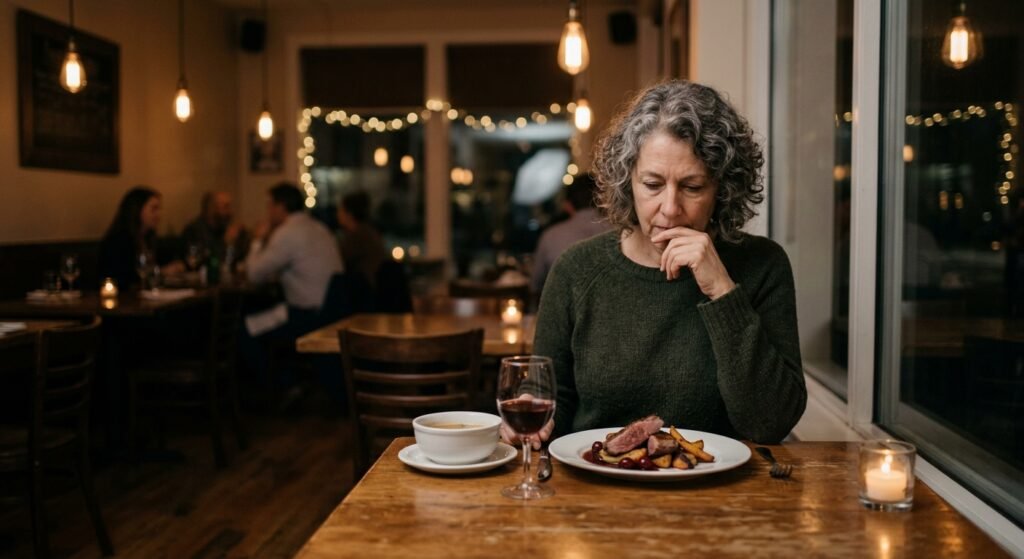
Think about standing in front of a menu at a local lunch spot, or staring into your own open refrigerator on a quiet Tuesday evening. You’re hungry, and yet, you aren’t just deciding what tastes good anymore. Instead, there’s a quiet, relentless interrogation happening in your mind. If you choose the salad, will you be searching the pantry for snacks in an hour? If you choose the pasta, what does that mean for the rest of your day? Every option suddenly feels like a test you didn’t study for, and the simple act of feeding yourself turns into a complicated puzzle that needs to be solved.
It’s an exhausting way to live, but for so many of us, it has become the default setting. We’ve taken something that should be a basic, comforting part of our daily rhythm and turned it into an ongoing math problem. We calculate, we negotiate, and we second guess. And in the process, we’ve lost the simple joy of just eating a meal without having to explain our reasoning to ourselves first.
The Kitchen Table as a Boardroom
Most of us can remember a time when eating didn’t require so much strategy. When we were younger, a slice of watermelon on a hot afternoon or a bowl of cereal before school was just a moment of satisfaction. We ate when we were hungry, we stopped when we were full, and we didn’t spend the next three hours wondering if we should’ve made a different choice. Food was simple, and it was allowed to be comforting.
But somewhere along the way, the culture around us started offering endless rules disguised as wisdom. We were told to track, to measure, to optimize, and to clean up our habits. What started as a sincere attempt to feel better slowly grew into a full time management job. Every plate became a report card, and every snack became a potential setback.
When you start viewing food primarily through the lens of metrics, the pleasure of eating is the first thing to go. You find yourself sitting down to dinner with a mental spreadsheet instead of an appetite. You’re looking at components, balancing macros, and managing portions, while the sensory experience of the meal itself fades into the background. It’s a lonely way to interact with something that is supposed to connect us.
The Quiet Illusion of Control
There’s a subtle psychology at play when we turn our meals into calculations. Often, overthinking what we eat isn’t really about the food at all. It’s about a deeper desire for predictability in a world that feels increasingly unpredictable. When work is stressful, relationships are complicated, and the future feels uncertain, our daily menu is one of the few things we can fully govern. We tell ourselves that if we can just get this one area of life completely right, we’ll somehow feel safe.
Psychologists who study eating behaviors often point out that this hyper vigilance actually creates its own cycle of stress. When we try to control every single bite, we elevate our anxiety levels, which paradoxically makes it even harder to tune into our body’s natural signals. The nervous system doesn’t know the difference between a real threat and the internal pressure of choosing the perfect dinner. It just knows you feel tense, which makes the entire dining experience feel fraught.
Research in behavioral medicine suggests that this kind of rigid restraint often backfires because our minds are wired to resist deprivation. When we label foods as strictly good or bad, we create a constant internal struggle. The more we tell ourselves we can’t have something, the more our focus zeroes in on it, leading to a cycle of restriction and eventual overindulgence. It turns out that our systems are much better at regulating themselves when we stop treating our appetite like an opponent we need to defeat.
The Burden of the Perfect Plate
Perhaps the most exhausting part of this behavior is the sheer volume of mental energy it steals from the rest of your day. Think of how many times you’ve spent the afternoon negotiating with yourself about what you’ll allow yourself to have for dinner. Or the quiet guilt that follows a meal that didn’t align with your goals. We carry this ledger around, constantly trying to balance the books of our appetite, and it leaves very little room for anything else.
This exhaustion is compounded by the fact that the goalposts are always moving. One year we are told to avoid one ingredient, the next year we’re told it’s the key to longevity. We are flooded with advice from experts, books, and wellness accounts, all promising that the perfect lifestyle is just one adjustment away. But trying to follow every piece of advice is like trying to catch the wind. It leaves you feeling permanently behind, as if you’re always one meal away from finally getting it right.
What we’re actually mourning in these moments isn’t just a relaxed relationship with food; it’s the version of ourselves that knew how to trust our own bodies. We’ve traded our natural intuition for external rules, and we’re left wondering why we still feel so unsatisfied even when we follow the guidelines perfectly.
Reclaiming the Quiet Joy of Eating
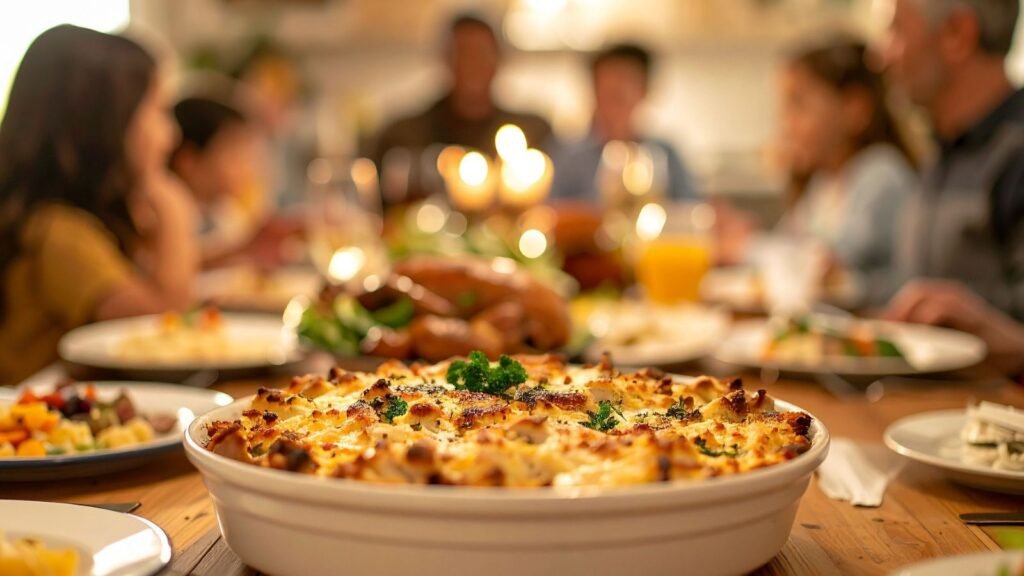
Maybe the mistake we make is believing that food needs to be a constant reflection of our discipline. We’ve loaded our plates with so many expectations of wellness and perfection that we’ve forgotten how to simply let a meal be a meal. Food doesn’t have to carry the burden of our moral worth. A simple lunch doesn’t make you a better or worse person; it’s just nourishment for the afternoon ahead.
When we stop trying to solve food like a riddle, we might find that our bodies already know how to guide us. There’s a profound relief in realizing that we don’t need to be perfect to be well. Sometimes, the healthiest thing we can do for ourselves isn’t choosing the most nutritious option on the menu, but choosing the option that allows us to sit back, laugh with friends, and actually enjoy the moment we’re in.
In the end, food is meant to sustain us, not consume us. The next time you find yourself standing before the refrigerator, caught in that familiar spiral of calculations, perhaps you can take a quiet breath and remember that you don’t have to get it perfectly right. You just have to eat. And maybe, in letting go of the need for the perfect choice, you’ll find the very peace you’ve been searching for all along.