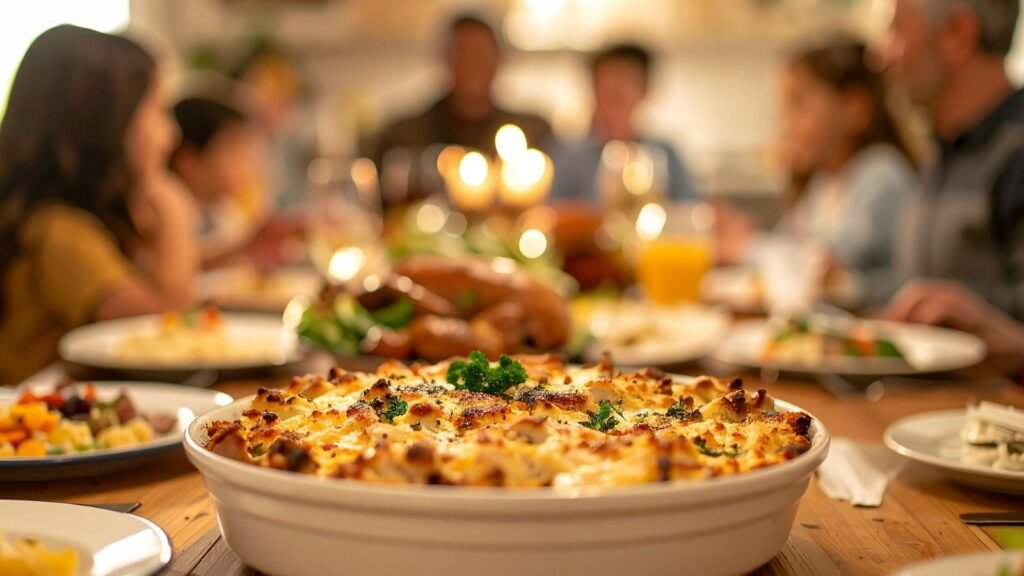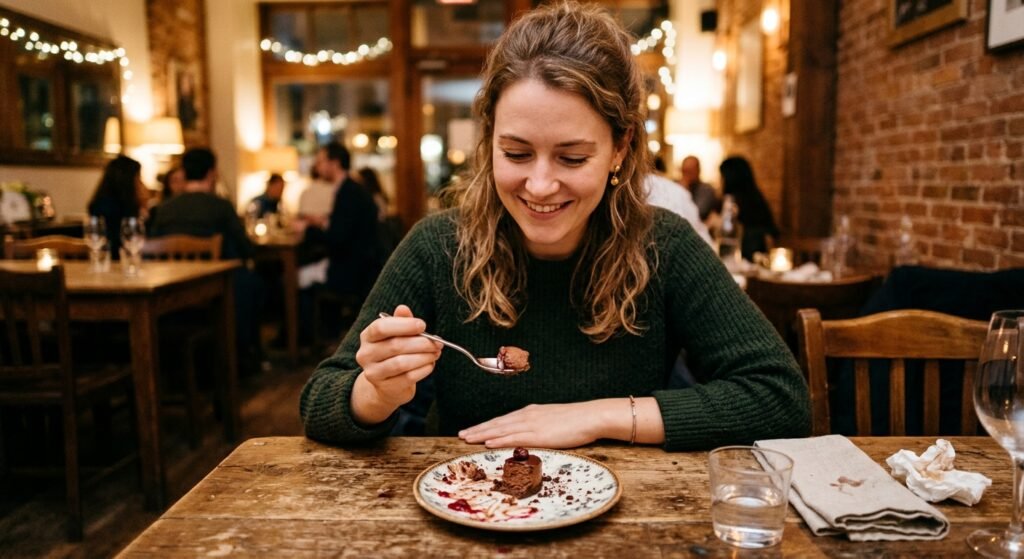
Can we talk about this for a second?
You’re sitting at the table, about halfway through a really good sandwich. You haven’t said anything out loud, but deep down, a very serious calculation is already underway. You’re quietly trimming the edges. You eat the slightly dry corner. You work your way through the crust. You strategically clean up the parts that are mostly just bread so that one specific, glorious section remains sitting in the center of your plate.
That final section has it all. It has the perfect ratio of filling, sauce, and crunch. It’s, by every measurable standard, the absolute champion of the meal.
And you’re saving it for last.
The Silent Strategy on Your Plate
Nobody taught us to do this, yet millions of people perform this exact same routine every single day. Whether it’s the soft center of a cinnamon roll, the crisp brown edge of a piece of lasagna, or the precise mouthful of ice cream that holds the most fudge, we treat the final bite like a grand reward for making it through the rest of the plate.
The funny part is the quiet story we tell ourselves while doing it. In that moment, holding back the best part feels completely logical. You convince yourself that if you eat the best bite first, the rest of the meal will feel like a disappointment. So you turn your lunch into a tiny obstacle course, eating around the good stuff, patiently waiting for the grand finale.
The Great Sharing Stand-Off
We’ve all seen what happens when someone doesn’t understand the rules. A friend reaches across the table, looks at the pristine center of your sandwich, and asks if they can have a taste. Suddenly, your brain freezes. You want to be nice. You want to be a generous friend. But they’re reaching directly for the anchor of your entire dining experience. That isn’t just a bite of food. That’s five minutes of careful planning they’re about to sweep away in a single second.
So what do you do? You politely redirect their fork toward the outer crust while pretending you’re just offering them a bigger piece. You save the center because some things are sacred.
Think about how much quiet focus goes into this process. If you’re eating a slice of pie, you don’t just eat from left to right like a machine. You construct each forkful with dedication. You balance a little bit of crust, a little bit of filling, and just enough whipped cream so that every bite feels balanced. But that last forkful? That one gets double the whipped cream. You save the top point of the pie slice for the very end because ending on a high note just feels right.
The Delight of Built-In Anticipation
At some point, it stops being about the food itself and becomes about the anticipation. The brain loves a good buildup. Leaving the best thing for last turns a simple meal into a tiny story with a happy ending. You get to spend ten minutes looking forward to something that you already own. It’s right there on your plate, completely within your control, waiting for you to decide the exact right moment to enjoy it.
Psychology tells us that people tend to judge an experience largely by how it feels at the very end. If a meal ends with something amazing, your brain files the whole experience away as a total success. That tiny mouthful of perfect flavor carries far more influence than it probably should. It rewrites the history of the slightly dry crust you ate three minutes earlier.
The Unexpected Risks of Final Bite Planning
Of course, this strategy carries a few risks that nobody likes to admit.
Sometimes you calculate wrong. You save the ultimate bite for the end, only to realize you’re suddenly completely full. Now you’re sitting there staring at the best part of your meal, locked in a silent staring contest with a piece of toast. You can’t leave it behind. You’ve invested too much emotional energy into this moment. So you force yourself to eat it anyway, purely out of respect for the plan you created ten minutes ago.
Or even worse, you set the perfect piece aside, look away for two seconds to check your phone, and accidentally bump the plate. The chosen bite falls onto the napkin. For a split second, the whole room goes quiet. You look at it. You realize what’s happened. Five minutes of careful planning, gone in an instant.
Why We Keep Doing It
Yet despite the occasional disaster, we keep doing it.
We keep eating around the edges. We keep saving the middle of the cinnamon roll. We keep carefully arranging the last spoonful of soup so it has the ideal blend of broth and vegetables. We do it because life doesn’t always offer guaranteed happy endings, but a really good plate of food lets us build one for ourselves.
It’s a tiny, harmless ritual that gives us a moment of pure satisfaction before we clear the table and get back to the rest of the day.
So the next time you see someone systematically eating around the edges of their dinner, don’t rush them. Don’t ask for a taste of whatever is left in the middle. They aren’t just eating. They’re executing a plan. They’re patiently building up to a tiny moment of delight that they’ve been looking forward to since the first forkful. Let them have their perfect ending. You’ll probably be doing the exact same thing with your own plate tomorrow.