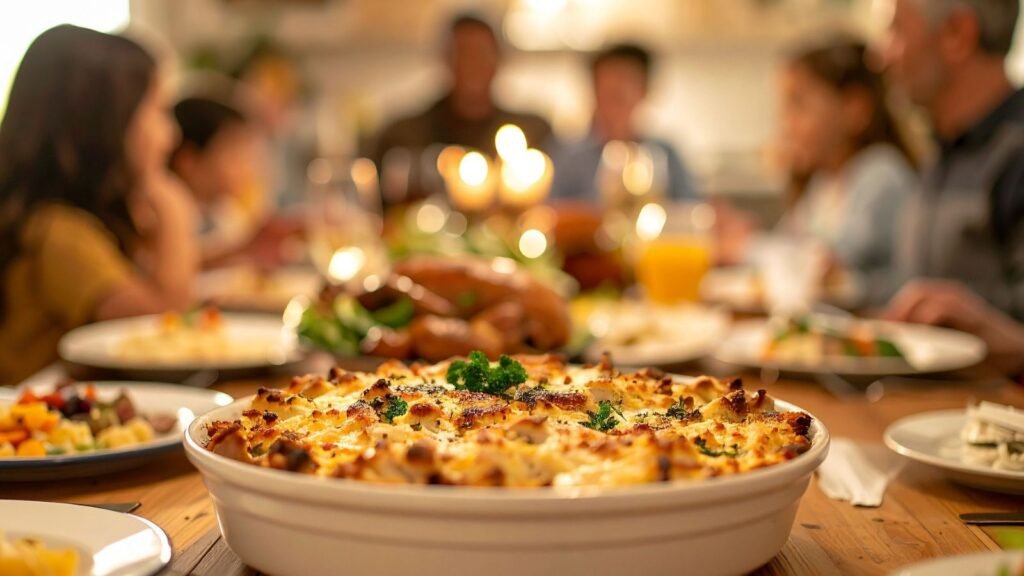

You probably know the exact moment the kitchen becomes a sanctuary. You receive a text, or perhaps a neighbor stops you by the mailbox to share some quiet, difficult news about someone down the block. A family is navigating a profound loss. Almost immediately, without even thinking about it, you find yourself standing in front of your pantry. You aren’t particularly hungry, and it is hours before dinner, but you pull out the flour, the sugar, or the large baking dish you reserve for special occasions. Your mind is already calculating how many people are staying at their house, and whether a hearty pasta bake or a loaf of warm banana bread would bring the most comfort.
It is a quiet, instinctual rhythm that plays out in neighborhoods everywhere. When life falls apart, we cook. We chop carrots, stir bubbling pots of soup, and wrap warm dishes in aluminum foil. We don’t do this because we believe a casserole can cure a broken heart, or because we think a plate of cookies will make the grief disappear. We do it because we are faced with a situation where words feel entirely inadequate, and our hands need somewhere to go.
The Language We Speak When Words Fail
In the wake of a loss, the standard expressions of support can feel remarkably fragile. Saying “I’m so sorry” or “let me know if you need anything” is polite, but it often places a burden on the grieving person to ask for help when they barely have the energy to breathe. A warm dish delivered to the front porch asks for nothing in return. It does not require a conversation, an explanation, or even an invitation to step inside. It simply arrives, a quiet testament that someone is thinking of them.
When you prepare food for someone who is grieving, you are taking on a small portion of their daily survival. In the initial days of grief, the executive functions of the brain—the parts responsible for making decisions, planning, and organizing—often go offline. Deciding what to eat, let alone grocery shopping or cooking, can feel like climbing a mountain. By showing up with dinner, you are quietly removing one hundred tiny decisions from their day. You are saying, you don’t have to worry about how to feed yourself tonight; we have taken care of that.
This instinct to feed one another during times of crisis is as old as community itself. For centuries, sharing food has been the ultimate signal of safety and belonging. When we cook for a grieving neighbor, we are participating in an ancient tradition of protection. We are letting them know that even though their world has been upended, the community around them remains intact, holding them steady while they find their footing.
The Comfort in the Making
Interestingly, the act of cooking for a grieving neighbor doesn’t just benefit the recipient. It offers a profound sense of grounding for the person doing the cooking as well. Psychologists who study altruistic behavior note that taking action during a crisis helps us manage our own feelings of helplessness. When we care about someone who is suffering, we feel a natural urge to alleviate their pain. Because we cannot fix their grief, we redirect that emotional energy into something tangible.
There is a therapeutic quality to the kitchen when you are cooking with purpose. The repetitive motion of chopping vegetables, the steady warmth of the oven, and the familiar aromas filling the air offer a gentle anchor. Researchers who study how we bond have found that preparing a meal for another person activates the very same pathways in our brains that light up when we care for a loved one. It is a physical expression of empathy that actually helps us process our own distress at the fragility of life. By nurturing someone else, we quietly soothe ourselves.
And let’s be honest, there is something beautiful about the sheer simplicity of it. In a world that often demands grand gestures or perfect solutions, cooking is humble. It doesn’t pretend to be more than it is. It is just ingredients, heat, time, and care, brought together in a dish that can be eaten on the couch with a spoon.
What We Are Truly Delivering
If you look closely at the food that gets delivered during these times, it is rarely fancy. It is almost always comfortable, familiar, and easy to reheat. It is the kind of food that reminds us of childhood, of safety, of times when life felt uncomplicated. We send mashed potatoes, baked ziti, chicken soup, and fresh bread. These aren’t just meals; they are emotional blankets.
When a grieving person sits down to eat what you’ve made, they aren’t just consuming nutrients. They are tasting the time you spent standing over the stove. They are feeling the care that went into measuring the ingredients. Every bite is a quiet reminder that they are loved, that they are seen, and that they are not alone in the quiet corners of their sorrow. The food becomes a bridge between their isolation and the warmth of the outside world.
Perhaps that is the real reason we cook when someone in our neighborhood grieves. It is not about the recipe, and it is certainly not about solving their pain. It is about offering a gentle, steady presence when everything else feels chaotic. It is the realization that while we cannot bring back what they have lost, we can quietly feed the life that remains, one warm dish at a time.