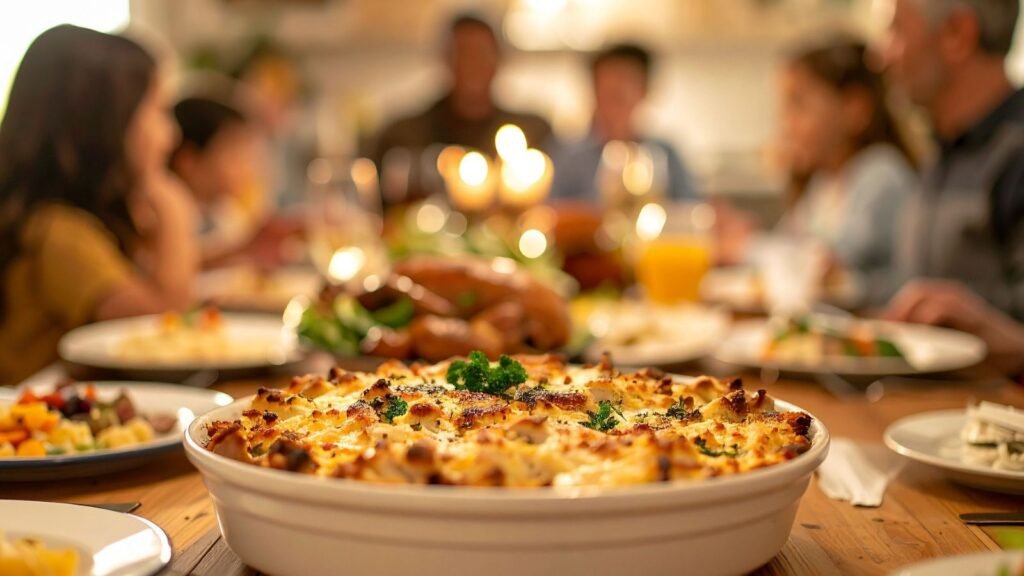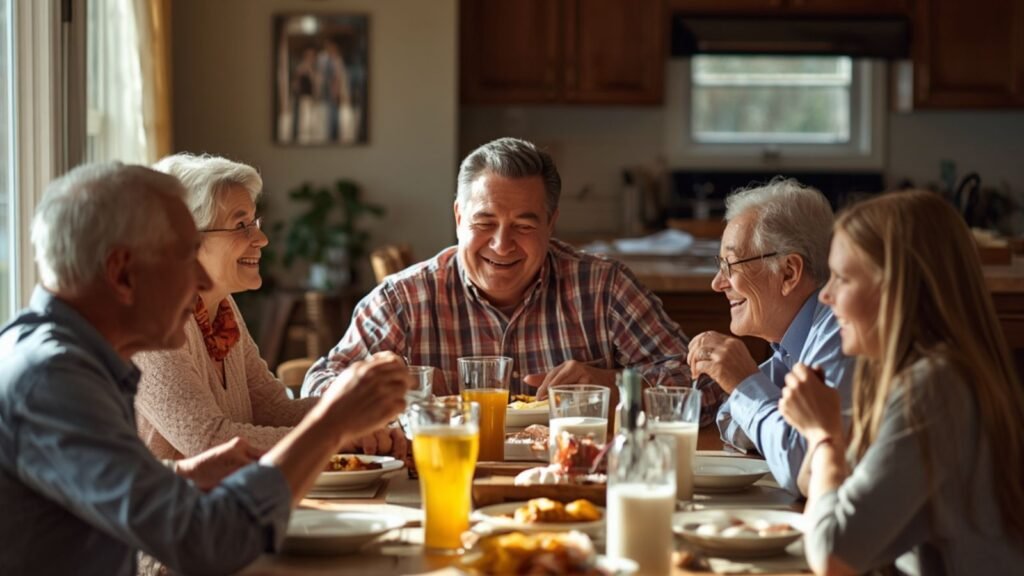
If you’ve ever tried recreating a favorite meal from childhood only to discover that it didn’t feel quite the same, you’re not alone. Many people spend years convinced that they’re searching for a recipe when they’re actually searching for a feeling.
They buy the same ingredients, they follow the same instructions, they even use the same cookware. Still, somehow the experience never fully matches the memory they’ve been carrying around for years. That’s because the thing most people miss isn’t the food itself. It’s the environment that surrounded it.
It’s the voice calling everyone to dinner from the kitchen, the familiar sound of family members talking over one another, the laughter that seemed ordinary at the time, and the comfort of knowing exactly who would be sitting in each chair around the table. The meal was present, of course, but it was only one piece of a much larger experience.
When people talk about comfort food, they’re often talking about connection without realizing it. They’re talking about belonging. They’re talking about being part of something familiar and safe. They’re talking about a moment in time when life felt stable enough that nobody thought to appreciate it because everyone assumed it would always be there.
And honestly, that’s why certain foods can feel surprisingly emotional decades later. The memory attached to them was never just about what was being served. It was about who was there to share it.
The Dinner Table Has Always Been About More Than Food
For thousands of years, human beings have gathered around meals for reasons that extend far beyond hunger. Long before phones, television, social media, and endless digital distractions competed for attention, food provided a reason for people to sit in the same place and simply be together. Families shared stories. Friends exchanged news. Communities celebrated milestones. Entire traditions were built around gathering people around a table and giving them a reason to stay awhile.
What’s interesting is that despite how dramatically the world has changed, that emotional purpose hasn’t disappeared. A family dinner still has the ability to create memories. A holiday meal can still bring together people who may not have seen each other in months. Even a simple cup of coffee shared between two friends can sometimes become the setting for conversations remembered years later.
Food creates something modern life often struggles to create naturally: presence. For a little while, people stop rushing toward whatever comes next and focus on what’s directly in front of them. The meal slows everyone down just enough for connection to happen.
And in a world where everyone seems busy all the time, that may be one of the most valuable things food continues to offer.
We Remember The Feeling More Than The Meal
Think about some of your strongest food memories for a moment. Chances are, the details that come to mind have very little to do with ingredients. You probably remember who was sitting nearby, what the room felt like, what people were talking about, or how life seemed during that particular season. The food may be part of the memory, but it’s rarely the entire memory.
That’s because human beings don’t store experiences the way recipe books store instructions. We attach emotions to moments. A birthday cake becomes connected to feeling celebrated. A holiday dinner becomes connected to family traditions. A bowl of soup becomes connected to being cared for during a difficult week. Over time, the emotional meaning attached to the meal becomes far more important than the meal itself.
It’s why a grilled cheese sandwich made by a grandparent can remain unforgettable while a far more elaborate restaurant meal disappears from memory within a few weeks. One fed your stomach. The other fed something deeper. The food became attached to a person, a feeling, or a chapter of life that mattered.
Years later, the memory remains because the emotional experience remains. The meal simply became the bookmark that helps you find it again.
Some Meals Become Family History
One of the most beautiful things about food traditions is that they quietly become part of a family’s story without anyone fully realizing it while they’re happening. The same recipes appear every holiday. The same dishes show up at birthdays. The same meals arrive after long weeks, difficult days, celebrations, graduations, and ordinary Sunday afternoons that seem completely unremarkable at the time.
Then years pass.
Children grow up. People move away. Family members get older. Life becomes busier. Suddenly those ordinary meals don’t seem ordinary anymore. They become reminders of a chapter that existed before everyone realized it was becoming a memory. Looking back, it isn’t the recipe that feels important. It’s the realization that dozens or hundreds of moments unfolded around those meals without anyone recognizing how meaningful they would eventually become.
That’s often how nostalgia works. It doesn’t arrive because something was perfect. It arrives because something was loved. The ordinary moments become precious in hindsight precisely because they were never trying to be extraordinary in the first place.
And maybe that’s why family recipes carry so much emotional weight. They’re one of the few ways we can briefly revisit people, places, and versions of ourselves that no longer exist exactly as they once did.