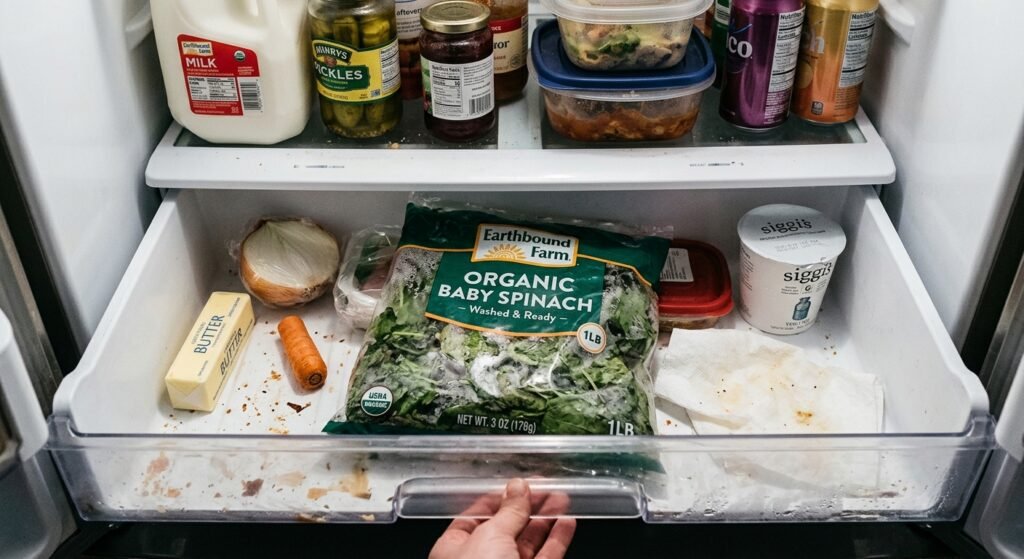
You are pushing your cart through the grocery store on a Sunday afternoon. You’ve already tossed in some tortilla chips, a frozen pizza, and maybe those cookies that were strategically placed at the end of the aisle. But then, you turn the corner into the produce section. The automated mist is spraying, the lighting is strangely dramatic, and there they are: the giant plastic tubs of organic baby spinach.
For some reason, this suddenly feels completely reasonable. You don’t just look at the spinach; you look at it and see a completely different version of yourself. This is the version of you who wakes up early, stretches on a yoga mat, and drinks green smoothies while looking thoughtfully out a window. This person does not eat cold pizza over the sink. This person is hydrated, organized, and definitely knows where their keys are at all times.
The Aspirational Supermarket Selection
So, you reach out and grab the family-sized tub. Not the small bag, because that’s for amateurs. You choose the container that looks like it could feed a small farm animal. If you are going to be healthy, you are going to go all in. You toss it into the cart right next to the chocolate chip cookies, quietly believing that the sheer proximity of the greens somehow neutralizes the sugar.
Five minutes later, you are standing in the checkout line feeling an immense sense of accomplishment. You haven’t even eaten a single leaf yet, but you already feel lighter, cleaner, and slightly superior to the person behind you buying three boxes of sugary cereal.
When you get home, the spinach gets prime real estate. You don’t hide it in the crisper drawer where vegetables go to be forgotten. You place it right on the middle shelf of the refrigerator, perfectly positioned at eye level. Every time you open the door over the next few days, you want to be reminded of your new, highly disciplined lifestyle. It sits there like a shiny green trophy of your good intentions.
The Mid-Week Reality Check
The first night, you feel great just knowing it’s there. You end up ordering takeout because unpacking groceries is exhausting, but you tell yourself that tomorrow is the day the green revolution officially begins. The spinach sits quietly in its plastic home, waiting.
Somehow, this always happens. By Tuesday evening, you open the fridge to make dinner. You look at the spinach. The spinach looks back at you. You realize that making a salad requires washing a bowl, finding a fork, and actually chewing raw leaves for ten minutes. That feels like an unreasonable amount of work for a Tuesday.
You decide a grilled cheese sandwich is a much safer choice. To keep the dream alive, you promise yourself you’ll put a handful of spinach inside the sandwich to make it healthy. But we all know how this ends. You don’t put the spinach in the sandwich. You eat the grilled cheese, look at the plastic tub, and think, “Tomorrow, definitely.”
By Thursday, a subtle change has occurred inside the plastic tub. The leaves at the top still look relatively optimistic, but there is a suspicious amount of condensation building up on the inside of the container. It’s starting to look less like a healthy snack and more like a miniature tropical rainforest. You quickly close the refrigerator door, deciding that tonight is a great night to eat whatever is left of the takeout.
The Sauté Delusion
By Saturday, the spinach has reached the point of no return. The leaves at the bottom have quietly dissolved into a dark, mysterious liquid. But you still aren’t ready to let go of the dream. This is when the negotiation starts. You convince yourself that you can still sauté it. You tell yourself that if you cook it down with some garlic and olive oil, it will shrink to the size of a single postage stamp anyway. It’s basically a superfood concentrate at this point.
At some point, it stops being about the food and starts being about admitting defeat. You leave the tub in the fridge for another two days, waiting for the perfect sautéing moment that you know, deep down, is never actually going to come. You are holding onto that spinach because throwing it away means admitting that the version of you who eats organic salads on Tuesday nights was just a beautiful, temporary fantasy.
Why do we keep doing this to ourselves? There is a beautiful, quiet optimism in buying fresh vegetables. The act of buying the spinach is actually the main event. In our minds, the purchase itself counts as a healthy choice. For a few dollars, we get to buy a little bit of hope. It feels good to want to be better, even if our Sunday afternoon energy doesn’t quite match our Wednesday night reality. Sunday-You has big plans, but Wednesday-You is tired, and that is completely okay.
The Clean Slate
Eventually, trash day arrives. You finally pull the tub from the back of the fridge. You try to hold your breath as you open the lid, quickly dumping the sad, soggy green puddle into the trash can. There is a brief moment of quiet guilt as the plastic container clatters into the bin. But then, something wonderful happens. The fridge is clean again. The slate has been wiped. You feel a sudden wave of fresh energy and relief.
Next Sunday, when you are walking through the produce aisle and the cool mist sprays over the fresh vegetables, you’ll look at those bright green tubs of spinach again. You will remember the soggy mess from last week for about half a second. But then you’ll think, “No, this week is going to be different.” And you’ll put it in the cart. Because honestly, we all do this. And a little bit of hope is always worth the price of a bag of spinach.