
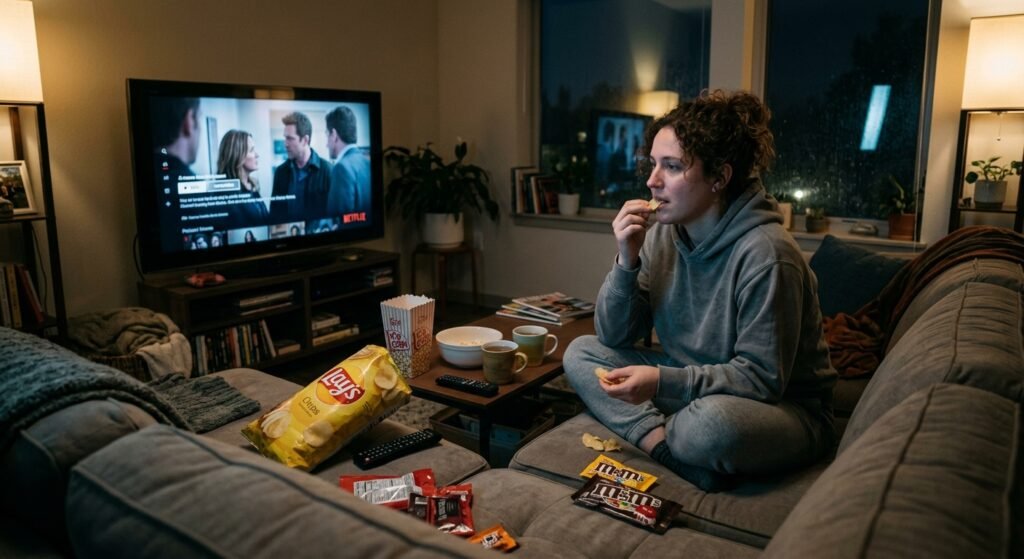
You’ve likely found yourself standing in front of the open refrigerator late at night, bathed in its cool, pale light. The house is quiet, save for the soft hum of the appliance. You aren’t actually hungry. You had dinner hours ago, and your body doesn’t need fuel. Yet, there you are, scanning the shelves for something sweet, salty, or warm. It’s a familiar ritual that usually happens when the day finally slows down and the distractions of work, chores, and conversations have faded away.
In those quiet moments, food is rarely just food. It becomes a bridge. When we reach for a bowl of cereal or a handful of cookies in the dark, we’re often looking for something we can’t find in the pantry. We’re looking for a pause. We’re looking for a way to soften the sharp edges of a difficult day, to fill a quiet room, or to soothe a restless mind that refuses to settle. It’s a deeply common experience, and yet, so many of us feel a sense of quiet shame when we realize we’re eating to escape how we feel.
But if you look closer, this behavior makes perfect sense. From the very beginning of our lives, eating and comfort have been hopelessly intertwined. As infants, we were held and fed when we cried. We learned very early that being nourished is synonymous with being safe, warm, and loved. That connection doesn’t simply vanish when we grow up. It stays with us, buried deep in our emotional memory, waiting to be called upon when the world feels a bit too loud or uncertain.
The Safe Space of the Kitchen
Think about the foods you reach for when you’re feeling overwhelmed, lonely, or bored. They are rarely crisp salads or steamed vegetables. Instead, they’re the foods that feel like a warm blanket. Creamy pastas, fresh pastries, salty chips, or rich chocolate. These choices aren’t accidental. They’re rich in fats and carbohydrates, which trigger a very specific response in our bodies.
When we consume these foods, our brains experience a temporary surge of dopamine, the chemical associated with pleasure and reward. At the same time, eating these rich foods can temporarily lower our levels of cortisol, the primary stress hormone. It’s a biological system designed to keep us safe and calm. When you eat to soothe yourself, you aren’t showing a lack of willpower. You’re actually using a highly effective, immediate tool to help your nervous system find its balance.
The relief is fleeting, of course. The dopamine level drops, the cortisol returns, and the underlying emotion is still sitting there, waiting for us. But in those few minutes while we are chewing and tasting, we get to experience a rare moment of peace. The food acts as a temporary shield against whatever is causing us pain, worry, or emptiness.
Finding a Pause in the Motion
Sometimes, we eat simply because we don’t know what else to do with ourselves. In a culture that values constant productivity and endless action, sitting quietly with our feelings can feel profoundly uncomfortable. When sadness, anxiety, or boredom creep in, our immediate instinct is often to do something to fix it. We want to solve the problem, distract our minds, or change our internal landscape. Walking to the kitchen and preparing a snack gives us a physical task. It gives our hands something to hold, our mouths something to process, and our minds a simple, predictable sequence of steps to follow.
It’s a way of hitting the pause button on our lives. For a few minutes, we don’t have to figure out our careers, mend our relationships, or worry about the future. We only have to focus on the taste of chocolate or the crunch of a chip. In this way, food becomes a safe harbor. It’s a small, manageable universe where we are entirely in control, even when the rest of our lives feels messy and unpredictable.
The Quiet Language of Nourishment
When we look at this habit through a lens of curiosity rather than criticism, we begin to see that our cravings are actually trying to tell us something important. A sudden urge for something sweet might not be a physical demand for sugar, but rather a sign that your day has been entirely devoid of sweetness, play, or joy. A craving for something crunchy and loud might be a safe outlet for unexpressed frustration or anger that you’ve been holding back during a difficult meeting or a tense conversation.
Researchers who study eating behaviors often point out that our relationship with food is one of the most honest mirrors of our emotional state. We use it to celebrate, to mourn, to connect, and to survive. When we find ourselves eating when we aren’t hungry, it’s rarely because we don’t understand nutrition. It’s because we’re trying to meet an emotional need with a physical solution. It’s an attempt to take care of ourselves, even if it’s the only way we know how in that moment.
Understanding this doesn’t mean we have to immediately change our habits or police our plates. In fact, trying to force ourselves to stop can often create even more stress, leading us right back to the refrigerator. Instead, it simply allows us to bring a bit of tenderness to the moments when we find ourselves holding a spoon in the middle of the night.
The Realization at the Center of the Plate
Maybe the goal isn’t to stop turning to food for comfort entirely. Maybe the real step forward is simply acknowledging what we’re actually hungry for.
When you find yourself reaching for that extra slice of cake or that bag of chips, you don’t have to scold yourself. You don’t have to feel like you’ve failed some unspoken test of discipline. Instead, you can take a slow, deep breath and quietly ask yourself what you’re hoping that food will give you. Are you looking for comfort? Are you looking for a break? Are you feeling lonely, and hoping for a warm presence in a quiet house?
Once you recognize the true source of your hunger, the food itself begins to lose its magic power. You realize that the warm meal was never actually going to heal your heartbreak, and the cookies were never going to make your workload disappear. But you also realize that wanting comfort is a beautiful, deeply natural part of being alive. And sometimes, realizing that you’re just looking for a little bit of warmth is enough to help you close the refrigerator door, wrap yourself in a real blanket, and finally give yourself the comfort you actually needed all along.