
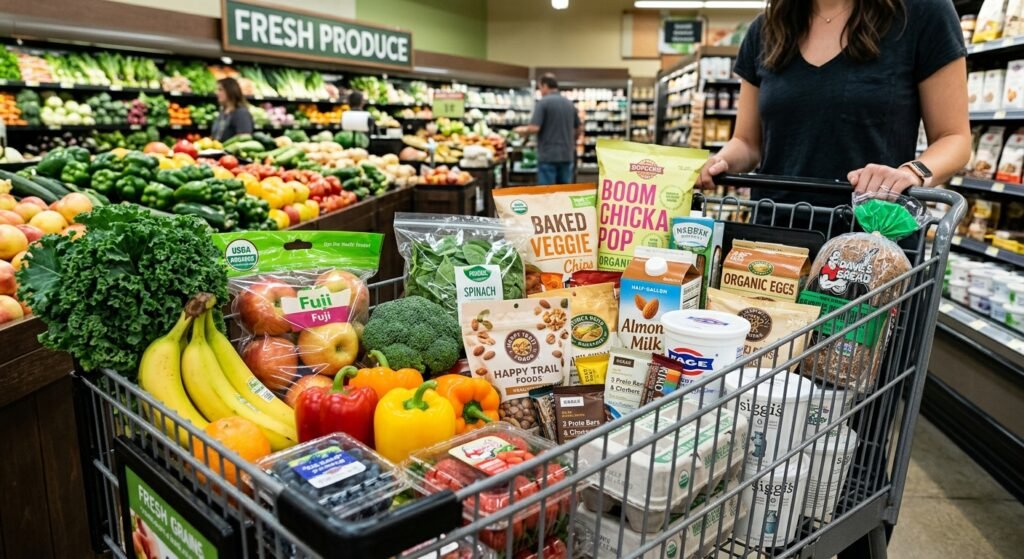
Can we talk about this for a second?
You walk into the grocery store on a Sunday afternoon, grab a cart, and suddenly you’re not just a person buying food anymore. You’re a visionary. You’re a culinary pioneer. You’re about to become the kind of person who knows exactly what to do with a raw spaghetti squash.
We’ve all experienced this moment of pure optimism. You glide past the bakery department without looking back, completely ignoring the fresh chocolate chip cookies that usually call your name. Today, you have a plan. You turn the corner into the produce section, take a deep breath of that crisp, misted air, and prepare to build the cart of a lifetime.
Somehow this always happens. The minute your hands touch the handle of that shopping cart, your brain undergoes a total rewrite. You look at a massive bunch of organic kale and think, yes, this is the week we start making green smoothies every single morning before sunrise. You grab three lemons, a root of raw ginger, and a bag of chia seeds. In the moment, this suddenly feels completely reasonable.
You’re not just shopping for groceries. You’re shopping for the imaginary version of yourself who wakes up early, stretches, and never looks at a phone screen before breakfast. This version of you doesn’t eat frozen pizza. This version of you roasts chickpeas for fun.
The Beautiful Illusion of the Crisper Drawer
The funny part is how easy it is to convince yourself that buying the food is the exact same thing as eating the food. When you place a head of broccoli into your cart, you get a little rush of accomplishment. It’s like your brain registers the purchase as a finished meal. You tell yourself that the hardest part is over. You’ve made the right choices, you’ve paid for the vegetables, and now you can reap the rewards of being a responsible adult.
Then you get home and unpack everything. You carefully place the fresh spinach, the bell peppers, and the artichokes into the crisper drawer. It looks beautiful. It looks like a picture from a home styling magazine. You close the drawer, slide the little humidity tab to high, and feel a deep sense of satisfaction. Everything is exactly where it belongs.
But we all know how this ends.
By Wednesday evening, the enthusiasm has started to fade. You come home after a long afternoon, open the refrigerator, and stare directly into the crisper drawer. The spinach is still there, looking slightly less vibrant than it did on Sunday. To eat it, you’d have to wash it, spin it, chop some other ingredients, and find a clean bowl. That feels like a lot of steps.
Instead, you quietly close the drawer, turn around, and boil some pasta. You convince yourself that you’ll definitely eat the spinach tomorrow. Tomorrow is a much better day for salad.
The Slow Decline of the Produce
Five minutes later, you’re happily eating pasta with jarred sauce, completely ignoring the green vegetables waiting for their moment in the spotlight. This is when the silent negotiation begins. Every time you open the refrigerator over the next few days, you make eye contact with the produce. And every time, you find a small, comforting excuse to wait just a little longer.
At some point, it stops being about the food and starts being about timing. You look at the avocados. On Monday, they were rock hard. On Tuesday, they were still pretty solid. On Wednesday, you forgot to check. By Thursday, they have reached that highly specific five-minute window of perfect ripeness, but you’re too busy to notice. By Friday, they’ve quietly transitioned into a state of existence where they’re basically just soft, brown spheres of disappointment.
Yet, you don’t throw them away immediately. That would feel like admitting defeat. Instead, you leave them in the drawer for another two days, hoping some kind of miracle occurs, before finally tossing them into the trash with a quiet sigh of regret.
The spinach experiences an even more tragic journey. It goes from crisp and hopeful, to slightly limp, to a dark, mysterious liquid at the bottom of the plastic container. When you finally pull it out, you hold it with two fingers, trying not to make direct contact, and quickly dump it into the garbage bag. You feel a brief flash of guilt, but it’s quickly replaced by the relief of having a clean refrigerator again.
Why We Keep Doing It Anyway
Why do we keep playing this game with ourselves? It would be so much easier to just admit that we’re going to eat pasta, toast, and takeout, and leave the exotic vegetables at the store. But if we did that, we’d have to give up on the dream of who we could be.
Those vegetables are more than just vitamins and fiber. They’re a weekly vote of confidence in our own potential. When we buy them, we’re saying that we believe we can do better, that we want to take care of ourselves, and that we still believe in the possibility of a fresh start. The grocery cart is one of the few places where we can buy a brand-new identity for under fifty dollars.
Our brains love these little rituals of renewal. Even if the spinach ends up as compost, the act of buying it gives us a moment of genuine hope. It’s a way of practicing optimism in the middle of our normal, busy lives.
So the next time you find yourself standing in the produce aisle, staring at a bag of organic brussels sprouts that you secretly know you’ll never cook, go ahead and put them in the cart. Sure, you might end up making grilled cheese instead. You might have to clear out some soggy greens next Sunday morning.
But for those few minutes at the checkout counter, you get to be the person who has everything completely under control. And honestly, we all deserve to feel that way at least once a week. You’ll probably do it again tomorrow, and that’s perfectly fine.