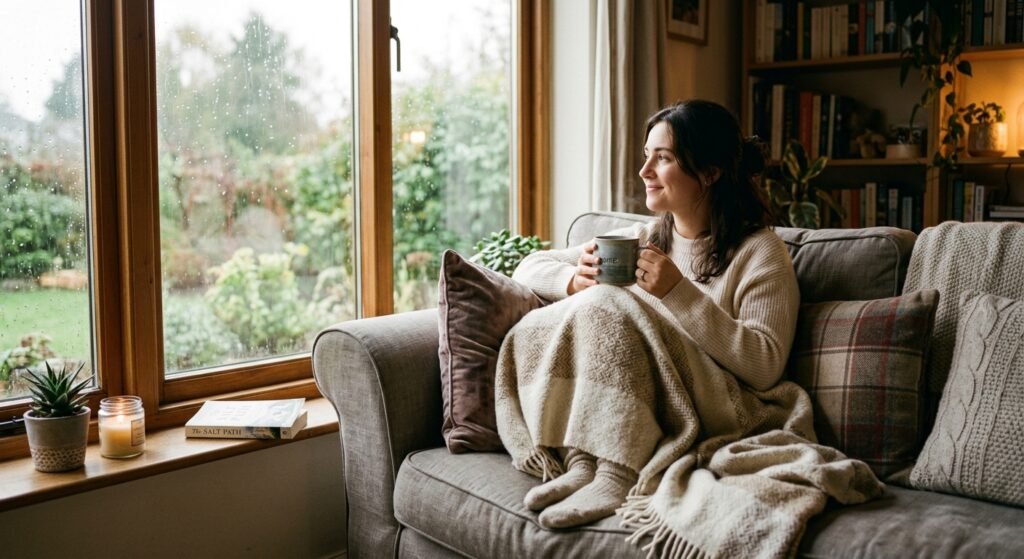
You finally get a quiet afternoon where nothing is urgent. The obligations are finished, your phone is still, nobody needs anything from you, and for the first time in weeks, you have permission to sit down and relax. Yet, instead of feeling settled, a subtle restlessness creeps into the room. You check your phone for messages that aren’t there. You find yourself standing up to wipe down a counter that’s already clean or rearranging items on a shelf. It turns out that after spending a long time anticipating trouble, stillness doesn’t feel like a reward. It feels like a warning.
Most of us assume that calm is our natural default setting, something we automatically return to once a stressful week ends. But when you’ve lived through a prolonged season of uncertainty or continuous demand, your mind gets used to operating in high gear. You become accustomed to watching for sudden changes, managing reactions, and keeping everything steady. That state of high alertness keeps you safe during difficult times, but it doesn’t automatically turn off just because the room is quiet.
When Calm Feels Like Unfamiliar Territory
When you’ve been braced for impact for months, a sudden lack of tension can actually feel disorienting. Psychologists often notice that our nervous system values predictability far more than comfort. If high stress or constant busyness has been your baseline for a long time, quiet surroundings don’t immediately register as peace. They register as unfamiliar territory. And to a mind that’s spent years solving problems, an absence of problems feels like a missing piece of information.
That’s why you might find yourself waiting for the catch during moments that ought to feel wonderful. You sit on the couch during a peaceful evening, and instead of sinking into the comfort, you wonder when the bad news will arrive. You search for the hidden drawback in a good week, convinced that life is simply gathering momentum before taking something away. It’s almost as if staying slightly anxious gives you a sense of control, while allowing yourself to relax feels like dropping your guard completely.
The Protection of Staying Prepared
In a curious way, staying on edge can feel like a safety strategy. If you constantly expect a crisis, you feel like you won’t be caught off guard when something goes wrong. If you let yourself enjoy the quiet, a small part of you worries that you’ll be vulnerable when life becomes chaotic again. So you remain braced, holding your breath, confusing internal strain with actual readiness.
It’s an understandable response. People don’t hold onto strain because they enjoy being stressed. We hold onto it because, at some point in our lives, being vigilant was necessary. It helped us navigate chaotic environments, difficult circumstances, or periods where things felt unpredictable. The difficulty arises when the old survival habit lingers long after the environment itself has become safe.
Learning How to Receive Rest
Studies in emotional regulation suggest that feeling settled during quiet moments is a skill that gets rebuilt over time rather than a simple switch you flip. When your internal alarm system has been calibrated for quick action, it requires gentle practice to teach your body that calm isn’t a trick. It takes time to catch up to the reality that the emergency has already passed.
That practice doesn’t require deep meditation or elaborate routines. Sometimes, it’s as simple as lingering at the dining table for five minutes after finishing lunch, even when your brain tells you to clean up immediately. It’s letting your hands rest in your lap while watching the afternoon sunlight move across the floor, without convincing yourself that you’re wasting time. It’s noticing the subtle impulse to invent a problem, and deciding to let the moment remain simple instead.
Trusting the Quiet Moments
Many of us grew up with the quiet belief that rest must be earned, that you’re only allowed to relax once every single item on your list is checked off and every potential future issue is accounted for. But since life rarely offers a day where everything is completely resolved, real rest keeps getting pushed into a future that never quite arrives.
Maybe peace isn’t the complete absence of challenges or the guaranteed certainty that nothing will ever go wrong again. Maybe peace is simply learning to trust the present moment enough to put down your tools for an hour. You don’t have to spend a calm afternoon bracing for a storm that isn’t on the sky. Sometimes, allowing yourself to sit in a quiet room and receive the rest that’s right in front of you is where healing actually begins.