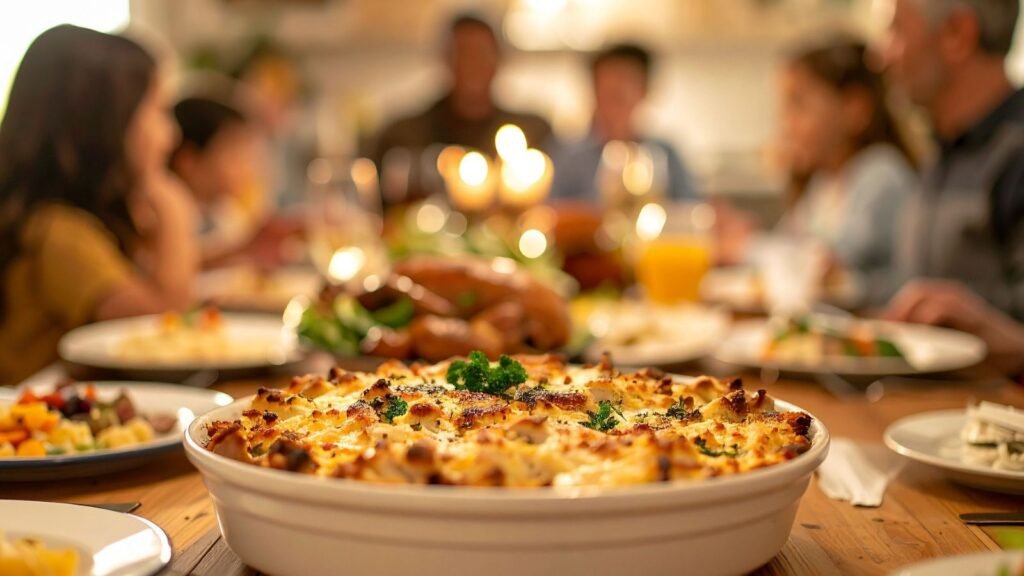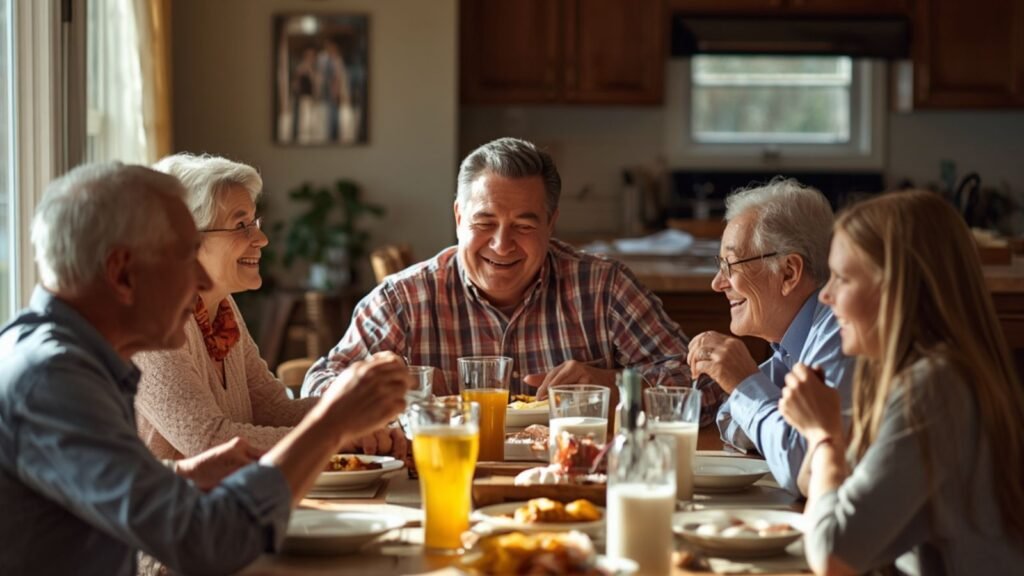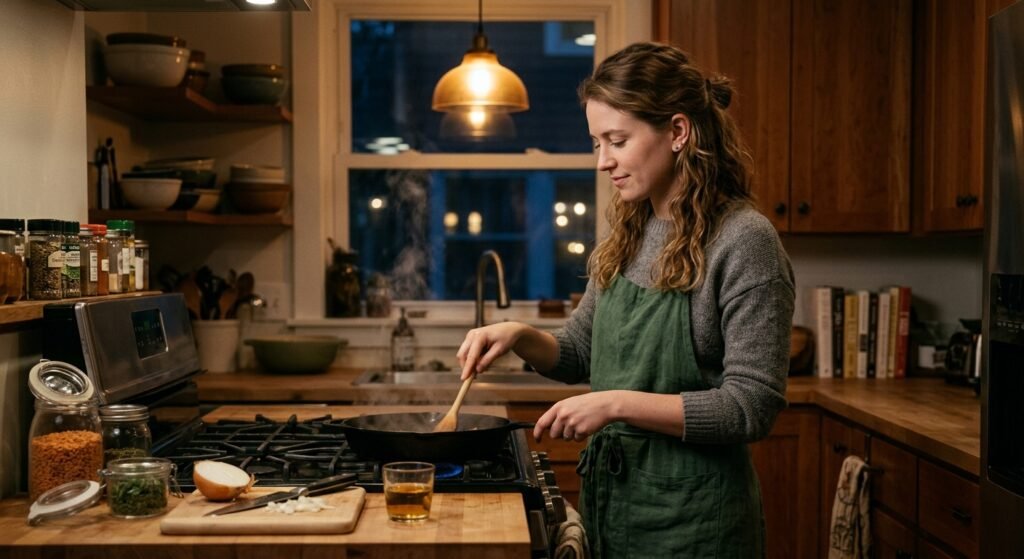
You stand in the grocery aisle, staring at a package of chicken breasts, and suddenly realize you don’t know how to buy food anymore. For years, your grocery list was a collaborative document, a reflection of shared tastes, weekly routines, and compromise. Now, you’re looking at a cart that contains one avocado, a small carton of milk, and a single serving of soup. It feels less like shopping and more like navigating a strange, quiet landscape where all the old rules have evaporated.
The kitchen has always been the heart of a home, which means it is often the place where the silence of a split feels loudest. When a long partnership ends, we expect the big griefs, like the empty side of the bed, the sorting of photo albums, and the awkward conversations with mutual friends. But we rarely prepare ourselves for the quiet panic of five o’clock on a Tuesday evening, standing in front of an open refrigerator, wondering if it’s even worth turning on the stove for one person.
The Ghost of the Shared Table
When you cook for someone else, the act of preparing food is an unspoken conversation. It’s a way of saying you care, a way of checking in after a long day, or sometimes just a way of maintaining a shared rhythm. You learn their preferences, like the way they like their eggs, their aversion to cilantro, and the specific brand of hot sauce they put on everything. Those tiny details form the layout of your shared life, a landscape you spent years building together.
When that person is no longer there, the kitchen can feel haunted by those old habits. You might find yourself reaching for the larger pan out of instinct, only to remember you don’t need it. You might catch yourself starting to make enough for leftovers, then realizing you really don’t want to eat the same lasagna for five straight days. The realization that you only have to please yourself isn’t always liberating at first; often, it just feels deeply lonely.
Rebuilding the Daily Rhythms
There is a reason why this specific transition feels so destabilizing. Psychologists who study how we build our identities often point out that our sense of self is deeply tied to our daily roles and routines. When you’re part of a couple, you occupy a specific role in relation to the other person, and cooking is often a key part of that role. When that relationship ends, the sudden loss of those structured routines can make you feel temporarily anchorless.
Studies on transition and recovery show that finding comfort in small, repeatable daily habits is one of the most effective ways we ground ourselves during major life transitions. Preparing a meal is a sensory process that forces you to be present. You have to chop the onions, smell the garlic, listen to the sizzle in the pan, and watch the colors change. It pulls you out of your head and places you back into your body, even if only for twenty minutes.
The Temptation of the Cold Sink
In the early months, it’s surprisingly easy to slip into what some people call survival eating. You eat cereal over the sink at midnight, or subsist entirely on takeout boxes and toast. It feels silly to dirty three pots just to feed yourself, and the thought of setting a table for one can feel almost performative, like a sad scene from a movie you didn’t audition for. You might tell yourself you’re just being practical, but underneath that practicality is often a quieter, more painful question: am I actually worth the effort if there’s no one here to appreciate it?
That question is where the real work of starting over begins. When you choose to cook a real meal for yourself, you’re not just preparing food; you’re actively practicing self-respect. You’re deciding that your hunger matters, your comfort matters, and your evenings deserve a sense of structure. It’s a way of reclaiming your environment, transforming the kitchen from a place of absence into a place of active creation.
Nourishing the Person You Are Becoming
Eventually, the kitchen begins to change. You start buying ingredients you love but your former partner couldn’t stand. You play the music you actually enjoy while chopping vegetables, without worrying about whether it’s too loud or too eccentric. You discover that you actually prefer your steak cooked a different way, or that you enjoy having breakfast for dinner on a Friday night simply because you can.
These aren’t just adjustments in menu choices; they’re the quiet signs of a life being put back together. You aren’t just learning to feed yourself in the aftermath of a split. You’re learning to get to know yourself again, one small recipe at a time. Maybe the hardest part of cooking for yourself isn’t the physical effort or the empty chair at the table. Maybe it’s the beautiful, unfolding realization that you don’t need an audience to deserve a warm, comforting meal, because your own company is finally starting to feel like enough.