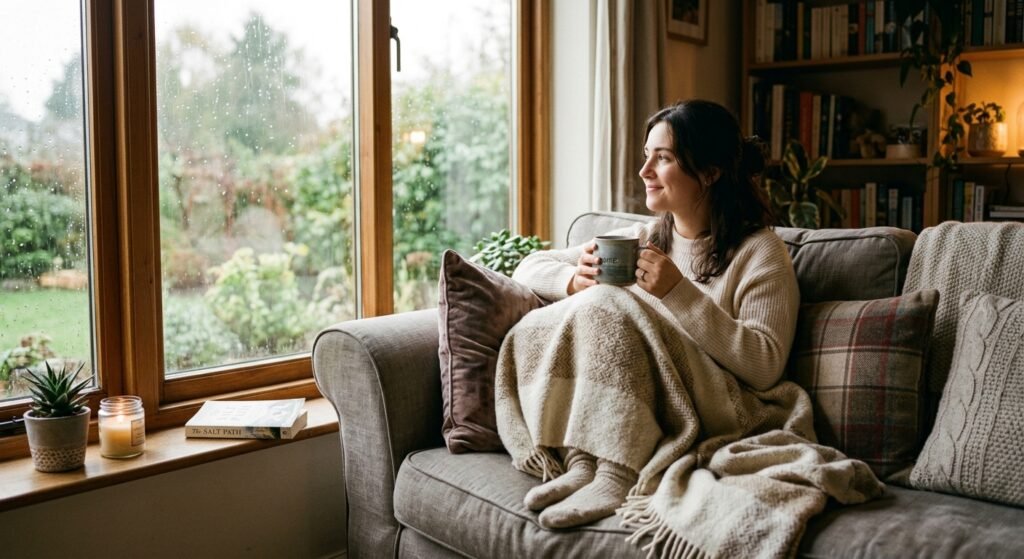
The pile of clothes on the chair has its own quiet personality by Friday afternoon. You look at it while walking past the bedroom, promising yourself you’ll fold it the moment you finish this one email, or right after you wash the dinner dishes. There is a persistent voice in your head that insists you can’t truly relax until everything is done.
But then you look out the window. The late afternoon light is doing that beautiful, golden thing where it filters through the trees, casting long, peaceful shadows across the grass. It is the kind of afternoon that feels like a quiet invitation. Yet, you turn back to the laundry pile, feeling the familiar pull of duty, believing that peace is something you have to earn by finishing your list first.
The Subtle Trap of Earning Our Joy
We’ve been quietly conditioned to believe that joy is a reward for productivity. We tell ourselves we’ll go for that walk, sit on the porch, or meet a friend for coffee only after the kitchen is clean and the inbox is empty. It’s a cycle that never ends because the daily list of chores is a living thing that constantly replenishes itself. By waiting for the perfect moment of completion, we accidentally postpone our lives.
This isn’t just about being busy; it’s about how we define our worth. When we tie our permission to relax to the state of our homes, we turn simple, domestic tasks into barriers between us and the world. The unfolded shirts become a physical boundary, keeping us indoors and keeping our minds spinning with what we should be doing instead of what we could be enjoying.
People who study how our minds interact with our environments have noticed a quiet pattern in how we react to mess. Our brains are naturally wired to seek completion, which is why an unfinished chore acts like a tiny, silent alarm going off in the background of our minds. It constantly demands our attention, making us feel like we’re always on duty, even when we’re trying to rest.
Why Your Brain Craves the Open Air
Those who look closely at how we spend our time have found that people who occasionally choose to ignore these minor tasks in favor of spending time in nature report significantly higher levels of daily happiness. When we step outside and look at the sky, our focus moves from what we need to control to what we get to experience. It turns out that stepping away from the chores quietly restores our peace of mind far better than finally folding that last shirt ever could.
The outside world has a way of putting our endless lists into perspective. The trees aren’t rushing to finish their tasks, and the grass doesn’t wait for permission to grow. When you step into that space, you’re reminded of a much larger rhythm that has nothing to do with efficiency or household management.
Think about the memories that actually stay with you from years past. You probably don’t remember the week you kept the kitchen completely spotless. You don’t look back at your younger years and feel a warm glow of appreciation for the Tuesdays you spent organizing the garage or sorting the mail.
The Memories We Choose to Keep
Instead, you remember the spontaneous drives to watch the sunset, the long conversations on the porch that lasted until the stars came out, and the afternoons you spent lying on a blanket in the grass doing absolutely nothing. Those moments didn’t happen because your life was perfectly organized. They happened because you were willing to let the organization slide for a little while.
There is a quiet bravery in choosing to leave the chores undone. It means looking at a mess and deciding that your time, your peace, and your connection to the present moment are simply more valuable than a tidy room. It is an act of trust, believing that the house will still be there when you return, and that the sky won’t wait for you to finish your chores.
When we look back on our lives, we won’t wish we spent more hours washing dishes or folding sheets. We’ll wish we spent more time feeling the breeze on our faces and listening to the birds in the evening light.
Maybe the laundry was never meant to be a barrier keeping you from the world. Maybe it’s just an invitation to practice letting go. The next time you find yourself staring at a pile of clothes while the sun is shining outside, try walking away. You might realize that the most productive thing you can do for your soul is to leave the work behind and simply go enjoy being alive.