
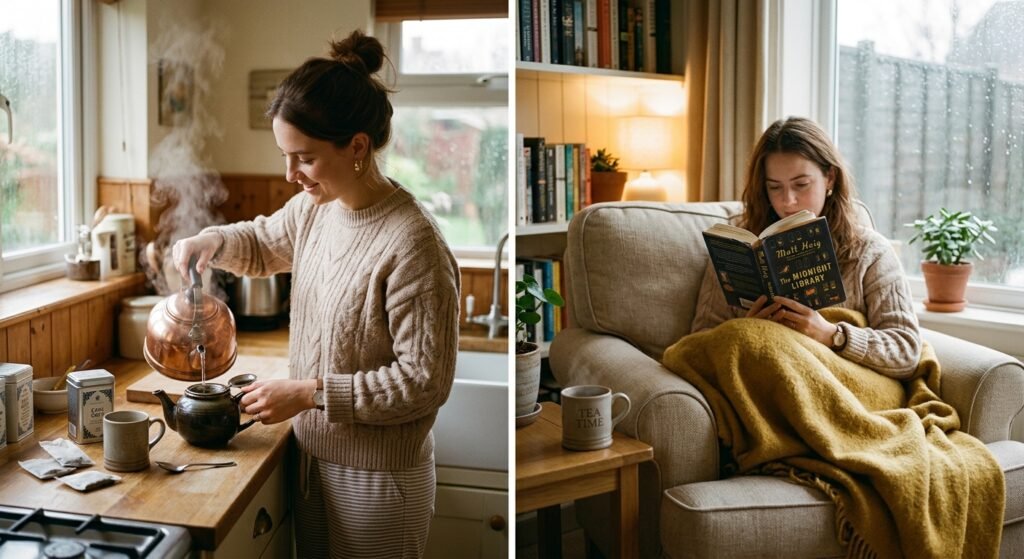
Think about that specific mug you reach for every single morning. It isn’t the most expensive one in your cabinet. It might have a small chip near the handle, or the design on the front might be faded from years of trips through the dishwasher. Still, when you open the cupboard door, your hand bypasses the newer, shinier cups to find that one familiar shape. You grip it the exact same way every time, holding it with both hands to feel the warmth seeping through the ceramic.
We do this without thinking, but it isn’t an accident. It’s a quiet preference we return to day after day. You don’t choose that mug because it holds more coffee or keeps it hotter than the others. You choose it because holding it feels like a silent agreement with yourself. It’s a small signal that says the day has officially started, and that for the next ten minutes, you are allowed to simply sit and exist.
We all have these quiet rituals. Maybe yours is the specific route you take when you walk around your neighborhood after work, even though you know every crack in the pavement by heart. Maybe it’s the way you arrange the cushions on the sofa before you sit down, or the specific album you play only when you’re preparing a meal. These moments aren’t on any to-do list, yet we protect them with a surprising amount of dedication.
The Small Anchors of a Busy World
It’s easy to look at these tiny habits and dismiss them as unimportant details of a routine. But when you look closer, they are actually the scaffolding that keeps our days from collapsing. Our minds are constantly processing a massive amount of information, adapting to unexpected changes, and navigating the demands of other people. By the time you get through a normal afternoon, your brain has made hundreds of decisions, many of them under pressure.
That’s where the beauty of a comfort routine comes in. Psychologists who study behavior often point out that predictability is one of our most effective tools for emotional grounding. When the world outside feels unpredictable, our brains naturally look for small spaces where we have complete control over the outcome. A study on repetitive actions showed that performing a familiar sequence of movements actually lowers our heart rate and settles our nervous system. It isn’t about being rigid; it’s about creating a safe harbor.
When you make your bed the exact same way, or follow the same steps to brew your tea, you aren’t just performing a chore. You’re giving your mind a rest from decision-making. For those few minutes, there are no surprises. You know exactly what comes next, and that certainty is deeply comforting.
Finding Safety in the Familiar
Sometimes, we return to these routines because they connect us to a feeling we’re afraid we’ve lost. If you’ve ever found yourself re-watching a television show you’ve already seen five times, you know how this works. You aren’t watching for the suspense or the plot twists. In fact, you’re watching specifically because there are no surprises. You know exactly what the characters will say, when the music will swell, and how the story will end.
In a life that often feels like it’s moving too fast, those predictable moments become deeply comforting. They allow us to lower our guard. We don’t have to be prepared for an emergency or ready to react to a sudden change. We can just rest in the familiarity of what we already know.
This is especially true during transitions. When you move to a new city, start a different job, or navigate a difficult change in a relationship, your daily patterns get disrupted. During those seasons, the tiny routines we bring with us become even more precious. Unpacking that favorite mug and placing it on a new kitchen shelf is often the first step in making an unfamiliar place feel like home. It’s a way of telling ourselves that even though everything else is changing, the core of who we are remains steady.
The Gentle Art of Doing Nothing on Purpose
There is a quiet freedom in having a routine that serves no productive purpose. In a culture that constantly urges us to optimize our time, we are often told that every habit should lead to self-improvement. We’re encouraged to turn our morning walks into fitness challenges, our reading into professional development, and our hobbies into side hustles. The pressure to make everything useful can make even our rest feel demanding.
But comfort routines resist this pressure. They don’t exist to make you healthier, wealthier, or more productive. They exist simply because they make you feel okay. Taking twenty minutes to water your plants, reorganizing a shelf just because you like the order of it, or sitting on the porch to watch the evening light fade are acts of gentle rebellion against the hurry of modern life.
When we allow ourselves these unproductive rituals, we’re practicing a quiet kind of care. We’re declaring that our comfort matters just as much as our achievement. We don’t need to earn these moments of peace through hard work; we’re allowed to have them simply because we need a place to breathe.
The Realization Beneath the Routine
Perhaps the most beautiful thing about these comfort routines is that they don’t require us to change who we are. They don’t ask us to be better versions of ourselves or to reach for grand goals. They meet us exactly where we are, whether we’re feeling tired, overwhelmed, or just a little bit lonely.
Maybe we don’t return to these small habits to change our lives. Maybe we return to them because, in a world that asks us to constantly adapt, they are the only places where we are allowed to remain exactly as we are. The next time you reach for that favorite cup, or take the long way home just to hear one more song, let yourself sink into the comfort of it. It’s a small moment, but it’s yours, and sometimes that’s more than enough.