If you’ve ever pulled into your driveway after a long day, turned off the engine, and just sat in the quiet dark for two minutes before opening the car door, you already know what this feels like. You aren’t doing anything remarkable. You’re just sitting there while the dashboard lights fade, letting the quiet settle in around you.
In that brief space between where you’ve been and where you’re going next, something subtle happens. Your shoulders drop a fraction of an inch. Your breath slows down naturally. For a few seconds, nobody is asking you for answers, nobody needs a decision, and nothing demands your immediate attention.
We’re often taught that happiness looks like excitement. We imagine loud laughter, thrilling milestones, big celebrations, or the high energy of accomplishing something difficult. But when you pay close attention to the moments that leave you feeling most restored, they’re rarely the loud ones. More often, they’re the moments when you simply feel safe enough to put down your guard.
We Spend Life Chasing Excitement When We Really Crave Calm
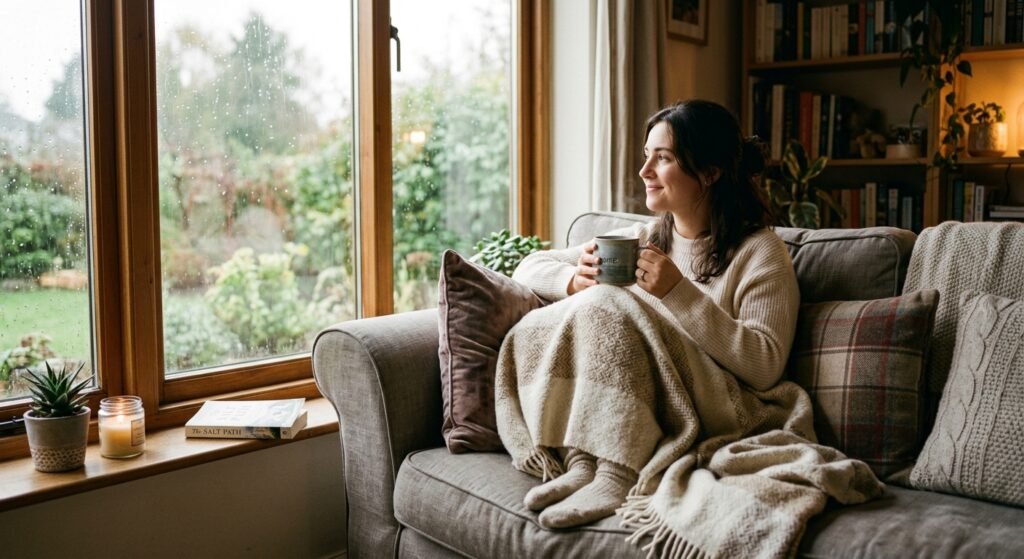
Think about the places where you feel most like yourself. It might be sitting on the sofa with someone who knows your whole story, where you don’t have to edit your thoughts before speaking. It could be staying in a quiet house on a Sunday morning, holding a warm mug while the rest of the world speeds along outside.
What makes those moments special isn’t that something extraordinary is happening. It’s that nothing dangerous is happening. You aren’t waiting for a text message to clear up an argument. You aren’t bracing for a tough conversation with a supervisor. You aren’t constantly scanning the room to see if your presence is welcome.
Psychologists who study emotional well-being often talk about how much energy our brains spend on background protection. Even when life seems smooth, our nervous systems are quietly keeping watch, scanning our surroundings, evaluating tone of voice, reading body language, and anticipating potential trouble. That vigilance takes a steady toll on your energy, even if you’ve grown so accustomed to it that you hardly notice it’s there.
When you finally enter a setting where that watchful system can rest, the relief is profound. We tend to call that feeling peace, but at its root, it’s really the quiet gift of security.
The Subtle Relief Of An Unclenching Body
Safety is easy to overlook because it manifests primarily as an absence. It’s the absence of tension in your jaw when you walk into your living room. It’s the absence of second-guessing yourself after leaving a gathering. It’s the absence of feeling like you have to prove your value to stay in the room.
When you don’t feel secure, your body knows it before your mind fully articulates it. You carry a subtle tightness in your chest or a constant background urge to stay vigilant. You reply to messages too quickly because you’re worried about disappointing someone. You keep busy because staying still lets the underlying unease catch up with you.
Research around emotional regulation suggests that our bodies aren’t designed to thrive in a continuous state of high alert. When we feel safe, our physiology undergoes a real transition. Heart rates settle, breathing deepens, and the mind opens up to thoughts that aren’t focused on self-defense. That’s why true calm feels less like an achievement and more like a gentle return to yourself.
It’s hard to be creative when you’re defensive. It’s hard to be open-hearted when you’re worried about being hurt. Safety gives your inner world permission to step out into the light.
Learning To Value The Unremarkable Days
There’s a strange trap in modern life where calm can easily be mistaken for boredom. If you’ve lived through chaotic seasons, predictable days can feel almost suspicious at first. You might catch yourself waiting for another problem to appear, simply because quietness hasn’t always meant safety in your past.
It takes time to realize that a day where nothing major happens isn’t a wasted day. It’s a protected day.
Think of the relief that comes from hearing a familiar front door unlock, knowing it’s just someone you trust coming home. Think of the comfort in a routine that repeats without painful surprises. These aren’t thrilling events, yet they build the foundation for everything meaningful in our lives.
When you look closely at what people cherish near the end of a long journey, it’s rarely the frantic highlights. It’s the ordinary, peaceful Tuesdays. It’s the quiet breakfasts, the familiar laugh across the kitchen counter, and the knowledge that they were completely secure in their own life.
Peace Is Found In What Isn’t Happening
Maybe we’ve had the formula for happiness slightly backward all along.
Perhaps happiness isn’t something you actively capture by adding more experiences, more achievements, or more excitement to your calendar. Maybe happiness is what naturally emerges when the threat of criticism, rejection, or instability is removed from the room.
When you find a space, a routine, or a relationship where you can completely let go of your defenses, you’ve found something far more durable than temporary delight. You’ve found a place where your nervous system can finally rest.
The next time you find yourself enjoying a quiet, unremarkable moment, pause long enough to notice it. Feel the lack of urgency. Notice the calm around you and the quiet inside you. You aren’t missing out on life in those slow moments. You’re experiencing one of the sweetest things life has to offer: the quiet realization that right now, right here, you’re safe.