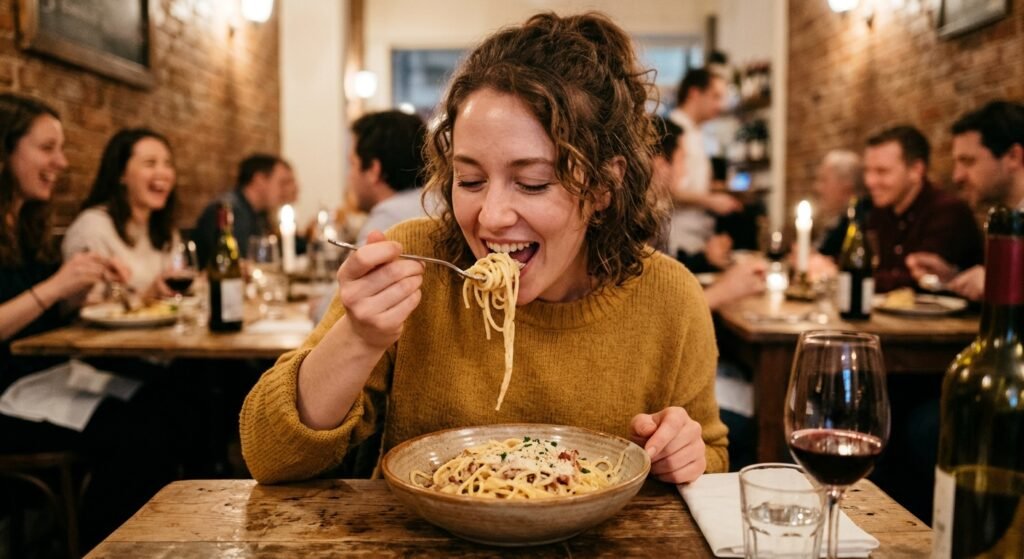
If you’ve ever sat down at a dinner table after a long, exhausting day, you probably know the exact moment right before the fork moves. The plate arrives, hot and smelling wonderful, and there is a tiny pause where the world outside seems to fall silent for just a second. You take that very first bite, and for a brief moment, everything feels completely right. The flavors are bright, the warmth settles in, and you catch yourself letting out a small, satisfied sigh.
By the time you’re halfway through the plate, the food still tastes good, but that sudden spark of magic isn’t quite as loud anymore. It isn’t because the cook did something wrong or because the dish cooled down too fast. It’s because that first bite was never actually just about the food. It was about the grand arrival of something you had been looking forward to for hours.
That brief, beautiful moment of delight is something we experience all the time, yet we rarely pause to ask why it hits us so deeply. It happens with the first sip of morning coffee, the first slice of warm bread straight out of the oven, or the first spoonful of hot soup when you step inside on a chilly evening. The experience feels almost electric, as though all your senses were quietly holding their breath just waiting for it.
And honestly, that is what makes everyday routines so surprisingly emotional. We think we’re just satisfying our appetite, but really, we’re stepping into a brief story of anticipation that started long before we picked up a napkin.
The Magic Lives In The Waiting
Think about how a great meal actually begins. It rarely starts when you take your first bite. It starts when you read the menu while your stomach grunts in agreement, or when the rich aroma of garlic and butter begins drifting out of the kitchen. It builds while you watch the steam rise from the dish as it gets carried over to your seat.
During all those quiet minutes, your mind is doing something wonderful. Psychologists have found that our mind often generates more excitement during the waiting phase than during the event itself. Nerve pathways spark with anticipation, releasing dopamine not when we finish a reward, but while we’re actively expecting it. You aren’t just waiting for dinner; you’re building a sensory landscape in your head.
So when that food finally reaches your mouth, it isn’t just meeting your physical appetite. It’s meeting an entire atmosphere of expectation you’ve been building up all afternoon. The first bite carries the full emotional release of that built-up wait, making the taste feel far bigger and more satisfying than any bite that follows.
Why The Senses Wake Up All At Once
There is also a simple reason your senses react so intensely right at the start. When a new flavor or temperature touches your taste buds, your brain experiences a burst of fresh information. Every spice, every texture, and every drop of sauce feels intense because your mind hasn’t had time to adjust to it yet.
Researchers call the fading intensity that comes later sensory adaptation. It’s the same reason you stop noticing the sound of a ticking clock after sitting in a quiet room for ten minutes. As you keep eating, your nervous system gets comfortable with the flavor profile. The tenth bite is still comforting, but it no longer has the element of surprise. The first bite, however, captures your total, undivided attention.
What’s remarkable about that initial taste is how effortlessly it pulls you into the present. Most of the day, your mind wanders across a dozen different worries. You’re thinking about unanswered messages, unfinished projects, or what tomorrow morning is going to look like. But during that single first bite, all of that mental chatter vanishes. You aren’t anywhere else. You’re completely right there, tasting something wonderful.
Chasing Small Sparks Of Joy
It’s easy to assume that because the initial excitement fades as the plate clears, the meal somehow becomes less valuable. But maybe that misses the real charm of how we experience life. We don’t need every moment of a meal to feel like a burst of fireworks for it to bring us joy.
The first bite gives us delight, but the rest of the meal offers a very different kind of comfort. It settles us down. It gives us a reason to stay at the table, to share stories with friends, or to simply let our thoughts drift while we recharge. The sharp thrill of anticipation quietly transforms into the warm satisfaction of being fed and settled.
When you look closely at these daily moments, you realize how many small experiences work the exact same way. The first chapter of a book you’ve been dying to read, the first step into a lake on a warm afternoon, or the first chord of a favorite song at a concert all hold that same quiet magic. They remind us that anticipation isn’t just wasted time before the main event; it’s half the joy of living.
A Quiet Perspective On What We Really Crave
Maybe the first bite always feels different because it’s one of the few times we give ourselves permission to be fully receptive. We aren’t rushing to finish yet, and we aren’t thinking about washing dishes or rushing off to the next task. We are simply meeting a long-awaited moment right as it arrives, wide awake to the simple pleasure of it.
The next time you sit down to eat something you love, notice that tiny pause before your fork moves. Pay attention to how good that very first taste feels, and give yourself a second to enjoy the thrill of it. You aren’t just eating food. You’re giving yourself a small, gentle moment of presence in a world that usually asks you to hurry through everything else.
And maybe the magic isn’t lost as the plate empties. Maybe it just turns into something better: the quiet comfort of knowing that another morning, another meal, and another first bite are always waiting just around the corner.