
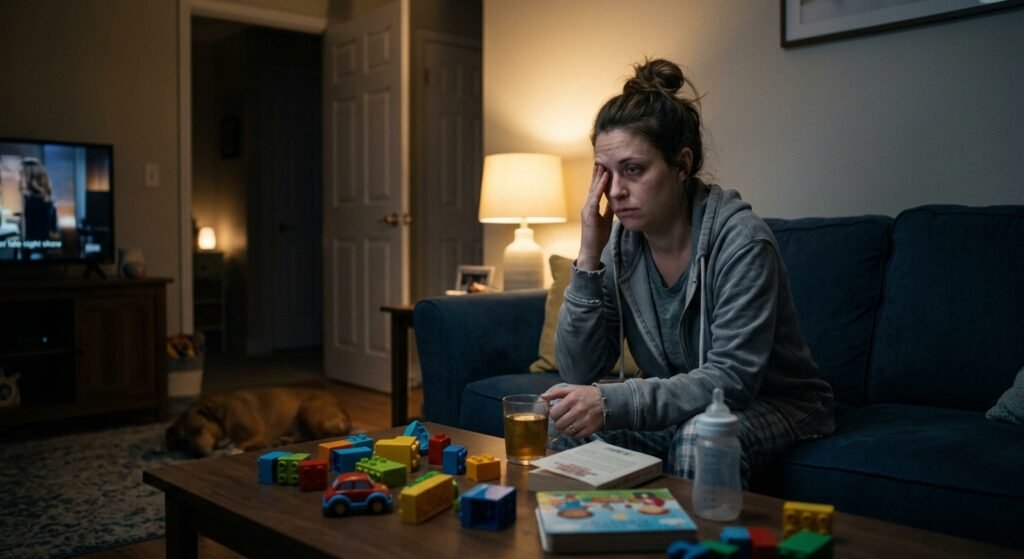
You probably know the quiet of a house when everyone else is asleep. It’s that thin slice of the night when the kitchen counters are finally wiped down, the stray shoes are pushed to the side, and the constant stream of requests has finally stopped. You sit down with a glass of water or a mug of tea that you’ve reheated twice, and for the first time all day, nobody is asking you for anything. But instead of feeling relieved, a strange, quiet coldness starts to settle in. It’s the realization that while you’ve spent the entire day tracking everyone else’s moods, anticipating their needs, and smoothing over their rough edges, nobody has asked how you’re holding up.
It isn’t that the people in your life don’t love you. If you fell ill or faced a massive crisis, they’d rally around you in an instant. The loneliness you feel isn’t the sharp pain of abandonment; it’s the slow, dull ache of being taken for granted. When you’re the person who always has the answers, who remembers the food allergies, who manages the schedules, and who offers the reassuring hugs, people stop looking for signs that you might be struggling. Your strength becomes a permanent part of the scenery, as dependable and unnoticed as the walls holding up the house.
The Burden of Being the Reliable One
Most people don’t set out to become the emotional anchor of their entire circle. It usually starts because you’re observant and caring. You notice when your partner’s voice carries a hint of stress, so you quietly take a chore off their plate. You see your child’s anxiety before they even have a word for it, so you carve out extra time to sit with them. You listen to your sibling vent about their job because you know they need a safe place to land. These are beautiful, generous acts, and they feel like the natural currency of a loving family.
But over time, a quiet pattern begins to form. Because you’re so good at managing things, people stop worrying about whether you can. They bring you their problems because they know you’ll listen, but they forget to ask if you have the space to hold them. They lean on your stability to steady themselves, unaware that the strain has to go somewhere. You become the designated emotional caretaker, a role that feels impossible to step out of because everyone else has built their comfort around your consistency.
Why We Keep Doing It
Relationship experts often talk about a concept known as role captivity, where a person feels locked into a specific identity within their family, even when that identity starts to drain them. Research in family dynamics suggests that once a person is cast as the primary caretaker, others unconsciously stop scanning them for signs of distress. We don’t do this out of cruelty; we do it out of convenience. When someone is always okay, checking on them feels unnecessary. It’s a natural mental shortcut, but for the caretaker, it can feel like a slow erasure.
The trickiest part of this dynamic is that we often participate in our own isolation. When someone asks how you’re doing, your default response is probably a quick, reassuring smile and a variation of, “I’m fine, just busy.” You say it because you don’t want to burden others, or because you honestly don’t know how to explain the profound exhaustion you’re feeling. You’ve spent so long focusing outward that turning your attention inward feels unfamiliar, almost selfish. You teach people that you don’t need help, and then you feel a quiet resentment when they believe you.
The Quiet Price of Emotional Caregiving
There’s a unique kind of exhaustion that comes from carrying the emotional temperature of a room. If you’re the one who keeps the peace, you’re constantly monitoring the subtle changes in tone, the unspoken tensions, and the silent withdrawals of the people around you. You’re always working to keep the boat steady, which means you can never fully relax. You’re always on duty, even when you’re just sitting on the couch.
This constant vigilance takes a toll that isn’t easily mended by a good night’s sleep or a weekend getaway. It’s a fatigue of the spirit. It’s the feeling that if you let go of your grip for even a moment, everything will slide into chaos. So you keep holding on, pretending the load isn’t wearying, while secretly wishing someone would walk into the room, look you in the eyes, and say, “Let me take this from you for a while.”
Finding Your Way Back to the Circle
This isn’t a problem that can be solved with a simple conversation or a checklist of self-care tips. It requires looking at why we feel so responsible for everyone else’s happiness in the first place. Often, we assume that being loved is tied directly to being useful. We worry that if we stop carrying the load, if we show our vulnerability, or if we admit that we don’t have everything under control, we’ll somehow let everyone down, or worse, lose our place in the lives of those we care about most.
But perhaps the real freedom begins when we realize that the people we love don’t just need our strength; they also need our vulnerability. By hiding our struggles to protect them, we accidentally deny them the chance to show up for us. We keep them at a distance, locked out of the deeper, messier parts of our lives. Allowing yourself to need someone else isn’t a failure of care; it’s the ultimate expression of trust. It’s the moment we stop trying to be the anchor and remember that we are allowed to be part of the family, too.