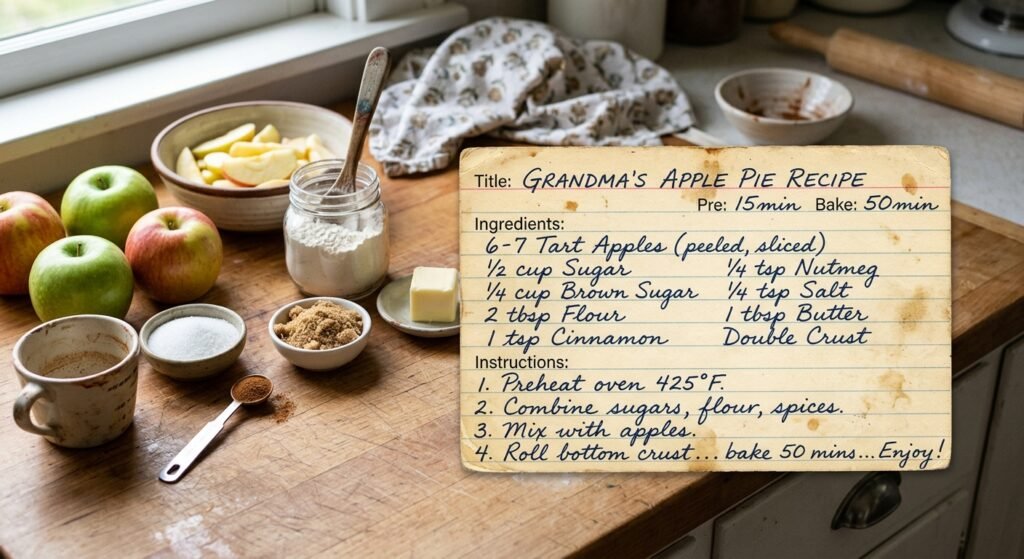
Maybe you have a handwritten index card tucked away in the back of a kitchen drawer, its edges slightly yellowed and stained with oil from a long-forgotten dinner. Or perhaps there’s a specific soup recipe bookmarked on your phone that you haven’t opened in years. You know the exact ingredients required, and you probably know the steps by heart. Yet, every time you plan your meals for the week, your eyes slide right past it.
It isn’t because you don’t like the taste. In fact, if someone served it to you right now, you’d probably tell them it’s one of your favorite things in the world. But actually making it yourself feels like a boundary you aren’t quite ready to cross. You stand in the grocery store aisle, looking at the specific brand of canned tomatoes or the exact shape of pasta, and you find yourself reaching for something else instead.
There’s a quiet hesitation that happens when a dish is intimately tied to someone we miss. It could be a grandparent who spent hours stirring a sauce, a partner from a chapter of life that has since closed, or a friend who used to bring over a specific dessert whenever things felt difficult. In those moments, a recipe stops being a set of instructions. It becomes a direct line to a version of your life that no longer exists.
The Sensory Time Machine in Your Kitchen
Our brains do something fascinating when we cook and eat. While most of our memories are stored like old photographs that we can look at with a bit of distance, sensory memories are different. Researchers who study how we process the past have found that our senses of smell and taste are wired directly to the emotional centers of our minds. Unlike a song or a picture, which we process through our logical thinking first, a scent goes straight to the parts of us that feel before we even have a chance to think.
This is why walking into a kitchen where onions are caramelizing can instantly make you feel like you’re young again, sitting on a stool waiting for dinner. It’s also why recreating a dish from your past can feel so emotionally intense. You aren’t just tasting ingredients; you’re actively waking up feelings that have been sleeping. When you recreate a recipe, you aren’t just remembering someone. You’re inviting their presence back into the room.
And sometimes, that presence is simply too loud for an ordinary Tuesday evening. It’s one thing to think about someone you miss while driving to work. It’s a completely different thing to stand over a stove, smelling the exact combination of garlic and rosemary they loved, and realizing they aren’t there to share it with you. The familiarity of the scent makes the absence feel profoundly sharp.
Protecting the Magic of What Was
When we choose to leave certain recipes unmade, we often assume we’re just avoiding sadness. We tell ourselves we aren’t ready to cry over a bowl of pasta, or that we don’t have the emotional energy to navigate the nostalgia. But if you look a little closer, there’s often a much more tender motivation behind our reluctance. We might actually be trying to protect the sacredness of the memory itself.
There’s a quiet worry that if we make that special dish too often, or if we make it under ordinary circumstances, the magic will start to fade. If you make your late mother’s signature birthday cake just because you had a craving on a random weekend, does it stop feeling like her cake? Does the memory get diluted by the everyday routine of washing dishes and checking emails? We worry that by bringing the past into the present, we might accidentally wear down the edges of the things we hold most dear.
By keeping the recipe tucked away, we keep it pristine. It remains a beautiful capsule of a specific time, a specific kitchen, and a specific love. The refusal to cook it isn’t always a sign of unresolved grief. Sometimes, it’s a quiet act of preservation. It’s our way of saying that some things are too precious to be made common.
Learning to Cook with the Absence
Eventually, many of us find a moment when we decide to try anyway. Maybe a decade has passed, or maybe it’s just a quiet afternoon when the longing feels stronger than the hesitation. You buy the ingredients, you set out the pots, and you begin. The process of making the dish becomes a slow, quiet conversation with the past, where every chop of a knife and stir of a spoon feels like an acknowledgment of what you’ve lost.
When you finally take that first bite, the feeling is rarely simple. It’s a mixture of comfort and ache, sweetness and sorrow. But in that moment, you realize something quiet and profound about why you avoided it for so long.
Perhaps the hesitation was never about being afraid of the sadness. Maybe you kept the recipe put away because you thought that cooking it alone would only remind you of how empty the kitchen is now. But as you sit there with the plate in front of you, you realize that the food didn’t make the absence feel larger. Instead, it brought the love back into the room, reminding you that the people we miss never truly leave us as long as we carry their warmth in our hands.