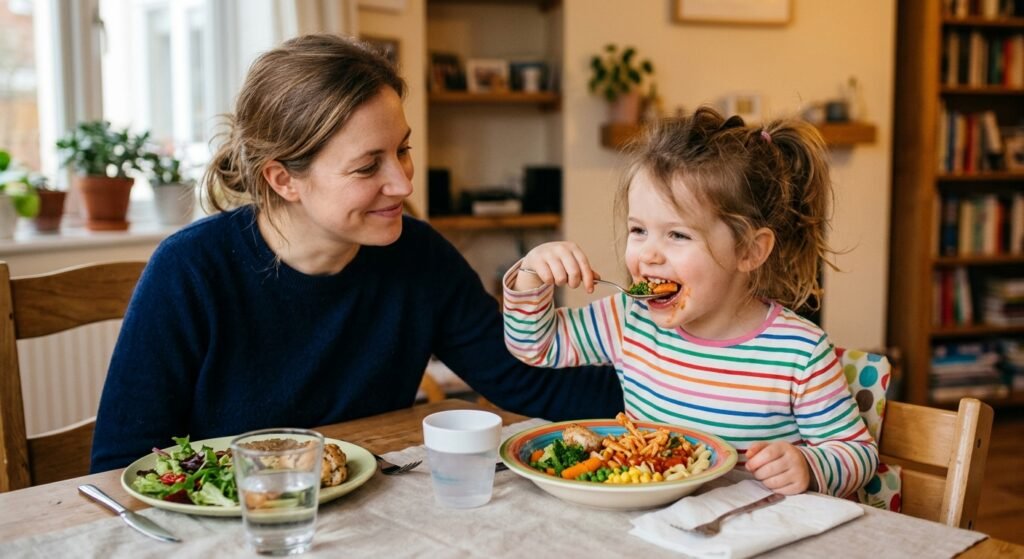
If you’ve ever watched a child sit at the kitchen table, casually nudging a partially eaten sandwich around their plate while they talk about their day, you might’ve felt a strange mix of emotions. For many, there’s a mild urge to tell them to finish their food, or maybe a passing thought about the grocery bill. But for those who grew up in homes where the kitchen cupboards were regularly bare, that simple, unfinished plate can stir up something much deeper than mild annoyance. It can feel like a quiet miracle.
When you grow up food insecure, your relationship with the kitchen isn’t simple. You learn early to read the silence of an empty refrigerator. You know exactly how many slices of bread are left in the bag, and you learn to measure the passage of the week by the dwindling supply of cereal. It’s a quiet sort of survival that stays with you long after you’ve grown up, found stability, and filled your own pantry to the brim.
Even years later, when the budget’s secure and the grocery trips are routine, that old instinct doesn’t entirely disappear. You might still find yourself checking the expiration dates too often, or feeling a spike of anxiety when the pantry looks slightly empty. The mind remembers the scarcity, keeping a watchful eye out for the cold draft of want, even when you’re completely safe.
The Secret Luxury of Being Careless
Then, one day, you find yourself sitting across from a child who’s eating with complete, beautiful carelessness. They take a bite of an apple, get distracted by a drawing, and leave the rest on the counter without a single thought. They don’t look at the pantry with calculation. They don’t ask if there’s enough for tomorrow. They simply assume, with the absolute certainty of youth, that food will always be there whenever they happen to feel hungry.
For someone who carried the silent stress of empty cupboards, watching this can feel startling at first. Your old instincts might whisper that they’re being wasteful, or that they don’t appreciate what they have. But if you sit with that feeling for a moment, something else begins to take its place. The irritation softens into a profound sense of relief. You realize that their carelessness is actually a gift you worked hard to give them.
Those who study family dynamics often talk about how our earliest environments shape our baseline expectations of the world. When resources are scarce during our formative years, our minds can become wired to anticipate instability. We learn to stay on high alert, always prepared for the other shoe to drop. Yet, research in developmental psychology suggests that creating safety for others can have a powerful, restorative effect on our own lives. By consistently providing abundance for the children in your care, you’re not just feeding them; you’re quietly showing your own past self that the world’s no longer a hostile place.
Finding Peace in the Leftovers
It’s easy to look at a partially eaten plate and see waste. But when you look closer, that plate represents something extraordinary. It means the child sitting across from you has never had to wonder where their next meal’s coming from. They’ve never had to listen to the quiet murmur of parents discussing finances in the kitchen late at night, trying to figure out how to stretch a budget through the weekend. They’ve never had to go to sleep with that dull, hollow ache in their stomach that makes the night feel far too long.
Their ability to leave food behind is proof that they trust you completely to take care of them. They don’t need to hoard, they don’t need to overeat out of fear, and they don’t need to worry. Your hard work has shielded them from the very things that once kept you awake at night. The cycle of worry has stopped with you, and that’s a quiet victory worth celebrating.
This realization can change the way you look at the daily routines of your household. The messy kitchen counters, the crumbs on the floor, and the boxes of crackers left open on the table stop looking like chores or frustration. Instead, they become evidence of a life lived in abundance. They’re the beautiful, untidy signs of a home where scarcity has no power.
Healing doesn’t always happen in quiet rooms during deep conversations. Sometimes, it happens in the middle of a busy Tuesday afternoon, while you’re wiping down the counter and tossing a cold, unfinished piece of toast into the compost. You look at it, and instead of feeling that old, familiar knot of anxiety in your chest, you feel a sudden, warm wave of peace.
You realize that you’ve built the very shelter you always wanted when you were young. Your children don’t have to carry the worries you carried, because you did all the worrying for them. And in watching them play, completely unburdened by the demands of survival, you might find that a small part of your own past is finally starting to rest, too. You’re not just feeding them; you’re quietly letting go of the hunger that followed you for so long, realizing that there’s finally enough for everyone.