Can we talk about this for a second?
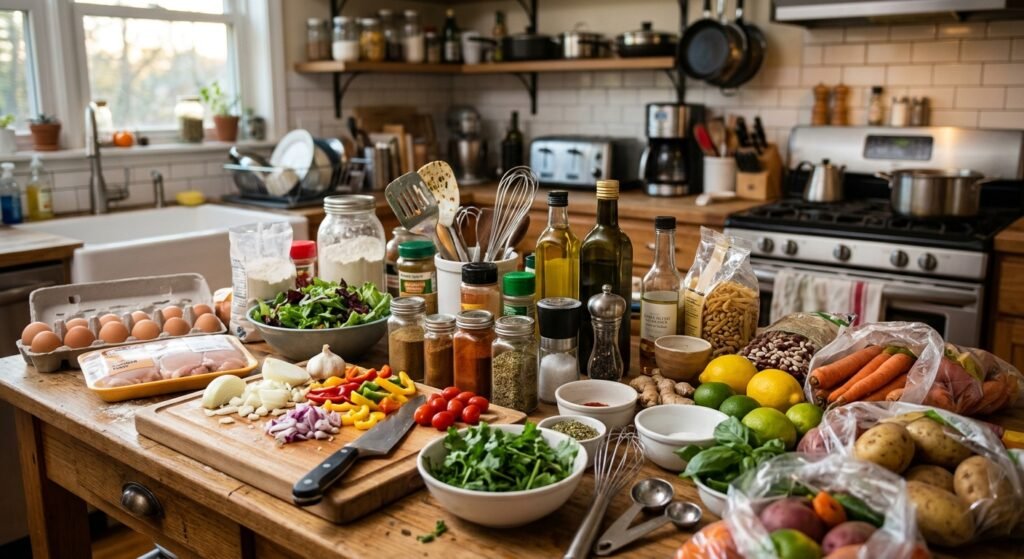
You are walking through the grocery store on a Sunday afternoon, pushing a cart that is currently empty, and you feel a sudden, beautiful wave of inspiration. You bypass the frozen food aisle completely. You don’t even look at the packaged pasta sauces, the frozen pizzas, or the boxed mac and cheese. Instead, you steer your cart directly toward the produce section, and you start grabbing things that require serious labor.
A whole butternut squash. A bunch of raw, untamed kale. A bag of dry lentils that have never met a pot of water in their lives. A ginger root that looks like a small tree branch.
In that exact moment, you aren’t just buying groceries. You are casting the lead role in a movie about a person who has life completely figured out. You convince yourself that on Tuesday evening, after a full day of work, you will happily spend nearly an hour chopping, roasting, and simmering. You genuinely believe you are the kind of person who finds joy in making fresh vegetable broth. The checkout conveyor belt feels like a runway of pure responsibility.
The Tuesday Night Reality Check
Then, Tuesday actually arrives.
You get home, drop your bag by the door, and walk into the kitchen. You are tired, you are hungry, and your decision making abilities have completely expired. You open the refrigerator, and there they are. The ingredients. They are sitting on the shelf, looking exactly as raw and unprepared as they did two days ago.
Suddenly, that butternut squash doesn’t look like a delicious side dish. It looks like a solid, daunting obstacle. Peeling it feels like trying to shave a rock. You stare at the kale, realizing it isn’t ready to eat; it needs to be washed, destemmed, and seasoned. It is basically a chore disguised as a leafy green. The lentils are still sitting in their plastic bag, quietly reminding you that they require forty minutes of boiling before they become anything resembling dinner.
Five minutes later, you are standing in the middle of your kitchen, holding your phone, and ordering a burrito. You tell yourself that you’ll just make the squash tomorrow. Tomorrow will definitely be the productive version of you.
The Hope We Put in the Crisper Drawer
What is fascinating is the little story we tell ourselves in the grocery store to make this feel completely reasonable. Buying the ingredients gives us the immediate satisfaction of being healthy, without any of the actual work. When you buy a ready made meal, you are buying dinner. But when you buy raw, unprocessed ingredients, you are buying a dream. It’s an investment in a future version of yourself who is organized, energetic, and apparently has nothing better to do than dice vegetables at eight o’clock at night.
It’s a very specific kind of optimism. We buy food for the person we want to be, rather than the person we actually are. We pretend that our future self will have infinite energy, unlimited time, and a sudden, burning passion for cleaning food processors. We conveniently forget that our future self is just us, but slightly more tired and wearing sweatpants.
So the ingredients sit there. They wait.
The kale slowly loses its enthusiasm, quietly wilting in the back of the crisper drawer. The ginger root begins to shrivel, looking more like a little wooden toy. The squash remains completely unchanged, staring at you every time you reach for the leftover takeout, acting as a silent, nutritious ornament. Every time you open the fridge, you make eye contact with that squash, and a tiny negotiation happens in your head.
The Art of the Compromise
At some point, it stops being about the food and starts being about our conscience. We don’t want to admit that we aren’t going to make the lentil stew. So we start moving the ingredients around. We slide the squash behind the milk. We push the wilting greens deeper into the drawer, hoping that if they are out of sight, we don’t have to face the fact that we spent money on a project we never started.
We all know how this ends.
Eventually, the weekend arrives, and you perform the ceremonial cleaning of the refrigerator. You quietly discard the things that were once full of potential, feeling a mild pang of guilt, but also a strange sense of relief. The slate is clean. You can start over. You promise yourself that next time, you’ll be more realistic.
And the funniest part? On Sunday, you’ll walk back into that grocery store. You’ll feel that familiar spark of ambition. You’ll see a fresh bunch of asparagus or a bag of dried chickpeas, and for some reason, it will suddenly feel completely reasonable to buy them again.
Honestly, we all do this. Maybe the goal isn’t to become a perfect chef who cooks from scratch every single night. Maybe the goal is just to appreciate the optimism itself. We want to be people who eat well and take care of ourselves, and even if we end up eating takeout on the couch, that little basket of raw vegetables is proof that we are still trying.
So go ahead and buy the squash. You probably won’t cook it tomorrow. But it’s nice to know the option is there, sitting in the fridge, believing in you. You’ll probably do it again next week, and honestly, that is completely fine.