You’ve spent nearly an hour preparing a meal, carefully balancing the colors on the plate to make it look inviting. You’ve sliced the vegetables into tiny, unrecognizable pieces, hoping they might slip past the sensory guards of a preschooler. Yet, the moment the plate touches the table, your child looks at it with the kind of suspicion usually reserved for a package from an unknown sender. A single green fleck, smaller than a grain of sand, becomes an insurmountable obstacle. The plate is pushed away, negotiations begin, and you find yourself offering bribes of dessert in exchange for just one bite of broccoli.
If you’ve ever sat at a kitchen table feeling your pulse rise over a plate of untouched pasta, you know this quiet frustration. It’s a scene played out in millions of homes every evening. We start the day with the best intentions, imagining a peaceful family dinner where everyone shares stories and happily consumes their vegetables. Instead, we often end up in a silent standoff, staring at a small person who’d rather go to bed hungry than let a piece of zucchini touch their tongue.
The Silent Burden of the Dinner Plate
It’s easy to tell ourselves that this is just about nutrition, but the truth is usually much more personal. When a child rejects the meal you’ve made, it can feel like a quiet rejection of your care. For parents, feeding a child is one of the most fundamental ways we show love. Since the day they were born, their growth and safety have been your primary responsibility. When they refuse to eat, it triggers a deep, protective panic that we’re failing at our most basic task.
Psychologists who study family dynamics often point out that the dinner table is one of the first places children realize they have agency. Until this point, so much of their lives has been decided for them. They’re told when to sleep, what to wear, and where to go. But what goes into their mouths is one of the very few things they can completely control. That green bean isn’t just a vegetable anymore. It’s a flag planted on the hill of their own independence.
Once we understand that this standoff is actually about a child figuring out where they end and where their parents begin, the struggle starts to look a bit different. It isn’t rebellion. It’s a very small person trying to navigate a very big world by controlling the only thing they can.
The Unspoken Relief of the Tiny Victory
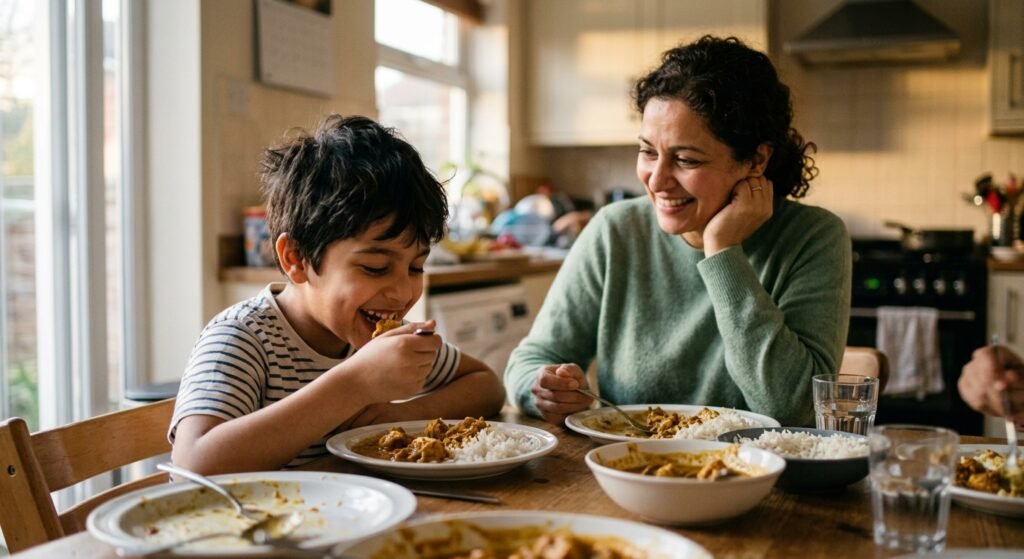
Then, on a completely ordinary Tuesday, something unexpected happens. There’s no grand announcement. You haven’t changed your cooking style, and you didn’t deliver an inspiring speech about nutrition. You simply put down a plate of chicken and rice, and without a single word of protest, your child picks up their fork.
They take a bite. Then another. They don’t pick out the onions. They don’t ask if there’s cheese hidden under the sauce. They just eat.
Across the table, you eye your partner with a silent, breathless look that says, don’t make eye contact, don’t say a word, and whatever you do, don’t celebrate. You sit there in the quiet room, listening to the gentle clinking of silverware, feeling a wave of relief so profound it surprises you. In that moment, the kitchen feels a little warmer, the evening feels a little lighter, and the silent tension that has defined your dinners for months suddenly begins to evaporate.
Finding Joy in the Smallest Steps
A leading researcher in pediatric feeding therapy once noted that children often need to be exposed to a new food up to fifteen times before they’re willing to try it. But we rarely think about those fifteen steps when we’re in the thick of it. We want the transformation to happen all at once. We want them to love the salad today, to appreciate the herbs tomorrow, and to thank us for our culinary efforts by the end of the week.
But growth doesn’t work that way, especially not for children. It happens in quiet, almost invisible increments. It’s a child who used to refuse to have sauce on their plate suddenly tolerating a small dollop of ketchup. It’s the child who wouldn’t touch a strawberry finally agreeing to hold one. These aren’t the kind of milestones you write down in a baby book, but they’re the quiet victories that keep us going.
When we look back on these years, we probably won’t remember the exact recipes we cooked or the hours we spent searching for creative ways to hide carrots in muffin batter. We’ll remember the feeling of sitting around the table, watching our children slowly, hesitantly, grow into themselves.
Maybe the lesson of the picky eater isn’t about finding the perfect recipe or mastering the art of negotiation. Maybe it’s the realization that happiness in family life doesn’t always arrive in grand, sweeping gestures. Sometimes, it arrives quietly, one small bite at a time, at a messy kitchen table, while everyone else is looking the other way.